Practice
Vegetarian Diet
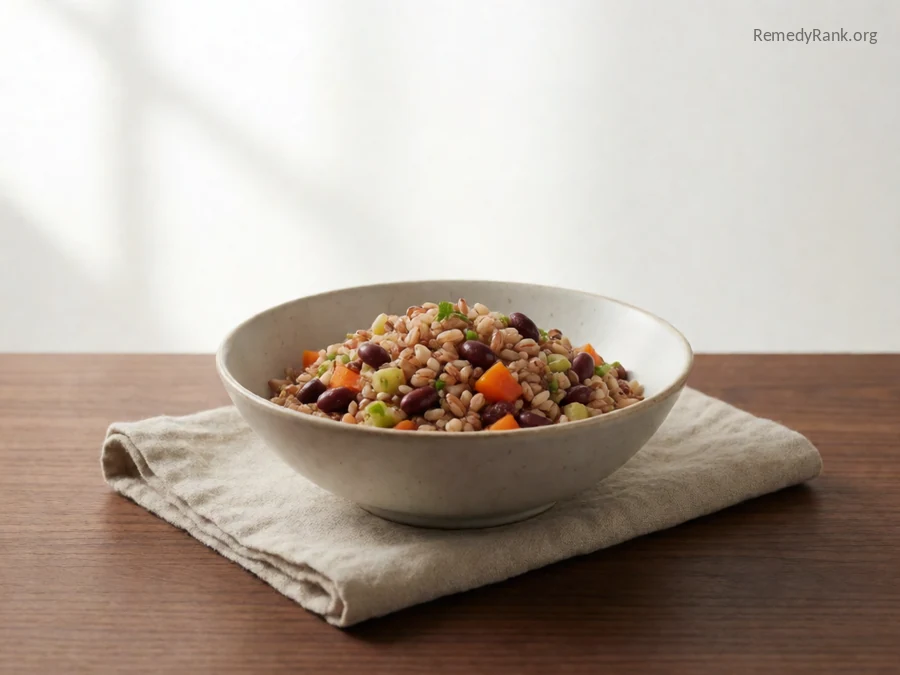
A meat-free diet built around grains, legumes, and vegetables that's associated with lower risk of several chronic conditions.
 ⤢
⤢📊 How it ranks (our editor score) — 69/100Tap to see the breakdown
👶 Safe for children?
This remedy carries age-related cautions. Please read them before giving it to a child, and check with your pediatrician or pharmacist first.
- Growing children, pregnant or breastfeeding women, and people with certain medical conditions should plan the diet with a doctor or dietitian.
🌱 What it is
A vegetarian diet replaces meat with plant-based proteins such as grains, legumes, soy foods, nuts, and vegetables.
📜 Where it comes from
Vegetarian eating has ancient roots in various religious and philosophical traditions, including certain Hindu and Buddhist practices, but its modern Western form owes much to the nineteenth-century Battle Creek health reform movement, whose leaders including Ellen White and John Harvey Kellogg promoted a meatless, grain-and-vegetable diet as part of whole-person wellness at the Battle Creek sanitarium. This tradition helped shape modern vegetarian and plant-based eating advocacy in the West.
✨ Why it's good for you
- Supports healthy cholesterol and heart health
- May lower risk of certain cancers and stones
- Rich in fiber, vitamins, and plant compounds
🙏 Begin with prayer
Prayer is the first remedy, not the last resort. Whether you are facing this yourself, caring for someone who is, or simply reading to understand — here is a simple prayer you are welcome to make your own, in your name or in theirs:
Creator God, thank You for grains and legumes and vegetables — the quiet abundance You planted in the earth long ago. Bless this way of eating, and let it strengthen this body without becoming my trust instead of You. Give me wisdom to eat well, consistency to keep at it, and gratitude for every ordinary meal. Whatever my health holds, may I glorify You in it. In Jesus' name, Amen.
“Whether therefore ye eat, or drink, or whatsoever ye do, do all to the glory of God.”— 1 Corinthians 10:31
🥄 How to use it
Build meals around whole grains, legumes (beans, lentils, soybeans), nuts, and a wide variety of vegetables and fruits, aiming for balanced protein across the day. Transition gradually and consider a registered dietitian's input for balanced nutrient intake, especially B12, iron, and omega-3s.
How much: Ongoing dietary pattern; not a dose-based remedy.
Why it works: Reducing animal protein and saturated fat while increasing fiber and plant nutrients is associated with lower cholesterol, and structured plant-basedEating mostly or only foods that come from plants — fruits, vegetables, beans, grains, nuts, and seeds. More → programs (such as those by Ornish and Esselstyn) have shown benefit for heart disease; the pattern is also linked with lower risk of certain cancers, osteoporosis, and kidney or gallstones.
⚠️ Cautions
- Plan for adequate vitamin B12, iron, zinc, and omega-3 intake, which can run low on a vegetarian diet without attention.
- A vegetarian diet supports but does not replace medical treatment for existing heart disease, cancer, or osteoporosis.
📚 Learn more
🌿 Deeper natural detail
Curated links coming for this one.
🩺 The conventional view
💬 Ask Remy about Vegetarian Diet
📚 Resource confidence
Based on mentions in health references
Your vote is saved. Source endorsement totals come from books and studies (+7 per book, +5 per article). You can change your vote anytime from this device.
💬 Comments & experiences
Share what worked for you — and reply or 👍 like the experiences that resonate. Comments get a quick review before they appear publicly, to keep things safe and honest. Please don't make medical claims.
💚 Have an experience to share? Create a free account to join the conversation — your words might be exactly what someone else needs. Reading is always open to everyone.
Know a remedy like this?
Share a structured suggestion and our team will review it for the site.
Suggest a similar remedy