Vegetable
Leafy Greens
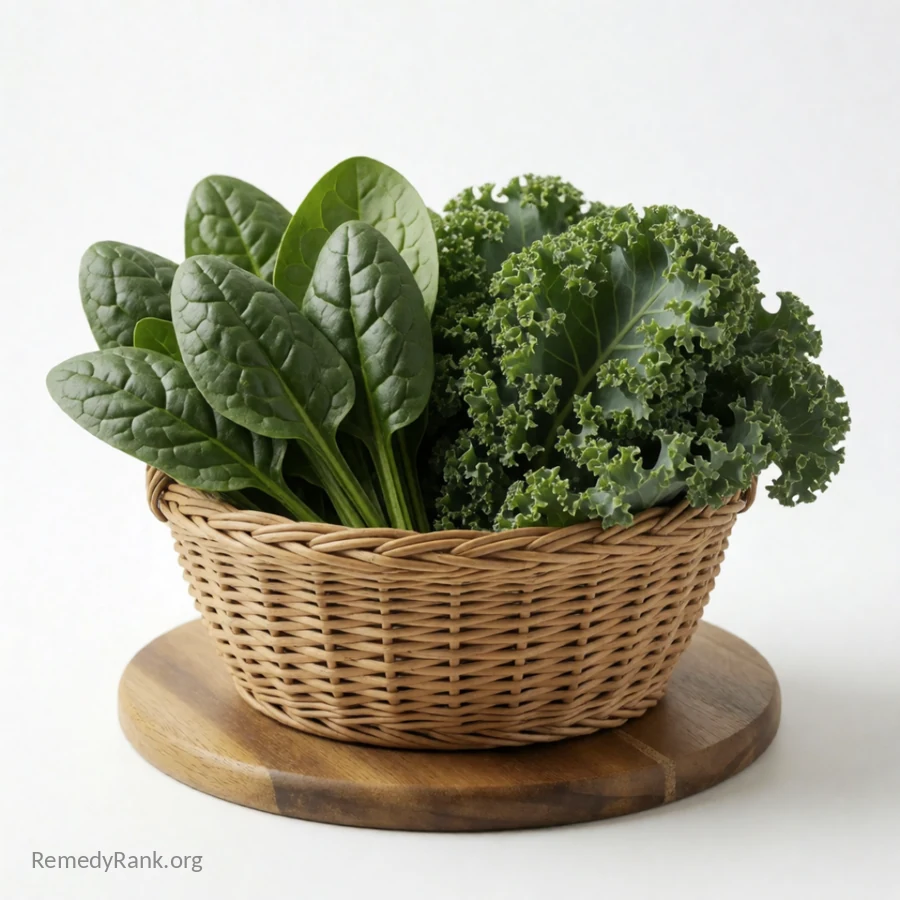
Spinach, kale, and other greens are some of the most nourishing foods you can eat.
 ⤢
⤢📊 How it ranks (our editor score) — 93/100Tap to see the breakdown
🌱 What it is
Leafy greens are the big, dark-green leaves of plants like spinach, kale, and collards. They are loaded with vitamins and minerals.
📜 Where it comes from
Dark leafy greens such as spinach, kale, and collards have been cultivated and eaten across many cultures for thousands of years, from the Mediterranean world's use of chard and related greens to African and Southern American traditions built around collards and mustard greens. They were valued in traditional diets as an accessible, hardy source of nourishment through much of the year. Their reputation as an especially healthful food has been reinforced steadily as modern nutrition science has studied their vitamin and mineral density.
✨ Why it's good for you
- Rich in magnesium for calm muscles and good sleep
- Full of vitamins for energy and immune health
- Very filling for very few calories
🥗 Nutrition
Per 1 cup cooked, average (180g) · about 40 calories
- Vitamin A 100%+ DV
- Vitamin K 100%+ DV
- Folate 15-65% DV (varies by green)
- Iron 6-20% DV
Source: USDA FoodData Central (typical range across spinach, kale, collards)
🥄 How to use it
Add a handful to smoothies, salads, soups, or stir-fries. Aim for some greens every day.
Why it works: Nutrition science points to leafy greens' dense concentration of vitamins, minerals, and antioxidantA helpful substance in colorful fruits and vegetables that protects your cells from everyday wear and tear. More → plant compounds as the basis for their broad benefits to heart, bone, and eye health.
🔬 Let's get technical
The scientific view, plainly reported. Hover a dotted word for its meaning.
What's in it
Leafy greens such as spinach and kale are notably high in vitamin K1 (), folate, dietary , and pigments including and , along with magnesium and other minerals bound within the plant's cellular structure.
Mechanism of action
Dietary from greens is converted by oral bacteria to and subsequently to in the body, supporting and studied effects on blood pressure and exercise efficiency. Vitamin K1 serves as an essential cofactor for the enzyme that carboxylates clotting factors in the liver, a step required for normal blood clotting, which is why intake can interact with vitamin K-dependent anticoagulant medications. Folate participates in , a set of biochemical reactions needed for DNA synthesis and for converting back to methionine, linking folate intake to both cell division and cardiovascular risk markers. and related are selectively taken up into the retina, where they concentrate as and are thought to filter high-energy light and contribute antioxidant protection to that tissue.
Current pharmacological applications
Large cohort studies consistently associate higher leafy green intake with lower rates of cardiovascular disease and slower age-related cognitive decline, though as observational research this shows association rather than proven causation. Dietary from greens and beet-derived sources has been studied in controlled trials for modest blood pressure reduction and improved exercise economy, among the more mechanistically well-supported effects in this category. The interaction between vitamin K1 intake and warfarin-type anticoagulants is well established clinically and is managed by keeping intake consistent rather than by avoiding greens altogether.
Every underlined word is collected on the technical glossary.
⚠️ Cautions
- If you take blood thinners, large changes in leafy greens can affect them -- keep your intake steady from day to day.
📚 Learn more
🌿 Deeper natural detail
🩺 The conventional view
💬 Ask Remy about Leafy Greens
📚 Resource confidence
Based on mentions in health references
Your vote is saved. Source endorsement totals come from books and studies (+7 per book, +5 per article). You can change your vote anytime from this device.
💬 Comments & experiences
Share what worked for you — and reply or 👍 like the experiences that resonate. Comments get a quick review before they appear publicly, to keep things safe and honest. Please don't make medical claims.
💚 Have an experience to share? Create a free account to join the conversation — your words might be exactly what someone else needs. Reading is always open to everyone.
Know a remedy like this?
Share a structured suggestion and our team will review it for the site.
Suggest a similar remedy