Nut
Walnut
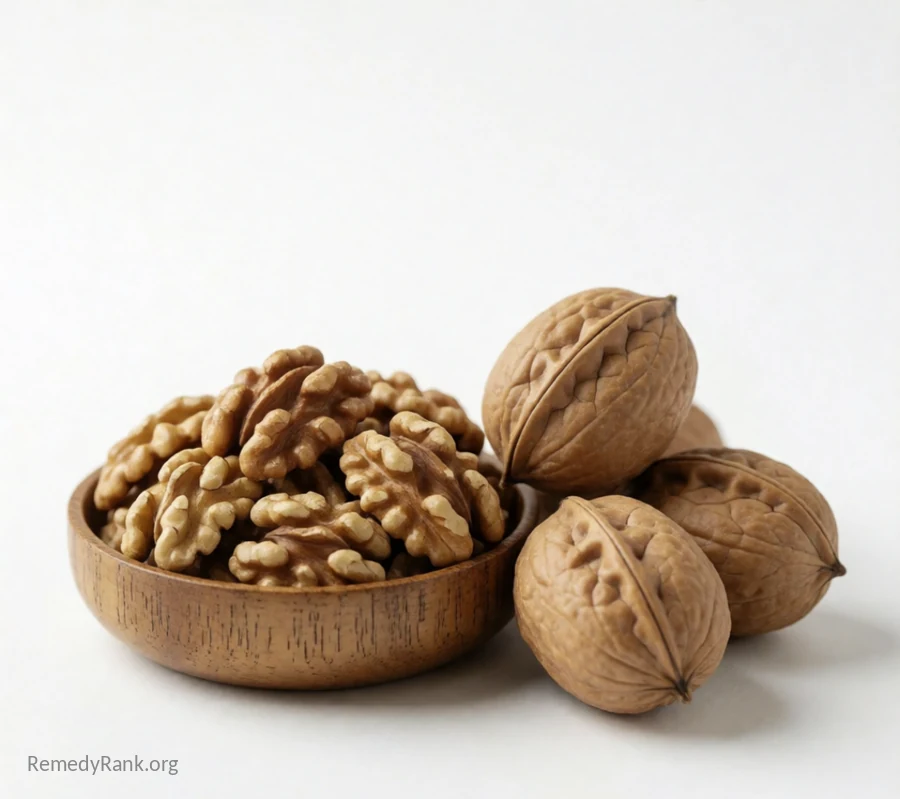
A brain-shaped nut rich in plant omega-3s, eaten as a snack to support the heart and the mind.
 ⤢
⤢📊 How it ranks (our editor score) — 82/100Tap to see the breakdown
🌱 What it is
Walnuts are tree nuts with a distinctive folded shape, prized for their rich, slightly bitter flavor and their plant-based omega-3 fat content.
📜 Where it comes from
Walnuts have been eaten since ancient times, prized by Greco-Roman writers for their rich flavor and traded along ancient routes from Persia to Europe. Folk tradition sometimes linked the nut's brain-like shape to brain health, a notion that modern nutrition research revisited when it identified the nut's plant-based omega fats.
✨ Why it's good for you
- May help support heart and blood vessel health
- May help support healthy brain function
- May help support healthy cholesterol levels
- May help support healthy inflammation levels
🥗 Nutrition
Per 1 oz, about 7 halves (28 g) · about 185 calories
- Omega-3 (ALA): 2.6 g
- Protein: 4.3 g
- Magnesium: 45 mg
- Fiber: 1.9 g
Source: USDA FoodData Central
🥄 How to use it
Eat a small handful (about 7 walnut halves) most days, on their own or sprinkled over oatmeal, salads, or yogurt.
How much: A small handful (about 7 halves) most days.
Why it works: Researchers point to walnuts' alpha-linolenic acid, a plant omega-3 fat, as supporting heart and brain health alongside their antioxidantA helpful substance in colorful fruits and vegetables that protects your cells from everyday wear and tear. More → compounds.
Show full details & how to prepare it
Walnuts are unusually rich in plant-basedEating mostly or only foods that come from plants — fruits, vegetables, beans, grains, nuts, and seeds. More → omega-3 fats, the kind that support both the heart and the brain — a fitting role for a nut that even looks a little like the organ it nourishes. A small daily handful is a simple, satisfying way to enjoy them.
Ways to prepare it
🔬 Let's get technical
The scientific view, plainly reported. Hover a dotted word for its meaning.
What's in it
Walnuts are notable among nuts for their content of , a plant-based omega-3 fatty acid, along with polyphenols such as and smaller amounts of gamma- (a form of vitamin E) and plant sterols. Ellagitannins are metabolized by gut bacteria into compounds called , which are of particular research interest.
Mechanism of action
can be partially converted in the body to the longer-chain omega-3 fatty acids EPA and DHA, though this conversion is inefficient in humans, so much of walnut's omega-3 contribution is thought to act through alpha-linolenic acid's own effects, which include modest reductions in circulating and mild anti-inflammatory activity. and their gut-derived metabolites have shown antioxidant and anti-inflammatory activity in laboratory studies, including effects on , and are an active area of microbiome-related research. Regular walnut consumption has been associated in cohort studies with favorable changes in blood lipid profiles and markers of vascular function, plausibly linked to this combination of fatty acids, polyphenols, and fiber, though whole-food effects are difficult to attribute to any single constituent.
Current pharmacological applications
Walnut consumption has been studied in numerous cohort studies and a smaller number of randomized trials examining cardiovascular risk markers, with fairly consistent associations between regular intake and improved lipid profiles and vascular measures. Effects on cognitive function are of growing research interest, based partly on the omega-3 and polyphenol content, but human trial evidence in this area remains preliminary. The cardiovascular association is among the better-supported nut-related findings in nutrition research, though as with most whole-food nutrition studies, causation is harder to establish than correlation.
Every underlined word is collected on the technical glossary.
⚠️ Cautions
- A whole food and very nourishing; calorie-dense, so keep to a small handful.
- A tree-nut allergy is a clear reason to avoid them.
- Store them well, as their healthy oils can go rancid over time.
📚 Learn more
🌿 Deeper natural detail
💬 Ask Remy about Walnut
📚 Resource confidence
Based on mentions in health references
Your vote is saved. Source endorsement totals come from books and studies (+7 per book, +5 per article). You can change your vote anytime from this device.
💬 Comments & experiences
Share what worked for you — and reply or 👍 like the experiences that resonate. Comments get a quick review before they appear publicly, to keep things safe and honest. Please don't make medical claims.
💚 Have an experience to share? Create a free account to join the conversation — your words might be exactly what someone else needs. Reading is always open to everyone.
Know a remedy like this?
Share a structured suggestion and our team will review it for the site.
Suggest a similar remedy