Food
High-Fiber Whole Foods
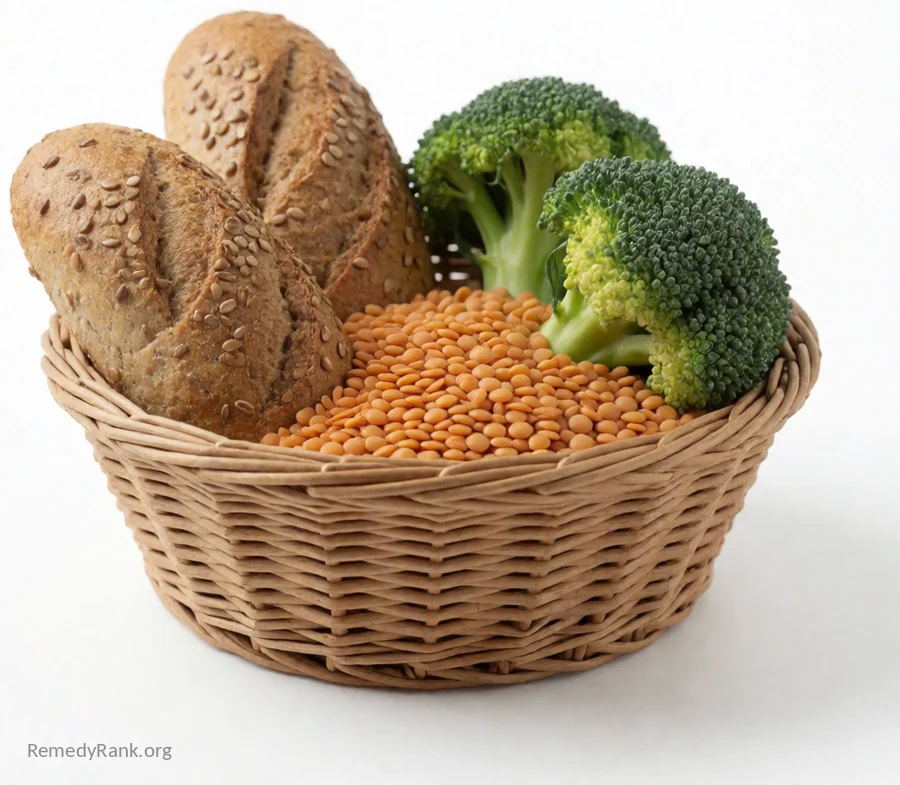
Fruits, vegetables, legumes, and whole grains keep digestion regular and feed healthy gut bacteria.
 ⤢
⤢📊 How it ranks (our editor score) — 93/100Tap to see the breakdown
🌱 What it is
High-fiber whole foods are fruits, vegetables, legumes, and whole grains eaten in their least processed form.
📜 Where it comes from
Whole, high-fiber eating has deep roots in traditional diets around the world, where grains, legumes, and vegetables were eaten largely unrefined out of necessity. The nineteenth-century Battle Creek health reform movement made plant-based, whole-food eating a central teaching, with figures like John Harvey Kellogg promoting whole grains over refined ones at Battle Creek. Modern nutrition science later confirmed much of what these traditional and reform diets had long assumed about fiber and digestion.
🥄 How to use it
Build meals around plants — beans, oats, berries, leafy greens. Increase fiber gradually with plenty of water.
Why it works: Nutrition scientists explain that fiber adds bulk and softness to stool, helping it move steadily through the gut, while certain fibers also ferment in the colon to feed beneficial bacteria that support overall digestive health.
🔬 Let's get technical
The scientific view, plainly reported. Hover a dotted word for its meaning.
What's in it
Dietary fiber is a catch-all term for plant and lignin that resist digestion by human enzymes. The soluble forms — pectins, , and psyllium — dissolve or swell in water to form a viscous gel, while the insoluble forms — cellulose, hemicellulose, and lignin — pass through largely intact, adding bulk. Whole grains, legumes, fruits, and vegetables typically supply a mix of both in varying ratios.
Mechanism of action
's gel-forming property slows and intestinal transit of nutrients, which flattens the post-meal and gives it a physical opportunity to bind in the small intestine, prompting the liver to draw more cholesterol out of circulation to synthesize replacement bile acids. adds mechanical bulk to stool and mechanically stimulates the intestinal wall, encouraging and reducing transit time. Both fiber types that reach the colon become substrate for resident bacteria, which ferment them into — chiefly acetate, propionate, and — that serve as an energy source for colon lining cells () and appear, in laboratory and animal studies, to have anti-inflammatory signaling effects beyond the gut.
Current pharmacological applications
The U.S. FDA permits a qualified health claim linking sources such as oat and psyllium to reduced risk of coronary heart disease, based on trial evidence of modest LDL-cholesterol reduction. Clinical trials of psyllium and other soluble fibers are also used in constipation-predominant and mixed irritable bowel syndrome research, generally showing benefit for stool regularity with more mixed results for abdominal pain. production from fermentable fiber is an active area of microbiome research, with early human and animal studies exploring links to insulin sensitivity and gut-barrier integrity, though this line of evidence remains preliminary relative to the cholesterol and regularity findings.
Every underlined word is collected on the technical glossary.
⚠️ Cautions
- Add fiber slowly to avoid gas and bloating.
📚 Learn more
🌿 Deeper natural detail
🔎 What this addresses
Where High-Fiber Whole Foods fits into a condition's cause-and-symptom picture — some conditions it works on the root cause of, others it mainly soothes.
💬 Ask Remy about High-Fiber Whole Foods
📚 Resource confidence
Based on mentions in health references
Your vote is saved. Source endorsement totals come from books and studies (+7 per book, +5 per article). You can change your vote anytime from this device.
💬 Comments & experiences
Share what worked for you — and reply or 👍 like the experiences that resonate. Comments get a quick review before they appear publicly, to keep things safe and honest. Please don't make medical claims.
💚 Have an experience to share? Create a free account to join the conversation — your words might be exactly what someone else needs. Reading is always open to everyone.
Know a remedy like this?
Share a structured suggestion and our team will review it for the site.
Suggest a similar remedy