Food
Magnesium-Rich Foods
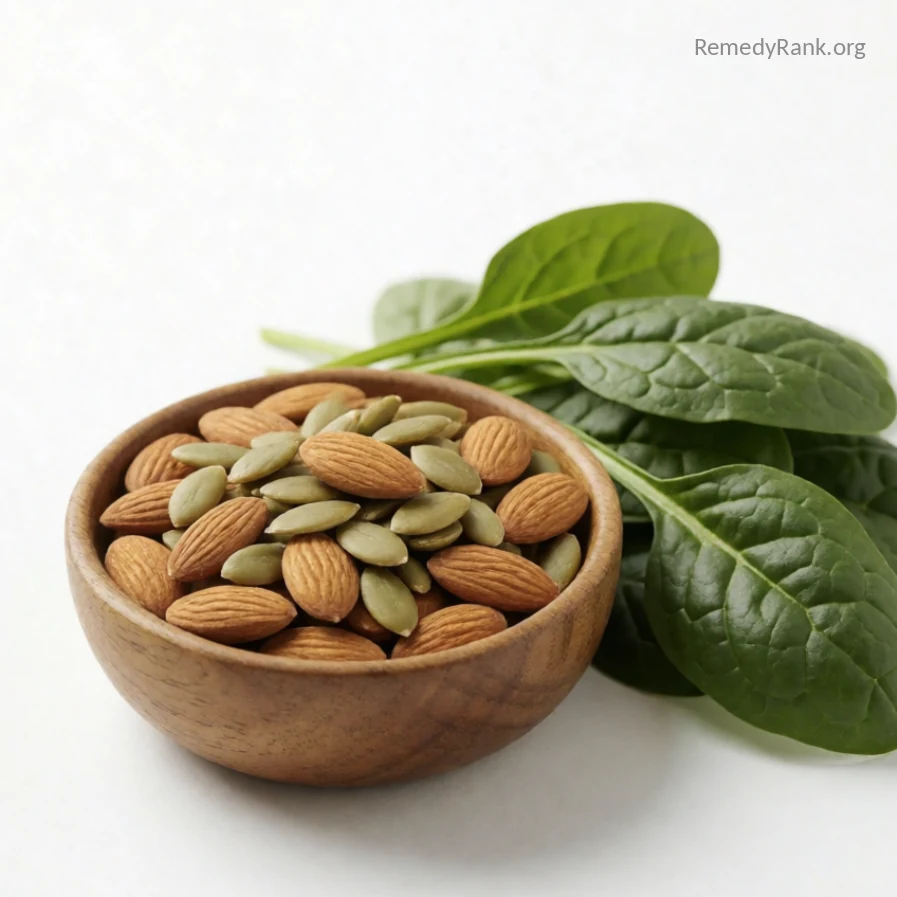
Leafy greens, nuts, seeds, and beans supply magnesium, which supports calm muscles and restful sleep.
 ⤢
⤢📊 How it ranks (our editor score) — 87/100Tap to see the breakdown
🌱 What it is
Magnesium-rich foods are plant foods like leafy greens, nuts, seeds, and beans that naturally supply this mineral.
📜 Where it comes from
Foods rich in magnesium, especially leafy greens, nuts, and legumes, have always been part of traditional plant-based diets, though the mineral itself was not identified and named until the early modern era of chemistry. The nineteenth-century Battle Creek health movement encouraged exactly these whole, plant-centered foods as a foundation of good living, well before magnesium's specific role was understood. Later nutrition science connected these traditional food patterns to the mineral's importance for muscle and nerve function.
🥄 How to use it
Eat a daily handful of nuts/seeds and plenty of greens; a warm magnesium-rich meal in the evening can aid sleep.
Why it works: Researchers point to magnesium's role in relaxing muscle fibers and calming nerve signaling, along with its involvement in melatonin regulation, as reasons magnesium-rich foods are often linked to steadier muscles and easier sleep.
🔬 Let's get technical
The scientific view, plainly reported. Hover a dotted word for its meaning.
What's in it
The relevant constituent here is the magnesium ion (Mg2+) itself, supplied through foods such as leafy greens, nuts, seeds, legumes, and whole grains, where it occurs bound within plant enzymes, chlorophyll, and phytate complexes rather than as a free salt. In the body, magnesium functions as a cofactor — a helper ion required for the catalytic activity — of more than 300 enzyme systems, most notably those that use or transfer ATP, the cell's basic energy currency.
Mechanism of action
Because so many ATP-dependent reactions require magnesium to stabilize the ATP molecule in an active conformation, adequate magnesium status touches processes as varied as protein synthesis, DNA replication, and energy metabolism. At the neuromuscular junction, magnesium competes with calcium for entry into muscle cells and blocks calcium influx through in nerve tissue, which tends to reduce nerve and muscle excitability — a plausible mechanistic basis for magnesium's traditional association with muscle relaxation, though the clinical translation of this cellular effect is not fully established. Magnesium also influences vascular tone, contributing to blood pressure regulation, and affects pancreatic insulin secretion and receptor signaling relevant to blood glucose control.
Current pharmacological applications
The NIH Office of Dietary Supplements identifies established roles for magnesium in blood pressure regulation, bone health, and blood glucose control, and lists an established Recommended Dietary Allowance based on population intake data. Clinical trials of magnesium supplementation for sleep quality and nocturnal leg cramps have produced mixed and generally modest results, and the evidence base is described by reviewers as limited relative to magnesium's more firmly established roles in cardiovascular and metabolic health. Different magnesium salts (oxide, citrate, glycinate) are also compared in research, since absorption efficiency varies meaningfully by form — a detail relevant to interpreting why supplement trial results are not always consistent with one another.
Every underlined word is collected on the technical glossary.
⚠️ Cautions
- Supplements can cause loose stools and may interact with medicines — prefer food first.
📚 Learn more
🌿 Deeper natural detail
🩺 The conventional view
💬 Ask Remy about Magnesium-Rich Foods
📚 Resource confidence
Based on mentions in health references
Your vote is saved. Source endorsement totals come from books and studies (+7 per book, +5 per article). You can change your vote anytime from this device.
💬 Comments & experiences
Share what worked for you — and reply or 👍 like the experiences that resonate. Comments get a quick review before they appear publicly, to keep things safe and honest. Please don't make medical claims.
💚 Have an experience to share? Create a free account to join the conversation — your words might be exactly what someone else needs. Reading is always open to everyone.
Know a remedy like this?
Share a structured suggestion and our team will review it for the site.
Suggest a similar remedy