Food
Probiotic Foods
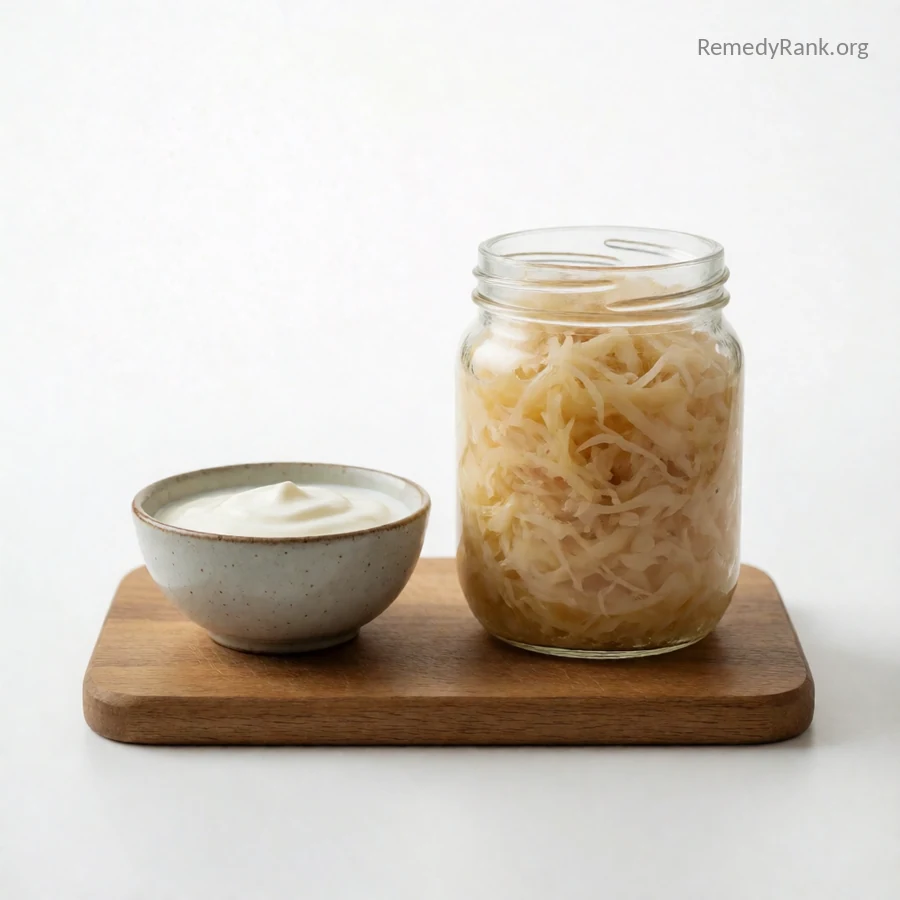
Lightly cultured plant foods add friendly bacteria that help keep digestion happy and balanced.
 ⤢
⤢📊 How it ranks (our editor score) — 83/100Tap to see the breakdown
🌱 What it is
Probiotic foods are lightly fermented plant foods that carry live, friendly bacteria cultures.
📜 Where it comes from
Fermented plant foods have been prepared for thousands of years across many cultures, from sauerkraut in Europe to various fermented vegetables in Asia, originally as a way to preserve harvests before refrigeration existed. These foods were valued in traditional diets for their tang and keeping quality long before anyone understood the bacteria responsible. Twentieth-century microbiology later explained why these old preservation methods also supported digestion.
🥄 How to use it
Enjoy small servings of foods like sauerkraut, kimchi, or plant-basedEating mostly or only foods that come from plants — fruits, vegetables, beans, grains, nuts, and seeds. More → yogurt. Start with a little and build up slowly.
Why it works: Researchers explain that the live bacteria in fermented foods can add to and support the community of beneficial microbes already living in the gut, which plays a role in digestionHow your body breaks food down into pieces small enough to use for energy. More → and overall gut balance.
🔬 Let's get technical
The scientific view, plainly reported. Hover a dotted word for its meaning.
What's in it
Cultured plant foods like fermented vegetables, kefir-style drinks, and cultured soy carry live populations of lactic-acid bacteria, chiefly Lactobacillus and Bifidobacterium species, sometimes alongside the yeast Saccharomyces boulardii. During fermentation these microbes also generate their own metabolic byproducts—organic acids, , and such as —that persist in the food alongside the living cells. Strain identity matters a great deal here: two products both labeled 'probiotic' can contain genetically distinct organisms with different downstream effects.
Mechanism of action
Once ingested, these bacteria compete with resident and transient gut flora for attachment sites and nutrients, a process sometimes called competitive exclusion, while some strains secrete that directly suppress unwanted organisms. Fermentation of dietary fiber by these bacteria in the colon yields , which lower pH, serve as an energy source for , and appear to influence local immune signaling. Certain strains also interact with , modulating output in ways that are strain-specific rather than generalizable across the whole probiotic category. Because the microbiome is so individualized, effects observed in one study population do not automatically transfer to another, and colonization tends to be transient rather than permanent, requiring repeated intake to sustain any measurable shift.
Current pharmacological applications
The clearest evidence supports specific strains for reducing the incidence of antibiotic-associated diarrhea and for shortening infant colic episodes with Lactobacillus reuteri, per NCCIH-summarized trial data. Evidence for irritable bowel syndrome, general immune support, and periodontal outcomes remains mixed and is considered inconclusive by NIH reviewers. In the United States, probiotic foods and supplements are regulated as foods or dietary supplements rather than drugs, meaning manufacturers are not required to demonstrate efficacy for any specific condition before marketing them.
Every underlined word is collected on the technical glossary.
⚠️ Cautions
- Add them slowly so your gut can adjust.
- Choose low-salt versions when you can.
- Skip them if a doctor has told you to avoid cultured foods.
📚 Learn more
🌿 Deeper natural detail
🔎 What this addresses
Where Probiotic Foods fits into a condition's cause-and-symptom picture — some conditions it works on the root cause of, others it mainly soothes.
💬 Ask Remy about Probiotic Foods
📚 Resource confidence
Based on mentions in health references
Your vote is saved. Source endorsement totals come from books and studies (+7 per book, +5 per article). You can change your vote anytime from this device.
💬 Comments & experiences
Share what worked for you — and reply or 👍 like the experiences that resonate. Comments get a quick review before they appear publicly, to keep things safe and honest. Please don't make medical claims.
💚 Have an experience to share? Create a free account to join the conversation — your words might be exactly what someone else needs. Reading is always open to everyone.
Know a remedy like this?
Share a structured suggestion and our team will review it for the site.
Suggest a similar remedy