Herb
Turmeric
A golden spice long valued for supporting the body's healthy, balanced response to inflammation.
 ⤢
⤢📊 How it ranks (our editor score) — 82/100Tap to see the breakdown
🌱 What it is
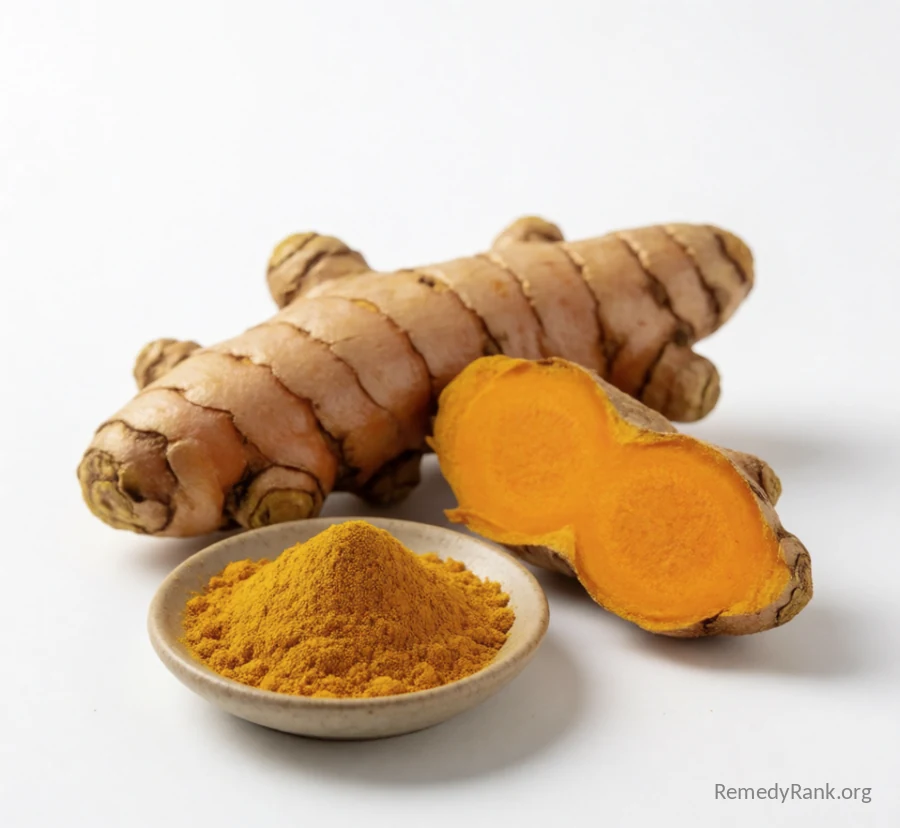
Turmeric is a root, like ginger, but bright orange-yellow inside. Ground into powder, it gives curry its color.
📜 Where it comes from
Turmeric has been used for thousands of years in Ayurveda and Traditional Chinese Medicine, where the golden root was valued for supporting digestion and easing swelling and joint discomfort. It also holds a long place in South Asian cooking and religious ceremony. Turmeric entered Western herbal and nutritional interest more prominently in the twentieth century as trade and immigration carried its culinary and medicinal use worldwide.
✨ Why it's good for you
- Studied for supporting healthy inflammation levels
- Adds warm color and flavor to meals
- Pairs well with black pepper, which helps your body use it
🥗 Nutrition
Per 1 tsp ground (3g) · about 9 calories
- Curcumin ~95mg
- Iron 1.2mg
- Manganese 0.5mg
- Potassium 57mg
Source: USDA FoodData Central
🥄 How to use it
Stir into soups, rice, or a warm 'golden milk.' Add a pinch of black pepper, which helps your body use it.
How much: A practical food amount is ½–1 teaspoon of turmeric powder a day, always with a pinch of black pepper and a little fat. Standardized curcumin capsules are stronger, so it's worth following the product label closely.
Why it works: Powerful anti-inflammatoryA food or habit that helps calm swelling and redness in the body. More → that may support brain health long term.
Show full details & how to prepare it
Turmeric is the golden spice that gives curry its color, and its prized compound is curcumin, which has been studied for helping the body keep its inflammationThe body's natural response to injury — like redness, swelling, or heat around a sore spot. More → response calm and balanced. That is why turmeric is so often turned to for everyday stiffness and achy joints, and why it has been part of traditional kitchens and healing for centuries.
Curcumin on its own is hard for the body to absorb, but two simple kitchen tricks change that dramatically: a pinch of black pepper (which contains piperine) can boost absorption many times over, and a little fat — plant milk, olive oil, coconut — helps carry it in. Gentle warmth, as in a simmered 'golden milk,' rounds out the flavor.
Food amounts are wonderfully safe. Concentrated supplements are a different matter: large doses can thin the blood and upset the stomach, which is worth knowing if you're on blood thinners, have gallstones, or have surgery coming up.
Ways to prepare it
🔬 Let's get technical
The scientific view, plainly reported. Hover a dotted word for its meaning.
What's in it
Turmeric's color and much of its studied bioactivity trace to curcuminoids, a group of compounds of which is the dominant member, alongside related demethoxycurcumin and bisdemethoxycurcumin. These compounds make up only a small percentage of turmeric rhizome by weight and are poorly absorbed in their native form, which is why many supplement formulations pair curcumin with piperine from black pepper or with lipid- and nanoparticle-based delivery systems intended to raise .
Mechanism of action
In laboratory and animal studies, has been shown to inhibit the signaling pathway, a complex that upregulates production of pro-inflammatory such as ; meta-analyses of clinical trials report measurable reductions in circulating TNF-alpha with curcumin supplementation. Curcumin also acts as an antioxidant capable of scavenging , and in some cell-line studies it modulates the signaling pathway associated with cell proliferation. A persistent limitation across this research is curcumin's poor intrinsic —it is rapidly metabolized and cleared—so the concentrations shown to be active in a test tube are difficult to sustain in human blood without specialized formulations, some of which NCCIH notes carry their own liver-safety concerns at high doses.
Current pharmacological applications
Oral turmeric and extracts have been evaluated in multiple meta-analyses of randomized trials for knee osteoarthritis pain and stiffness, with several reporting effects comparable to over-the-counter in short-term outcomes. Early-phase clinical trials have paired curcumin with chemotherapy agents such as gemcitabine and docetaxel to test safety and tolerability, generally requiring high doses to reach measurable systemic levels. Preliminary research has also explored curcumin for oral mucositis related to cancer treatment and for markers of nonalcoholic fatty liver disease, though NCCIH characterizes the evidence in these areas as still requiring higher-quality confirmation.
Every underlined word is collected on the technical glossary.
⚠️ Cautions
- Large supplement doses may thin the blood or upset the stomach — food amounts are gentlest.
- Concentrated turmeric supplements may not suit people who take blood thinners or have gallstones.
📚 Learn more
🌿 Deeper natural detail
🩺 The conventional view
💬 Ask Remy about Turmeric
📚 Resource confidence
Based on mentions in health references
Your vote is saved. Source endorsement totals come from books and studies (+7 per book, +5 per article). You can change your vote anytime from this device.
💬 Comments & experiences
Share what worked for you — and reply or 👍 like the experiences that resonate. Comments get a quick review before they appear publicly, to keep things safe and honest. Please don't make medical claims.
💚 Have an experience to share? Create a free account to join the conversation — your words might be exactly what someone else needs. Reading is always open to everyone.
Know a remedy like this?
Share a structured suggestion and our team will review it for the site.
Suggest a similar remedy