Vegetable
Spinach
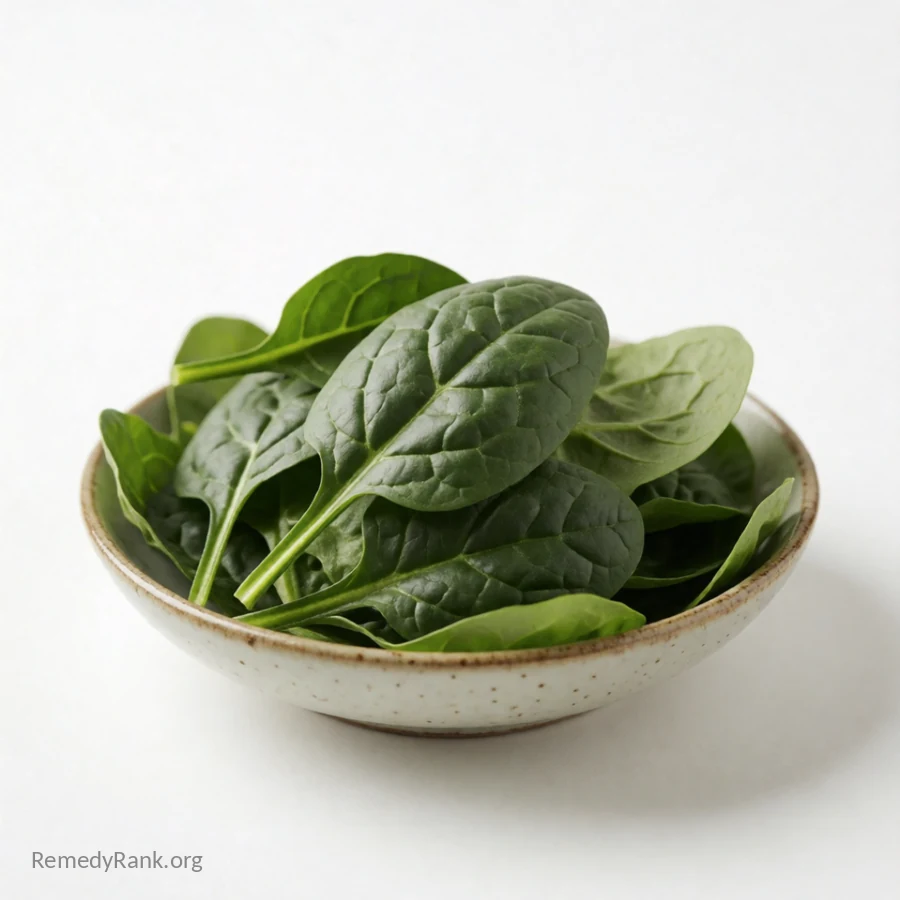
A tender dark-green leaf packed with iron, folate, and eye-protecting carotenoids — one of the simplest ways to strengthen the blood and the body.
 ⤢
⤢📊 How it ranks (our editor score) — 88/100Tap to see the breakdown
🌱 What it is
Spinach is a leafy green vegetable that grows quickly in cool weather and is eaten raw or cooked. It's one of the most nutrient-dense leafy greens commonly available.
📜 Where it comes from
Spinach originated in ancient Persia before spreading through the Middle East and into Mediterranean and European cooking by the medieval period, carried along trade routes and eventually into monastery gardens. It became closely associated with iron and strength in twentieth-century popular culture, most famously through the Popeye cartoons of the 1930s, which encouraged generations of children to eat their greens. It remains one of the most widely recommended leafy greens in modern nutrition guidance.
✨ Why it's good for you
- A good source of iron to help support healthy blood
- Rich in folate, important for cell growth
- Contains lutein and zeaxanthin, which may help support eye health
- Provides vitamin K and other antioxidants
🥗 Nutrition
Per 1 cup raw (30g) spinach · about 7 calories
- Iron 0.8mg
- Folate 58mcg
- Vitamin K 145mcg
- Vitamin A 141mcg
Source: USDA FoodData Central
🥄 How to use it
Eat a generous handful most days — raw in salads, wilted into soups, or stirred into a smoothie. A squeeze of lemon or other vitaminA natural substance your body needs in small amounts to stay healthy, like vitamin C or D. More →-C food alongside helps your body absorb the iron.
How much: A cooked cup (or two raw cups) several times a week is a gentle, generous serving. Cooking shrinks it dramatically, so a big raw handful becomes just a few spoonfuls.
Why it works: Nutrition science points to spinach's iron and folate content as support for healthy blood formation, while its lutein and other carotenoids are studied for their role in protecting the eyes.
Show full details & how to prepare it
Spinach is one of the great quiet workhorses of the garden. It carries plant iron and folate that the body uses to build healthy red blood cells, which is why it has long been valued for tiredness and thin, low blood. It is also rich in lutein and zeaxanthin, two carotenoids that gather in the back of the eye and help shield it from age-related wear.
The plant iron in spinach is absorbed better when you pair it with vitamin C, so a squeeze of lemon, some tomato, or a few strawberries on the side makes a real difference. A little cooking softens the oxalates and makes the greens easier on sensitive stomachs.
Ways to prepare it
🔬 Let's get technical
The scientific view, plainly reported. Hover a dotted word for its meaning.
What's in it
Spinach is rich in , folate, and the and , along with vitamin K1 and moderate amounts of . Like kale, its iron and calcium are bound in part by oxalic acid, which reduces the fraction of each mineral that is actually absorbed compared to their total measured content.
Mechanism of action
Folate functions as a cofactor in , supporting DNA synthesis and reactions, and adequate intake is specifically associated with reduced risk of in early pregnancy, a well-established mechanistic link. and , as in kale, concentrate in the , where they are thought to filter blue light and provide local antioxidant protection, an area studied in relation to age-related macular degeneration. Dietary from spinach can be converted by oral bacteria and then further in the body to , a molecule involved in , and this pathway has been proposed to explain modest reductions in blood pressure observed after nitrate-rich vegetable intake in some studies. Spinach's is less efficiently absorbed than heme iron from animal sources, and its absorption is further reduced by the oxalate content, though pairing with vitamin C-rich foods can improve uptake by keeping iron in its more absorbable reduced form.
Current pharmacological applications
Folate's role in preventing is one of the most firmly established nutrient-disease relationships in nutrition science, supported by both mechanistic and large-scale population data. and research parallels that for kale, with cohort and supplement-trial data suggesting a protective association with macular health, though whole-food spinach-specific trials are limited. and blood-pressure research includes a number of small randomized trials showing modest, short-term reductions in blood pressure after nitrate-rich vegetable juice or leafy green intake, though effect sizes are modest and long-term outcome data are limited.
Every underlined word is collected on the technical glossary.
⚠️ Cautions
- Spinach is high in oxalates, which can feed certain kidney stones — if you are prone to them, eat it in moderation and drink plenty of water.
- Its vitamin K can interfere with blood-thinning medicine like warfarin — keep your intake steady and talk with your doctor.
📚 Learn more
🌿 Deeper natural detail
Curated links coming for this one.
🩺 The conventional view
💬 Ask Remy about Spinach
📚 Resource confidence
Based on mentions in health references
Your vote is saved. Source endorsement totals come from books and studies (+7 per book, +5 per article). You can change your vote anytime from this device.
💬 Comments & experiences
Share what worked for you — and reply or 👍 like the experiences that resonate. Comments get a quick review before they appear publicly, to keep things safe and honest. Please don't make medical claims.
💚 Have an experience to share? Create a free account to join the conversation — your words might be exactly what someone else needs. Reading is always open to everyone.
Know a remedy like this?
Share a structured suggestion and our team will review it for the site.
Suggest a similar remedy