Herb
Milk Thistle
A spiny seed long valued as a gentle support and protector for the liver.
 ⤢
⤢📊 How it ranks (our editor score) — 77/100Tap to see the breakdown
🌱 What it is
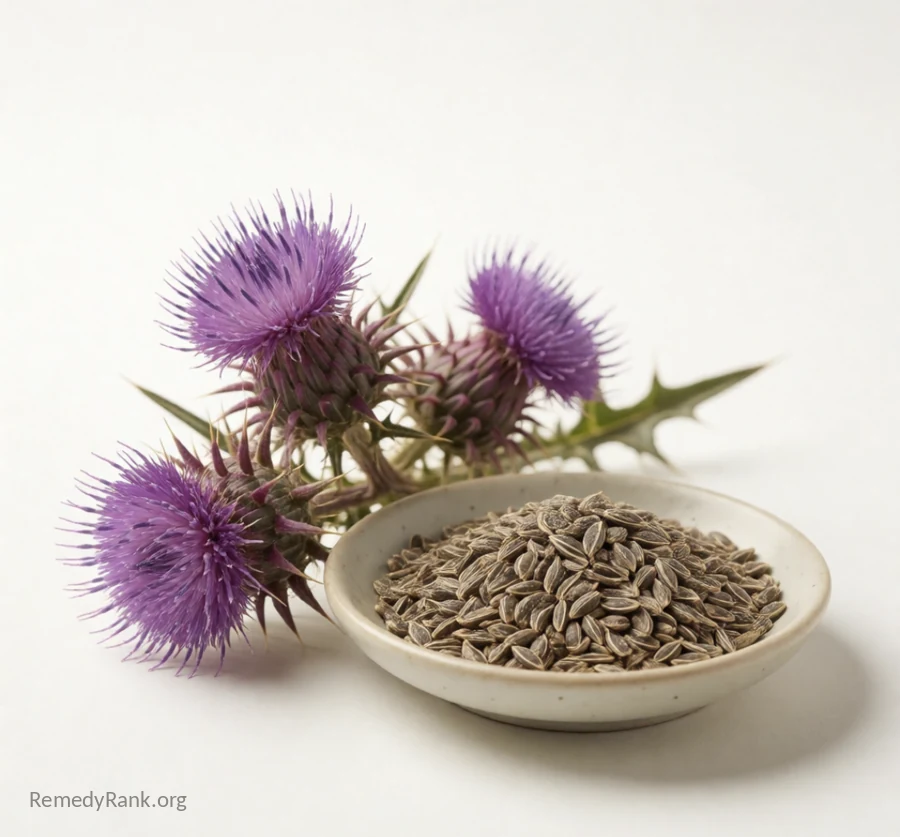
Milk thistle is a prickly plant whose seeds contain silymarin, a compound that has been studied for its supportive effect on liver cells. The seeds are usually taken as a standardized extract.
📜 Where it comes from
Milk thistle has been used since Greco-Roman times, when physicians including Pliny the Elder noted its usefulness for liver complaints, and its spiny leaves with white veins were traditionally thought to protect the plant, and by association the liver, from harm. Medieval European herbalists kept milk thistle seed as a standard liver remedy. Its long folk reputation for liver support has continued into modern herbal use.
✨ Why it's good for you
- Traditionally used to support liver health
- May help support the liver's everyday filtering work
- Often used alongside a healthy diet for overall wellness
- May help support healthy digestion
🥗 Nutrition
Per 1 tsp ground seeds (3g) · about 15 calories
- Silymarin (bioactive)
- Fiber ~1g
- Healthy fats
- Vitamin E
Source: Nutrition estimate (per typical serving)
🥄 How to use it
Take a standardized milk-thistle (silymarin) extract per the product label, usually with food; the seeds can also be ground into food or steeped, though extracts are stronger.
How much: Standardized silymarin extracts are taken per the product label, usually with meals.
Why it works: Silymarin has antioxidantA helpful substance in colorful fruits and vegetables that protects your cells from everyday wear and tear. More → and anti-inflammatoryA food or habit that helps calm swelling and redness in the body. More → properties that protect and repair liver cells.
Show full details & how to prepare it
Milk thistle is a tall, spiny plant with purple flowers, and its small seeds hold a group of compounds called silymarin that have a long reputation for supporting and protecting the liver — the body's hard-working filter.
It's most effective as a standardized extract, taken with food. It's a gentle, supportive herbA plant, or part of one, used for flavor, food, or gentle health support. More → rather than a cure: for hepatitis or liver disease, people typically use it as an everyday support alongside the medical treatment those conditions usually receive, and anyone on liver-processed medicines should check for interactions.
Ways to prepare it
🔬 Let's get technical
The scientific view, plainly reported. Hover a dotted word for its meaning.
What's in it
Milk thistle seeds contain , a mixture of that includes (also called silybin) as its principal and most-studied component, along with isosilybin, silydianin, and silychristin.
Mechanism of action
is proposed to act as a membrane-stabilizing agent on , competing with toxins for uptake transporters on the cell surface and thereby reducing entry of certain hepatotoxic compounds into liver cells, an effect best documented for Amanita mushroom toxin in both animal studies and clinical poisoning cases. It also scavenges and has been shown in cell studies to stimulate hepatocyte protein synthesis, supporting a role in cellular repair after injury. compounds additionally show anti-inflammatory activity by down-regulating and reducing pro-inflammatory production in liver tissue in preclinical models. Oral of silymarin is poor due to limited water solubility, which has driven development of phospholipid-complexed formulations intended to improve absorption in human studies.
Current pharmacological applications
Intravenous is an established treatment used clinically for confirmed Amanita phalloides mushroom poisoning, with a substantial supportive case-series and animal-study literature. Oral milk thistle for chronic liver conditions such as hepatitis C or non-alcoholic fatty liver disease has been tested in numerous randomized trials with mixed results, and larger, well-controlled trials have generally failed to show consistent improvement in liver enzyme levels or clinical outcomes, so its role in chronic liver disease is considered supported by preclinical mechanism more than by clinical outcome evidence.
Every underlined word is collected on the technical glossary.
⚠️ Cautions
- Generally well tolerated; may cause mild loosening of the stool at first.
- Those allergic to daisies or ragweed may react; may interact with some medicines processed by the liver.
- Supports liver health as an everyday tonic, while hepatitis and liver disease are conditions that are managed with dedicated medical treatment.
📚 Learn more
🌿 Deeper natural detail
💬 Ask Remy about Milk Thistle
📚 Resource confidence
Based on mentions in health references
Your vote is saved. Source endorsement totals come from books and studies (+7 per book, +5 per article). You can change your vote anytime from this device.
💬 Comments & experiences
Share what worked for you — and reply or 👍 like the experiences that resonate. Comments get a quick review before they appear publicly, to keep things safe and honest. Please don't make medical claims.
💚 Have an experience to share? Create a free account to join the conversation — your words might be exactly what someone else needs. Reading is always open to everyone.
Know a remedy like this?
Share a structured suggestion and our team will review it for the site.
Suggest a similar remedy