Nut
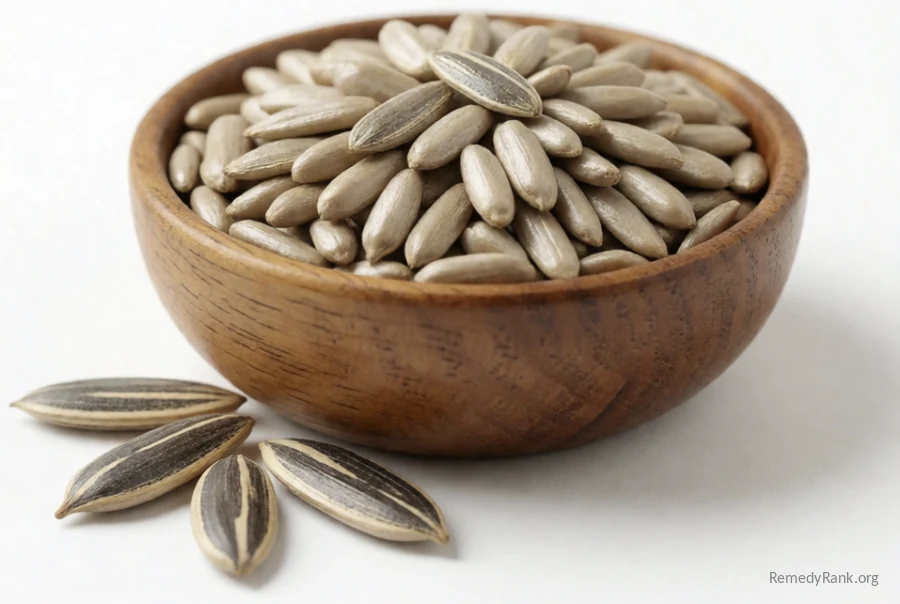
Sunflower Seed
A small seed rich in vitamin E and healthy fats, supporting the heart, skin, and a calm nervous system.
 ⤢
⤢📊 How it ranks (our editor score) — 94/100Tap to see the breakdown
🌱 What it is
Sunflower seeds are the small, oil-rich seeds of the sunflower, eaten raw or roasted as a wholesome snack.
📜 Where it comes from
Sunflowers were first cultivated by Native American peoples in North America, who used the seeds as a food source and for oil long before European settlers brought the plant back to Europe in the 1500s. It later became a major agricultural crop in Russia and Eastern Europe, prized as an affordable, nourishing seed.
✨ Why it's good for you
- May help support skin health with vitamin E
- May help support heart health with healthy fats
- May help support a calm nervous system with magnesium
- May help support healthy cholesterol levels
🥗 Nutrition
Per 1 oz (~28g) · about 165 calories
- Vitamin E 10mg
- Magnesium 91mg
- Protein 5.5g
- Healthy fats 14g
Source: USDA FoodData Central
🥄 How to use it
Eat a small handful of raw or dry-roasted unsalted sunflower seeds as a snack, or sprinkle them on salads, oatmeal, and yogurt.
How much: A small handful most days.
Why it works: Sunflower seeds are rich in vitamin E, an antioxidantA helpful substance in colorful fruits and vegetables that protects your cells from everyday wear and tear. More → nutritionists say helps protect cells and support skin health, alongside healthy fats and magnesium thought to support the heart and a steady mood.
Show full details & how to prepare it
Sunflower seeds are rich in vitamin E (a skin- and heart-protecting antioxidantA helpful substance in colorful fruits and vegetables that protects your cells from everyday wear and tear. More →), healthy fats, and magnesium, which supports a calm nervous system. A small daily handful is a satisfying, nourishing snack.
Ways to prepare it
🔬 Let's get technical
The scientific view, plainly reported. Hover a dotted word for its meaning.
What's in it
Sunflower seeds are notably rich in alpha-, the most biologically active form of vitamin E, along with linoleic acid (a polyunsaturated fatty acid), , magnesium, selenium, and .
Mechanism of action
Alpha- is incorporated into cell membranes, where it acts as a lipid-soluble antioxidant that intercepts before they can propagate chain reactions. share a structural resemblance to cholesterol and compete with it for absorption in the small intestine, modestly reducing the fraction absorbed. Linoleic acid serves as a precursor for signaling molecules, while magnesium acts as a cofactor in hundreds of enzymatic reactions involved in nerve and muscle function. Selenium is incorporated into glutathione peroxidase, an antioxidant enzyme that works alongside vitamin E to limit oxidative membrane damage.
Current pharmacological applications
Sunflower seed consumption has been studied mainly through cohort and dietary-pattern research linking regular nut and seed intake to favorable cardiovascular risk markers, though isolating the seed's independent contribution from overall diet quality is difficult. Its vitamin E content is also examined for antioxidant status and skin health, with most supporting evidence coming from nutrient-level rather than whole-food trials.
Every underlined word is collected on the technical glossary.
⚠️ Cautions
- A whole food and nourishing; calorie-dense, so keep to a small handful.
- Choose unsalted to keep sodium down.
- A rare seed allergy is possible.
📚 Learn more
🌿 Deeper natural detail
🩺 The conventional view
💬 Ask Remy about Sunflower Seed
📚 Resource confidence
Based on mentions in health references
Your vote is saved. Source endorsement totals come from books and studies (+7 per book, +5 per article). You can change your vote anytime from this device.
💬 Comments & experiences
Share what worked for you — and reply or 👍 like the experiences that resonate. Comments get a quick review before they appear publicly, to keep things safe and honest. Please don't make medical claims.
💚 Have an experience to share? Create a free account to join the conversation — your words might be exactly what someone else needs. Reading is always open to everyone.
Know a remedy like this?
Share a structured suggestion and our team will review it for the site.
Suggest a similar remedy