Supplement
Vitamin C
An antioxidant vitamin traditionally used to support healing, immune resilience, and skin repair.
 ⤢
⤢📊 How it ranks (our editor score) — 69/100Tap to see the breakdown
🌱 What it is
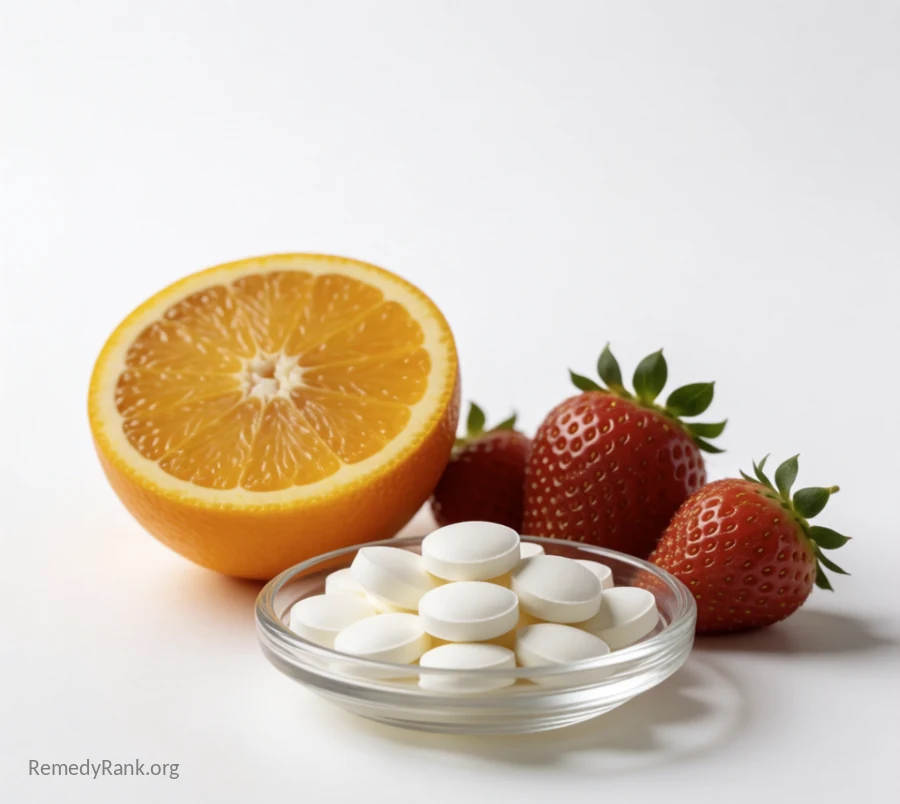
Vitamin C (ascorbic acid) is a water-soluble antioxidant vitamin found in citrus, peppers, and berries, also available as a supplement or topical spray.
📜 Where it comes from
Vitamin C's story is tied to the centuries-old scourge of scurvy among sailors, with British naval surgeon James Lind demonstrating in the eighteenth century that citrus fruit could prevent the disease, long before the vitamin itself was chemically identified in the 1930s. This discovery cemented vitamin C's reputation for supporting healing and immune resilience, a reputation that has only grown through subsequent nutritional research.
✨ Why it's good for you
- Supports immune function and healing
- Helps strengthen blood vessel walls
- Needed for collagen and skin repair
- May ease minor allergic-type skin reactions
🙏 Begin with prayer
Prayer is the first remedy, not the last resort. Whether you are facing this yourself, caring for someone who is, or simply reading to understand — here is a simple prayer you are welcome to make your own, in your name or in theirs:
Creator God, thank You for vitamin C and the way You built healing into this body's very design. Bless its use as I recover from this fever, wound, burn, or bruise, and knit together what is torn in Your good time. Give me patience with the slowness of healing, and gratitude for a body that mends at all. In Jesus' name, Amen.
“Heal me, O LORD, and I shall be healed; save me, and I shall be saved: for thou art my praise.”— Jeremiah 17:14
🥄 How to use it
Take orally as directed on the label; a diluted solution can be sprayed on minor burns or applied to support skin healing.
How much: 500-1000 mg daily is a common general-support amount; follow product label or reduce toward bowel tolerance.
Why it works: Supports immune defenses, strengthens blood vessel walls, is needed for collagen production, and has mild antihistamine activity.
🔬 Let's get technical
The scientific view, plainly reported. Hover a dotted word for its meaning.
What's in it
Vitamin C is the common name for L-, a water-soluble vitamin that the human body cannot synthesize on its own, unlike most other mammals, due to a mutation in the enzyme pathway that would otherwise produce it from glucose. It exists in food and supplements primarily as ascorbic acid or its oxidized form, dehydroascorbic acid, both of which are biologically active.
Mechanism of action
functions as a cofactor for enzymes involved in synthesis, specifically prolyl and lysyl hydroxylase, which stabilize the collagen triple helix; this is why vitamin C deficiency classically manifests as connective-tissue and wound-healing problems, historically seen as scurvy. As a water-soluble antioxidant, ascorbic acid donates electrons to neutralize and also helps regenerate oxidized vitamin E back to its active form, giving it a role in a broader antioxidant network rather than acting in isolation. It additionally functions as a cofactor in norepinephrine and carnitine synthesis and enhances the absorption of non-heme (plant-based) iron in the gut by keeping iron in its more absorbable reduced form. Immune-related roles include accumulation in white blood cells such as , where it is thought to support function and may help regulate the inflammatory response, though the precise contribution of supplemental vitamin C to immune function in well-nourished individuals is still debated in the literature.
Current pharmacological applications
Vitamin C's role in preventing deficiency-related connective tissue disease is well established, but its use for common cold prevention and treatment has been studied extensively with mixed results: large trials and meta-analyses generally show little effect on cold incidence in the general population, with a more consistent modest reduction in duration and severity of symptoms once a cold has started, and a more pronounced preventive effect reported in specific populations under heavy physical stress, such as marathon runners. Research on vitamin C and wound healing, skin support, and iron absorption is comparatively well supported by mechanistic and clinical data. Higher-dose intravenous vitamin C for conditions such as cancer-related fatigue remains an active but still preliminary area of clinical research.
Every underlined word is collected on the technical glossary.
⚠️ Cautions
- Very high doses can cause digestive upset or diarrhea — reduce the dose if this happens.
- People with kidney stone history should check with a doctor before high-dose use. Shingles and frostbite need prompt medical evaluation and treatment -- vitamin C may be a supportive measure alongside care but isn't a substitute for it.
📚 Learn more
🌿 Deeper natural detail
🩺 The conventional view
💬 Ask Remy about Vitamin C
📚 Resource confidence
Based on mentions in health references
Your vote is saved. Source endorsement totals come from books and studies (+7 per book, +5 per article). You can change your vote anytime from this device.
💬 Comments & experiences
Share what worked for you — and reply or 👍 like the experiences that resonate. Comments get a quick review before they appear publicly, to keep things safe and honest. Please don't make medical claims.
💚 Have an experience to share? Create a free account to join the conversation — your words might be exactly what someone else needs. Reading is always open to everyone.
Know a remedy like this?
Share a structured suggestion and our team will review it for the site.
Suggest a similar remedy