Food
Local Honey
A daily spoonful of raw, local honey is a favorite folk habit some people lean on around allergy season.
 ⤢
⤢📊 How it ranks (our editor score) — 86/100Tap to see the breakdown
👶 Safe for children?
This remedy carries age-related cautions. Please read them before giving it to a child, and check with your pediatrician or pharmacist first.
- Never give honey to a baby under 12 months old — it carries a rare but serious risk of infant botulism.
🌱 What it is
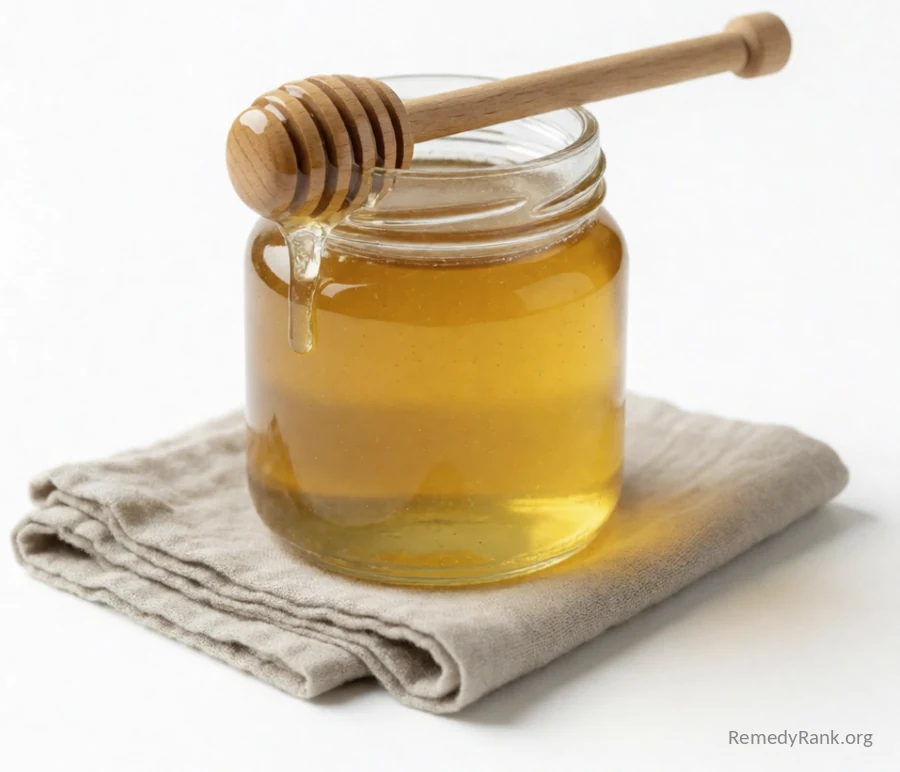
Local honey is raw honey produced by bees within a person's own region, often eaten by the spoonful during allergy season.
📜 Where it comes from
The idea of eating local honey to build tolerance to local pollen is a folk practice that grew popular in the twentieth century, especially in North American and European beekeeping communities, as an extension of honey's much older reputation as a soothing natural remedy. It draws loosely on the very old principle, traced back to ancient physicians, of gradual exposure building resistance. It remains a widely repeated household habit passed on more by word of mouth than by formal medical teaching.
🥗 Nutrition
Per 1 tablespoon (21g) · about 64 calories
- Natural sugars 17g
- Trace antioxidants
- Trace pollen and enzymes
- No fat or protein
Source: USDA FoodData Central
🥄 How to use it
Take about a teaspoon of raw honey from a beekeeper near you each day, ideally starting a few weeks before your usual allergy season begins.
Why it works: Believers in the practice suggest that trace amounts of local pollen carried in the honey may gently accustom the immune systemYour body's built-in defense team that fights off germs and helps you heal. More → to that pollen, though researchers note the pollens bees collect rarely match the airborne pollens that actually trigger allergies.
🔬 Let's get technical
The scientific view, plainly reported. Hover a dotted word for its meaning.
What's in it
Raw honey is predominantly a supersaturated sugar solution of fructose and glucose, with smaller amounts of pollen grains, plant-derived acids, , and trace enzymes such as carried over from bee processing. Pollen content, the component most relevant to the allergy-related folk use, varies widely by region, season, and filtration, and commercial honey is often filtered to remove much of it.
Mechanism of action
The rationale behind local honey as an allergy remedy resembles : repeated small-dose exposure to pollen is theorized to gradually desensitize the immune system, shifting the response away from IgE-driven release and toward tolerance. For this to plausibly work, the pollen in the honey would need to match the airborne pollen actually triggering symptoms, and the dose would need to be both consistent and sufficient, conditions rarely met by commercial honey. Most seasonal allergy triggers are grass, tree, and weed pollens with light, buoyant grains, whereas honey pollen is predominantly the heavier, insect-pollinated flower pollen bees favor, so the antigenic overlap between local honey and local hay-fever triggers is often limited.
Current pharmacological applications
Randomized controlled trials of honey for seasonal allergic rhinitis are few, small, and have produced mixed or null results for reducing symptom scores compared with placebo or usual allergy treatment. It remains primarily a folk practice supported by anecdote and biological plausibility rather than by consistent clinical evidence, and formal immunotherapy protocols rely on purified, standardized pollen extracts rather than raw honey.
Every underlined word is collected on the technical glossary.
⚠️ Cautions
- The idea that pollen in local honey builds tolerance to airborne pollen isn't well proven by research.
- Honey is a sugar — enjoy it in modest amounts, especially if you're watching blood sugar.
📚 Learn more
🌿 Deeper natural detail
🩺 The conventional view
💬 Ask Remy about Local Honey
📚 Resource confidence
Based on mentions in health references
Your vote is saved. Source endorsement totals come from books and studies (+7 per book, +5 per article). You can change your vote anytime from this device.
💬 Comments & experiences
Share what worked for you — and reply or 👍 like the experiences that resonate. Comments get a quick review before they appear publicly, to keep things safe and honest. Please don't make medical claims.
💚 Have an experience to share? Create a free account to join the conversation — your words might be exactly what someone else needs. Reading is always open to everyone.
Know a remedy like this?
Share a structured suggestion and our team will review it for the site.
Suggest a similar remedy