Food
Coconut Oil
A soft plant oil that locks in moisture, soothing dry skin, chapped lips, and a flaky scalp.
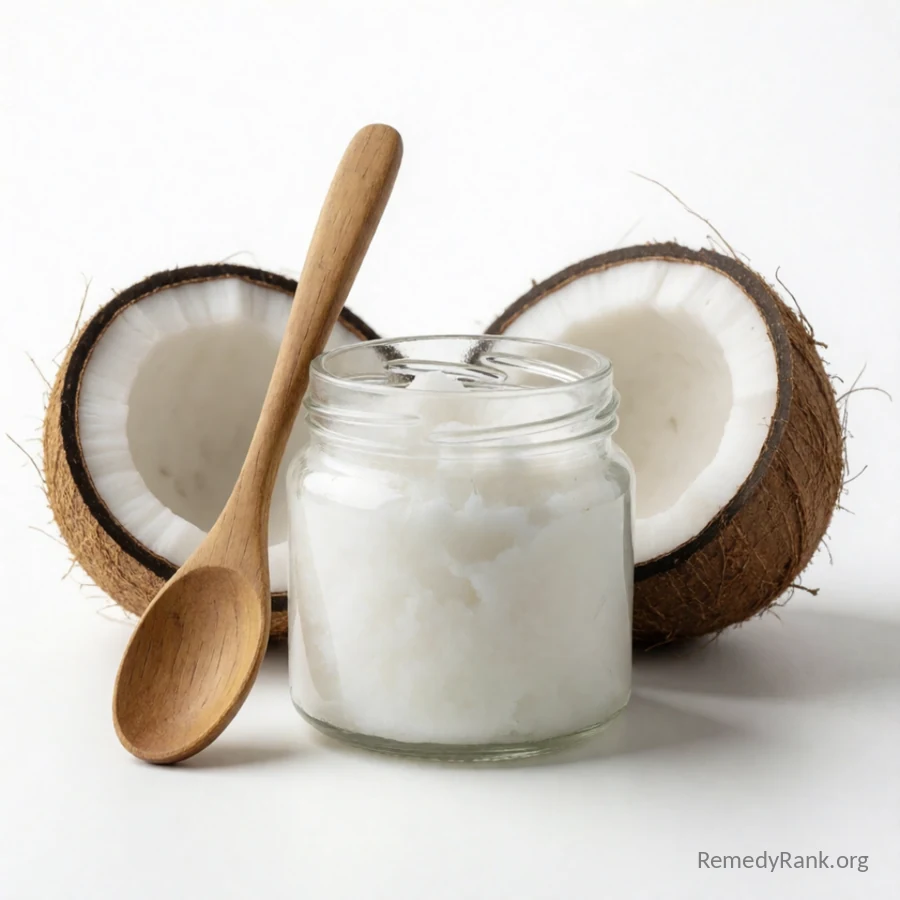 ⤢
⤢📊 How it ranks (our editor score) — 84/100Tap to see the breakdown
🌱 What it is
Coconut oil is pressed from the meat of mature coconuts, giving a smooth, solid-at-room-temperature oil that turns liquid when warmed.
📜 Where it comes from
Coconut oil has been pressed and used for skin and hair care for centuries across Pacific Island cultures, South and Southeast Asia, and parts of Africa, wherever coconut palms grow. Traditional households relied on it as an everyday moisturizer long before it reached Western shelves. It gained broader popularity in Western natural-health and cooking circles beginning in the later twentieth century.
✨ Why it's good for you
- May help support soft, moisturized skin
- May help support relief for dry, chapped lips
- May help support smoother, less flyaway hair ends
- May help support flavor and richness in home cooking
🥗 Nutrition
Per 1 tbsp (14g) · about 121 calories
- Total fat 14g
- Saturated fat 12g
- Vitamin E 0.1mg
Source: USDA FoodData Central
🥄 How to use it
Smooth a small amount onto clean, dry skin, lips, or the ends of hair. A little goes a long way.
How much: Use a thin layer on clean skin, lips, or hair ends as needed — usually 1–2 times a day. A little goes a long way.
Why it works: Herbalists and skincare researchers explain that coconut oil's fatty acids sit on the skin's surface and slow moisture loss, which helps it feel soothing on dry or chapped areas.
Show full details & how to prepare it
Coconut oil is the soft, creamy fat pressed from coconut meat. It is solid at room temperature and melts on contact with warm skin, which makes it a lovely, simple moisturizer. Its fats form a light barrier that slows water loss, so dry skin, chapped lips, and a flaky scalp hold onto moisture and feel softer.
It has been studied as a skin moisturizer and tends to be gentle, fragrance-free, and inexpensive — a single jar handles lips, elbows, cuticles, hair ends, and the friction-prone spots that chafe. It also makes an excellent base oil for herbA plant, or part of one, used for flavor, food, or gentle health support. More →-infused oils and salves.
Two small notes: use a thin layer, since too much just feels greasy, and if your face is acne-prone, test it on a small area first, as richer oils don't suit every skin type.
Ways to prepare it
🔬 Let's get technical
The scientific view, plainly reported. Hover a dotted word for its meaning.
What's in it
Coconut oil is roughly 90 percent saturated fat, dominated by medium-chain fatty acids — chiefly lauric acid, along with myristic and caprylic acids — a composition unusual among common cooking oils, most of which are predominantly unsaturated. It also contains small amounts of vitamin E and antioxidant compounds, particularly in less-refined virgin coconut oil, though these are minor constituents by weight compared with the fatty acid content.
Mechanism of action
As a topical , coconut oil's saturated, largely solid-at-room-temperature fat forms an film on the skin surface that slows , which is the primary mechanism behind its moisturizing effect on dry skin. Lauric acid and related medium-chain fatty acids have shown activity against certain bacteria and fungi , which has been proposed as a secondary benefit for skin barrier health, though this evidence is largely laboratory-based rather than from controlled trials on human skin conditions. Ingested, the are absorbed and metabolized somewhat differently than long-chain fats, moving more directly to the liver, but coconut oil also raises in most dietary trials because of its high saturated fat content overall, distinguishing it nutritionally from isolated MCT oil products.
Current pharmacological applications
Coconut oil is a common ingredient in commercial and DIY moisturizers, and small clinical trials have compared it favorably with mineral oil for skin hydration in conditions like mild atopic dermatitis, though the evidence base remains smaller than for established such as . As a food, health and nutrition bodies including the American Heart Association have generally advised against regarding coconut oil as heart-healthy given its saturated fat content and its LDL-raising effect in trials, a position that puts its dietary reputation somewhat at odds with its popularity. Its topical use for dry skin, chapped lips, and scalp flaking remains largely supported by tradition and small studies rather than large randomized trials.
Every underlined word is collected on the technical glossary.
⚠️ Cautions
- Use a thin layer — too much can feel greasy or clog some skin types.
- Choose pure, unscented coconut oil for the skin.
- If you are acne-prone, test on a small area first.
📚 Learn more
🌿 Deeper natural detail
🩺 The conventional view
🔎 What this addresses
Where Coconut Oil fits into a condition's cause-and-symptom picture — some conditions it works on the root cause of, others it mainly soothes.
Eases the symptoms of
For these, it calms the condition without addressing what drives it.
- Eczema — Small trials found virgin coconut oil improves skin barrier measures and reduces Staph bacteria on eczema-prone skin.
💬 Ask Remy about Coconut Oil
📚 Resource confidence
Based on mentions in health references
Your vote is saved. Source endorsement totals come from books and studies (+7 per book, +5 per article). You can change your vote anytime from this device.
💬 Comments & experiences
Share what worked for you — and reply or 👍 like the experiences that resonate. Comments get a quick review before they appear publicly, to keep things safe and honest. Please don't make medical claims.
💚 Have an experience to share? Create a free account to join the conversation — your words might be exactly what someone else needs. Reading is always open to everyone.
Know a remedy like this?
Share a structured suggestion and our team will review it for the site.
Suggest a similar remedy