Herb
Calendula Salve
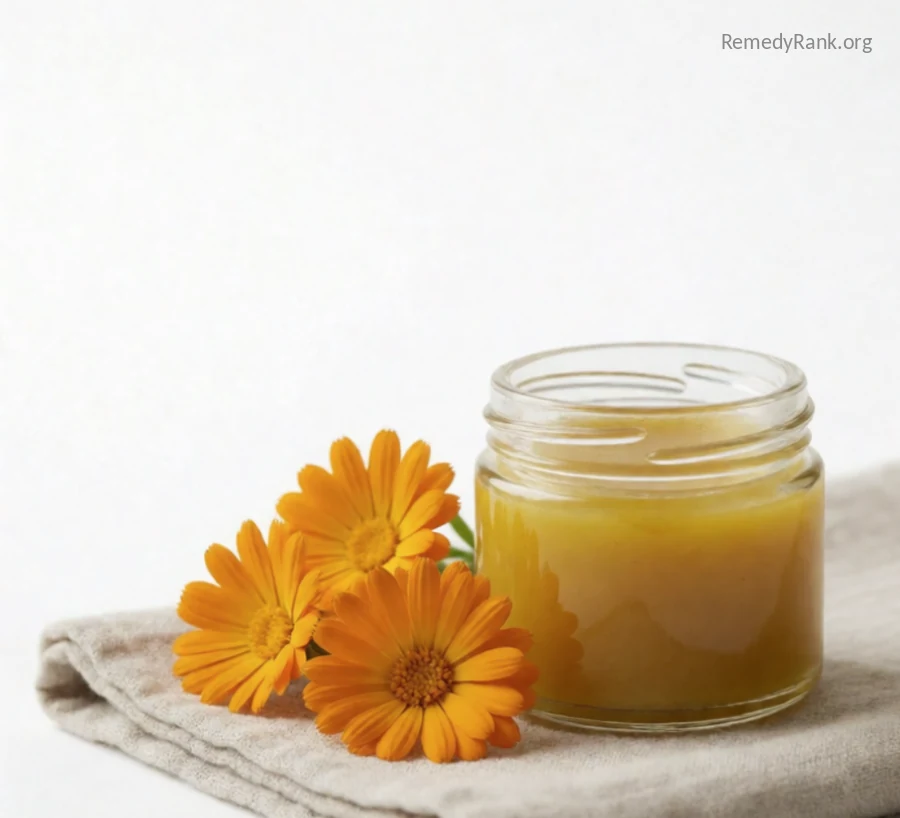
A gentle balm made from marigold flowers, long used to soothe dry, chapped, or scraped skin.
 ⤢
⤢📊 How it ranks (our editor score) — 83/100Tap to see the breakdown
🌱 What it is
Calendula salve is a soft balm made by steeping marigold (calendula) flowers in oil and blending it with beeswax, long used to comfort tired skin.
📜 Where it comes from
Calendula, or pot marigold, was used by Greco-Roman physicians and later medieval European herbalists, who valued its bright orange flowers for soothing skin and wounds. It also holds a place in older folk traditions as a flower steeped in oil to make a gentle healing balm. That practice of infusing calendula blossoms into oil and beeswax has continued largely unchanged into the salves sold today.
✨ Why it's good for you
- May help support comfort for dry or chapped skin
- May help support the skin's natural healing after small scrapes
- May help support soothing relief for chapped lips
- May help support a gentle moisture barrier on rough patches
🥄 How to use it
Smooth a thin layer of calendula salveA soothing herbal ointment for the skin. How to make a salve → onto clean skin, chapped lips, or a healing scrape a few times a day.
How much: Smooth a thin layer of salveA soothing herbal ointment for the skin. How to make a salve → onto clean, intact skin 2–3 times a day as needed.
Why it works: Herbalists attribute calendula's traditional skin benefits to compounds in the flower thought to calm irritated tissue and support the skin's own healing process when applied as a salveA soothing herbal ointment for the skin. How to make a salve →.
Show full details & how to prepare it
Calendula is the cheerful orange 'pot marigold,' and its petals have been a skin-care favorite for centuries. Gentle plant compounds in the flower are traditionally used to calm and comfort dry, chapped, and freshly-scraped skin and to support the skin's own tidy healing.
Most often it is enjoyed as a salveA soothing herbal ointment for the skin. How to make a salve → — calendula-infused oilOil gently flavored with herbs, used on skin or in a salve. How to make an infused oil → thickened with a little beeswax into a soft, protective balm that stays where you put it. It is one of the mildest herbal skin helpers, which is why it shows up in so many baby balms and lip products.
A couple of sensible limits: calendula belongs to the daisy family, so the rare person allergic to ragweed or daisies should patch-test first, and salves are for intact skin only — keep them off deep or infected wounds, which need a doctor's care.
Ways to prepare it
🔬 Let's get technical
The scientific view, plainly reported. Hover a dotted word for its meaning.
What's in it
Calendula (marigold) flower extracts used in salves contain esters, particularly esters, along with and pigments. The salve base itself, commonly a combination of oil, beeswax, or , is a separate physical constituent that forms an barrier over the extract.
Mechanism of action
esters and constituents show anti-inflammatory and antioxidant activity in laboratory studies, thought to act partly by dampening local production of inflammatory signaling molecules and in irritated tissue. Some and animal research suggests calendula extracts can support activity, the cell type responsible for laying down new during wound repair, though this has not been as thoroughly demonstrated in human tissue. Separately from the plant extract, the salve base itself provides an layer that reduces , keeping the wound or irritated skin surface hydrated, a physical effect that likely contributes as much to perceived benefit as the calendula constituents do. Because most evidence comes from topical application, effects are understood to be local rather than systemic.
Current pharmacological applications
Calendula preparations have been studied in small randomized trials for minor wound and abrasion healing, prevention of radiation-induced skin irritation during cancer treatment, and diaper rash, generally with favorable but modest results in trials that are often small or lack blinding. It is a long-standing traditional first-aid herb for minor cuts, chapped skin, and superficial burns, with evidence that is more consistent than for many topical botanicals but still short of the scale seen in trials of major pharmaceutical wound treatments. Allergic to calendula, while uncommon, is documented in people with prior sensitivity to related Asteraceae-family plants.
Every underlined word is collected on the technical glossary.
⚠️ Cautions
- For outside use on the skin only.
- Those allergic to daisies or ragweed may react — test a small spot first.
- Don't use it on deep or infected wounds.
📚 Learn more
🌿 Deeper natural detail
🩺 The conventional view
💬 Ask Remy about Calendula Salve
📚 Resource confidence
Based on mentions in health references
Your vote is saved. Source endorsement totals come from books and studies (+7 per book, +5 per article). You can change your vote anytime from this device.
💬 Comments & experiences
Share what worked for you — and reply or 👍 like the experiences that resonate. Comments get a quick review before they appear publicly, to keep things safe and honest. Please don't make medical claims.
💚 Have an experience to share? Create a free account to join the conversation — your words might be exactly what someone else needs. Reading is always open to everyone.
Know a remedy like this?
Share a structured suggestion and our team will review it for the site.
Suggest a similar remedy