Food
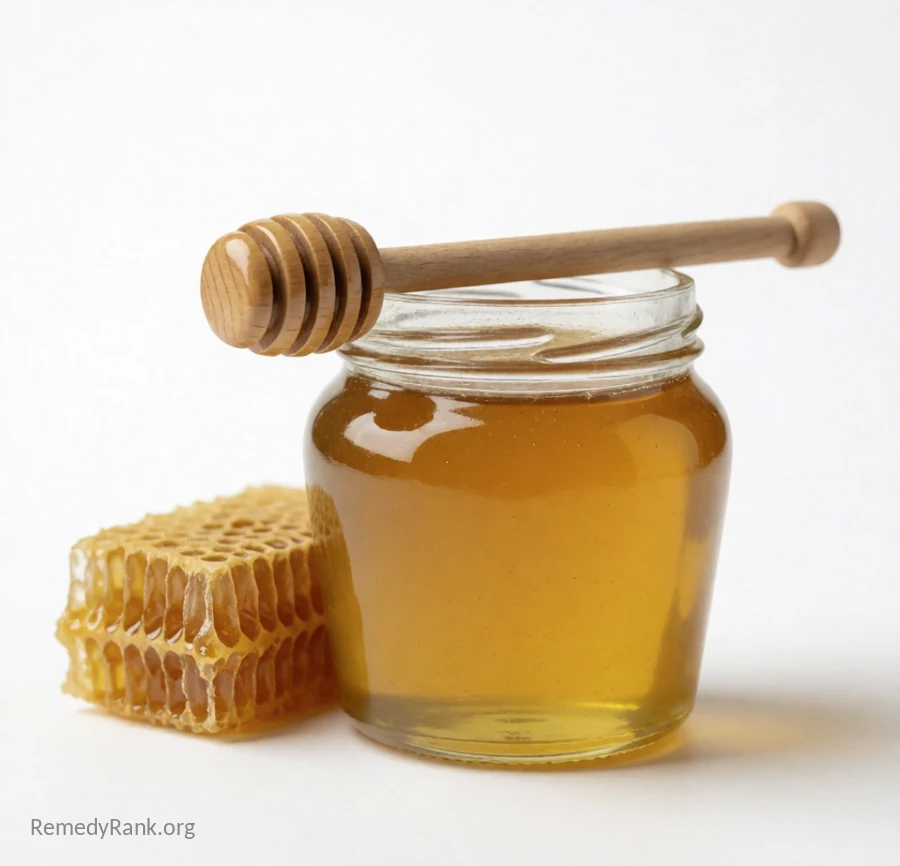
Raw Honey
A spoonful of honey coats and soothes the throat and can quiet a nighttime cough.
 ⤢
⤢📊 How it ranks (our editor score) — 88/100Tap to see the breakdown
👶 Safe for children?
This remedy carries age-related cautions. Please read them before giving it to a child, and check with your pediatrician or pharmacist first.
- Never give honey to children under 1 year (risk of infant botulism).
🌱 What it is
Honey is made by bees from flower nectar. Raw honey is the least processed kind, so it keeps more of its natural goodness.
📜 Where it comes from
Raw honey has been gathered from wild and kept bees for thousands of years, with ancient Egyptian, Greek, and Middle Eastern healers all recording its use for wounds and coughs. Dioscorides and other Greco-Roman physicians praised honey as a soothing remedy for the throat and chest, and it appears repeatedly in the Bible as a symbol of goodness and nourishment. Folk tradition across many cultures has long offered a spoonful before bed to quiet a child's cough.
✨ Why it's good for you
- Soothes sore throats and calms nighttime coughs
- A natural sweetener with a little extra value
- Tastes wonderful in warm (not boiling) water
🥗 Nutrition
Per 1 tablespoon (21g) · about 64 calories
- Natural sugars 17g
- Trace antioxidants
- No fat or protein
- Small amounts of B vitamins
Source: USDA FoodData Central
🥄 How to use it
Take 1–2 teaspoons plain, or stir into warm (not boiling) water with lemon.
How much: Adults and children over 1 year: 1–2 teaspoons as needed, up to several times a day, especially before bed for a nighttime cough.
Why it works: Soothes throat; mild antibacterial.
Show full details & how to prepare it
Honey is one of the gentlest and most pleasant remedies for an irritated throat. Its thick, slightly sticky texture coats the back of the throat and forms a soothing layer that calms the tickle that sets off coughing. It also draws a little moisture to the area and has mild natural properties that discourage germs.
For a cough that keeps you up at night, a spoonful of honey shortly before bed often settles things enough for restful sleep — in several studies it compared favorably to common over-the-counter cough syrups for children over one year. Raw, minimally processed honey keeps more of its natural goodness, and a local honey is a lovely choice.
The one firm rule: never give honey to a baby under 12 months, because of the small but serious risk of infant botulism.
Ways to prepare it
🔬 Let's get technical
The scientific view, plainly reported. Hover a dotted word for its meaning.
What's in it
Raw honey is roughly 80% sugars, mainly fructose and glucose, dissolved in a small amount of water, which gives it very low . It also contains trace amounts of the enzyme , and compounds, and, in some floral sources such as manuka, elevated levels of , a reactive compound linked to additional antibacterial activity.
Mechanism of action
Honey's low creates an osmotic environment that draws water out of bacterial cells, inhibiting microbial growth on contact, an effect independent of any single active compound. , activated when honey is diluted, slowly generates hydrogen peroxide, a mild antiseptic that contributes further antibacterial action at the wound or mucosal surface. Its viscosity and sugar content allow it to coat , forming a physical layer over irritated tissue that is thought to reduce cough receptor stimulation in the throat. and constituents also contribute modest antioxidant and anti-inflammatory activity, though their concentration varies considerably by floral source and processing.
Current pharmacological applications
Randomized trials in children with upper respiratory infection have found honey modestly reduces cough frequency and severity compared with no treatment, with mixed results against over-the-counter cough suppressants; it is not studied or recommended for infants under one year because of the risk of infant botulism from Clostridium botulinum spores it can contain. Medical-grade honey dressings are used in wound care and have trial support for certain burns and chronic wounds, attributed to the osmotic and hydrogen-peroxide mechanisms above. Broader claims about honey and allergies or general immune support have little rigorous clinical evidence behind them.
Every underlined word is collected on the technical glossary.
⚠️ Cautions
- Counts as added sugar — use modestly if managing blood sugar.
📚 Learn more
🌿 Deeper natural detail
🩺 The conventional view
🔎 What this addresses
Where Raw Honey fits into a condition's cause-and-symptom picture — some conditions it works on the root cause of, others it mainly soothes.
Eases the symptoms of
For these, it calms the condition without addressing what drives it.
- Eczema — Raw honey is sometimes dabbed on irritated patches for its traditional soothing reputation; evidence for eczema specifically is thin.
💬 Ask Remy about Raw Honey
📚 Resource confidence
Based on mentions in health references
Your vote is saved. Source endorsement totals come from books and studies (+7 per book, +5 per article). You can change your vote anytime from this device.
💬 Comments & experiences
Share what worked for you — and reply or 👍 like the experiences that resonate. Comments get a quick review before they appear publicly, to keep things safe and honest. Please don't make medical claims.
💚 Have an experience to share? Create a free account to join the conversation — your words might be exactly what someone else needs. Reading is always open to everyone.
Know a remedy like this?
Share a structured suggestion and our team will review it for the site.
Suggest a similar remedy