Supplement
Thiamine (Vitamin B1)
A B vitamin essential for healthy nerves, often low in people with certain nerve and brain conditions.
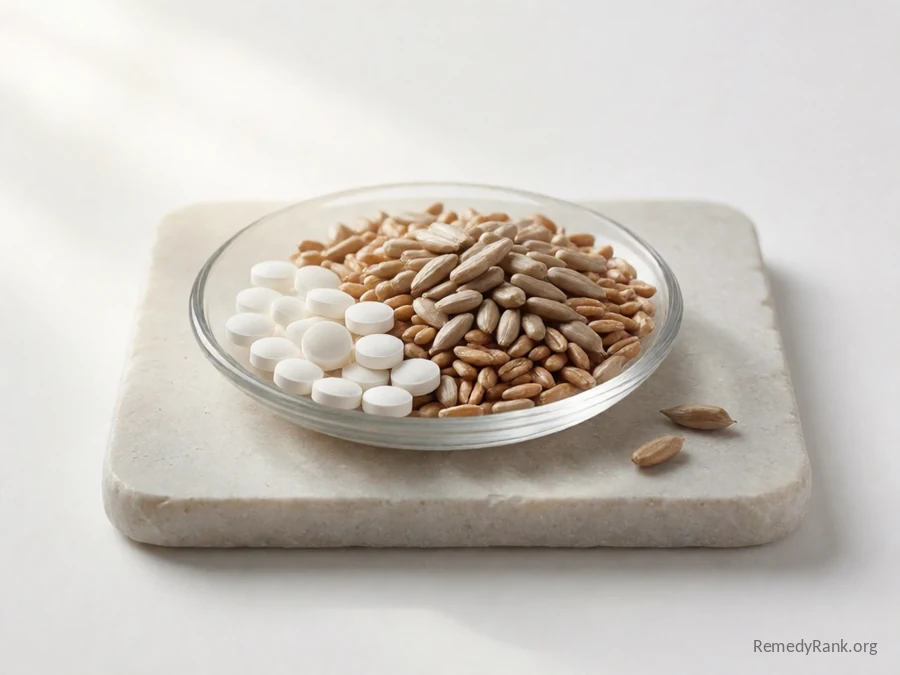 ⤢
⤢📊 How it ranks (our editor score) — 62/100Tap to see the breakdown
🌱 What it is
Thiamine (vitamin B1) is an essential nutrient the body needs for nerve function and energy metabolism.
📜 Where it comes from
Thiamine deficiency was identified in the late nineteenth and early twentieth centuries as the cause of beriberi, a serious nerve disease that became common in Asian populations eating heavily polished white rice stripped of its nutrient-rich outer layers. Once the vitamin was isolated, correcting deficiency with thiamine became standard practice, and its role in nerve health has remained central to nutritional medicine since.
✨ Why it's good for you
- Essential nutrient with a well-established role in nerve health
- Inexpensive and widely available
- Deficiency is reversible with prompt treatment
🙏 Begin with prayer
Prayer is the first remedy, not the last resort. Whether you are facing this yourself, caring for someone who is, or simply reading to understand — here is a simple prayer you are welcome to make your own, in your name or in theirs:
Dear God, thank You for thiamine, this quiet nourishment You built into Your good creation, meant to keep our nerves strong and steady. Where illness or emergency calls for more than food can give, give me wisdom to seek the help I need without delay, and guide those who treat me toward the right and timely care. Comfort me in weakness, and let Your peace hold me steady. Amen.
“I will lift up mine eyes unto the hills, from whence cometh my help. My help cometh from the LORD, which made heaven and earth.”— Psalm 121:1-2
🥄 How to use it
For general nerve support, 100 mg twice a day is a common approach. Wernicke-Korsakoff syndrome and severe deficiency require IV thiamine under medical supervision, not home dosing — seek prompt medical care for those conditions. For neuritis or neuropathy, work with a healthcare provider on the right dose for you.
How much: 100 mg twice daily for general nerve support; higher doses only under medical supervision.
Why it works: Thiamine deficiency can damage the brain and peripheral nerves; replacing it addresses the underlying deficiency and supports nerve repair.
⚠️ Cautions
- Wernicke-Korsakoff syndrome is a medical emergency requiring immediate professional evaluation and IV treatment — do not attempt to self-treat at home.
- High doses for neuropathy should be guided by a healthcare provider.
- Rule out underlying alcohol use disorder or malabsorption with a clinician, since these are common causes of deficiency.
📚 Learn more
🌿 Deeper natural detail
🩺 The conventional view
💬 Ask Remy about Thiamine (Vitamin B1)
📚 Resource confidence
Based on mentions in health references
Your vote is saved. Source endorsement totals come from books and studies (+7 per book, +5 per article). You can change your vote anytime from this device.
💬 Comments & experiences
Share what worked for you — and reply or 👍 like the experiences that resonate. Comments get a quick review before they appear publicly, to keep things safe and honest. Please don't make medical claims.
💚 Have an experience to share? Create a free account to join the conversation — your words might be exactly what someone else needs. Reading is always open to everyone.
Know a remedy like this?
Share a structured suggestion and our team will review it for the site.
Suggest a similar remedy