Practice
Elevation & Rest
Putting up tired or achy legs and giving them rest helps swelling settle and muscles recover.
 ⤢
⤢📊 How it ranks (our editor score) — 94/100Tap to see the breakdown
🌱 What it is
Elevation and rest means propping up a tired or aching limb above heart level and letting it rest rather than bear weight.
📜 Where it comes from
Raising an injured or tired limb and resting it is a common-sense practice that appears throughout folk and clinical first-aid traditions, without a single named origin, likely because the benefit was noticeable to anyone who tried it. It aligns naturally with the rest-and-recovery emphasis found in the nineteenth-century Battle Creek health movement's broader teaching on rest. It has remained a basic, unchanged piece of home care advice for generations.
🙏 Begin with prayer
Prayer is the first remedy, not the last resort. Whether you are facing this yourself, caring for someone who is, or simply reading to understand — here is a simple prayer you are welcome to make your own, in your name or in theirs:
Dear God, thank You for the simple relief of putting up tired legs and letting them truly rest. Bless this quiet time as I take it, and keep me from rushing back before I'm ready. You give rest to those You love, so let this small pause ease the swelling and ache I carry, and give me patience to move gently again afterward. In Jesus' name, Amen.
“It is vain for you to rise up early, to sit up late, to eat the bread of sorrows: for so he giveth his beloved sleep.”— Psalm 127:2
🥄 How to use it
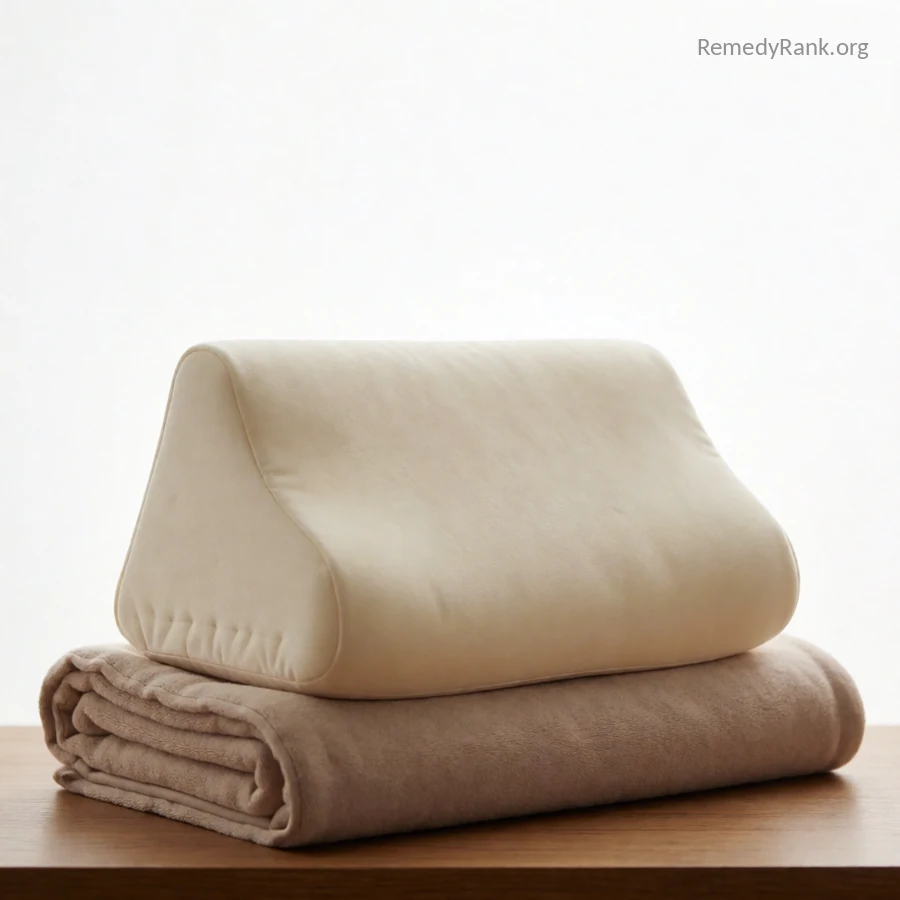
Lie down and prop the legs on a pillow so they rest a little above the heart for 15–20 minutes. Rest the sore area rather than pushing through.
Why it works: Clinicians explain that raising a limb above the heart lets gravity help drain built-up fluid, easing swelling, while resting the area gives strained tissue a chance to recover without further stress.
🔬 Let's get technical
The scientific view, plainly reported. Hover a dotted word for its meaning.
What's in it
Elevation and rest are physical, not chemical, interventions, so there is no active compound to isolate; the relevant "constituents" are the tissue and fluid systems being manipulated — venous blood, lymphatic fluid, and the that pools around an injured or overworked joint. What changes is the pressure gradient these fluids move along, not any biochemical input.
Mechanism of action
Raising a limb above heart level reduces local in the veins and capillaries below that point, which slows the rate at which fluid filters out of capillaries into surrounding tissue and gives the venous and lymphatic systems a gravity-assisted advantage in draining fluid that has already accumulated. Combined with rest, this removes the repetitive muscle-pump loading that can otherwise keep low-grade micro-trauma and local inflammatory signaling active at an injury site, allowing swelling to plateau and gradually recede as lymph flow catches up. Reduced mechanical stress on a strained tissue also lowers the local production of inflammatory mediators like that are triggered by continued loading, giving repair processes a comparatively quieter environment to work in.
Current pharmacological applications
Elevation and rest form two-quarters of the long-standing R.I.C.E. protocol (rest, ice, compression, elevation) referenced by sports-medicine and first-aid organizations for acute soft-tissue injuries such as sprains. Contemporary sports-medicine literature has increasingly debated how much rest is optimal, with some researchers favoring "protected, optimal loading" over strict immobilization once acute swelling subsides, though elevation's basic hydrostatic rationale is not seriously contested. Formal trial data isolating elevation's contribution from the other RICE components is limited, since it is almost always studied as part of a combined protocol rather than as a standalone variable.
Every underlined word is collected on the technical glossary.
⚠️ Cautions
- A gentle practice for nearly everyone.
- A leg that is very swollen, red, or warm can signal something more serious than ordinary tiredness, and is usually looked at by a doctor rather than simply rested.
- Move around gently again afterward to keep blood flowing.
📚 Learn more
🌿 Deeper natural detail
Curated links coming for this one.
💬 Ask Remy about Elevation & Rest
📚 Resource confidence
Based on mentions in health references
Your vote is saved. Source endorsement totals come from books and studies (+7 per book, +5 per article). You can change your vote anytime from this device.
💬 Comments & experiences
Share what worked for you — and reply or 👍 like the experiences that resonate. Comments get a quick review before they appear publicly, to keep things safe and honest. Please don't make medical claims.
💚 Have an experience to share? Create a free account to join the conversation — your words might be exactly what someone else needs. Reading is always open to everyone.
Know a remedy like this?
Share a structured suggestion and our team will review it for the site.
Suggest a similar remedy