Whole Grain
Teff
A tiny ancient whole grain remarkably rich in iron, calcium, and fiber.
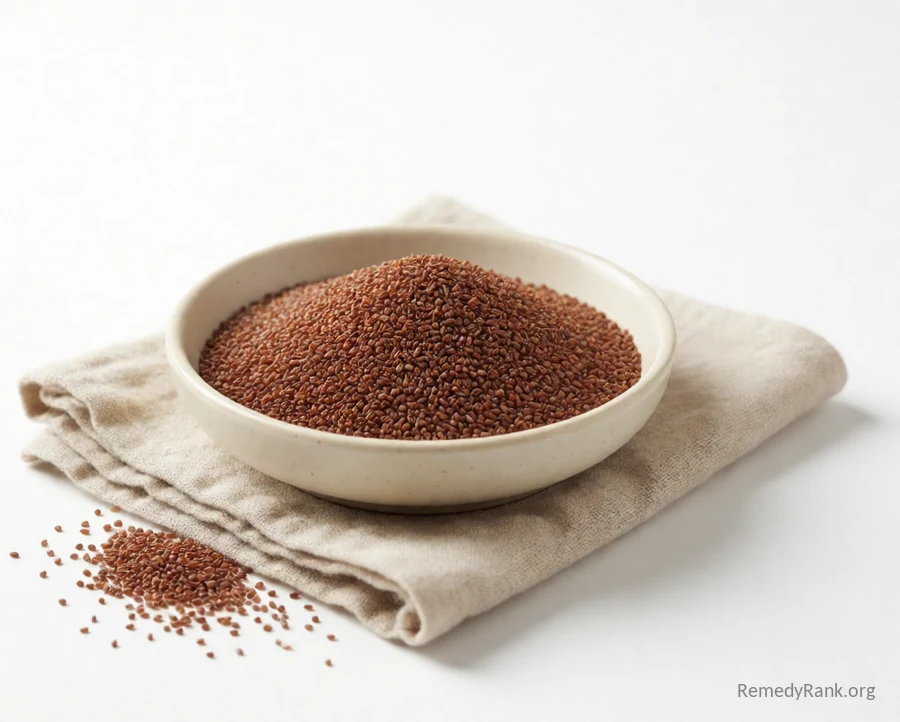 ⤢
⤢📊 How it ranks (our editor score) — 79/100Tap to see the breakdown
🌱 What it is
Teff is a tiny, ancient whole grain from the Horn of Africa, prized for its earthy flavor and naturally gluten-free, nutrient-dense makeup.
📜 Where it comes from
Teff has been cultivated in the Horn of Africa, particularly Ethiopia and Eritrea, for thousands of years and remains the traditional grain ground into flour for injera, the fermented flatbread central to Ethiopian meals. Farmers valued it for growing well in difficult soils and climates where other grains struggled. It only became known in Western health food circles in recent decades as interest grew in ancient and gluten-free grains.
✨ Why it's good for you
- may help support healthy iron levels and energy
- may help support bone strength through its calcium content
- may help support digestive regularity with its fiber
- may help support steady blood sugar as a whole, unrefined grain
🥗 Nutrition
Per 1 cup, cooked (252g) · about 255 calories
- Fiber 7g
- Iron 7mg
- Calcium 123mg
- Protein 10g
- Carbohydrates 50g
Source: USDA FoodData Central
🥄 How to use it
Cook teff into a warm porridge, simmer it into stews, or use the flour in flatbreads and pancakes.
How much: A cooked half-cup serving as porridge or a side a few times a week.
Why it works: Nutrition science points to teff's small size and whole-grain nature as the reason it retains a concentrated dose of iron, calcium, and fiber compared to many refined grains.
Show full details & how to prepare it
Teff is among the smallest grains in the world, the seed behind Ethiopia's spongy injera bread, and what it lacks in size it makes up for in nourishment. It is naturally high in iron, a quiet help for the tiredness of iron-poor blood, unusually rich in calcium for a grain, and full of fiber and resistant starch that steady digestionHow your body breaks food down into pieces small enough to use for energy. More → and energy. Being naturally gluten-free, it suits many sensitive stomachs.
Cooked whole it makes a creamy, mildly nutty porridge; ground to flour it becomes flatbreads and pancakes. Because plant iron is shy, pairing teff with a little vitamin C, fruit, peppers, tomatoes, helps the body take up more of it.
Ways to prepare it
⚠️ Cautions
- Introduce more whole grains gradually with plenty of water to let digestion adjust.
- Plant iron is absorbed better alongside vitamin-C foods, so pair teff with fruits or vegetables.
📚 Learn more
🌿 Deeper natural detail
Curated links coming for this one.
🩺 The conventional view
💬 Ask Remy about Teff
📚 Resource confidence
Based on mentions in health references
Your vote is saved. Source endorsement totals come from books and studies (+7 per book, +5 per article). You can change your vote anytime from this device.
💬 Comments & experiences
Share what worked for you — and reply or 👍 like the experiences that resonate. Comments get a quick review before they appear publicly, to keep things safe and honest. Please don't make medical claims.
💚 Have an experience to share? Create a free account to join the conversation — your words might be exactly what someone else needs. Reading is always open to everyone.
Know a remedy like this?
Share a structured suggestion and our team will review it for the site.
Suggest a similar remedy