Herb
Sumac
A tangy, antioxidant-rich spice studied in small trials for supporting healthy cholesterol and blood sugar.
 ⤢
⤢📊 How it ranks (our editor score) — 64/100Tap to see the breakdown
🌱 What it is
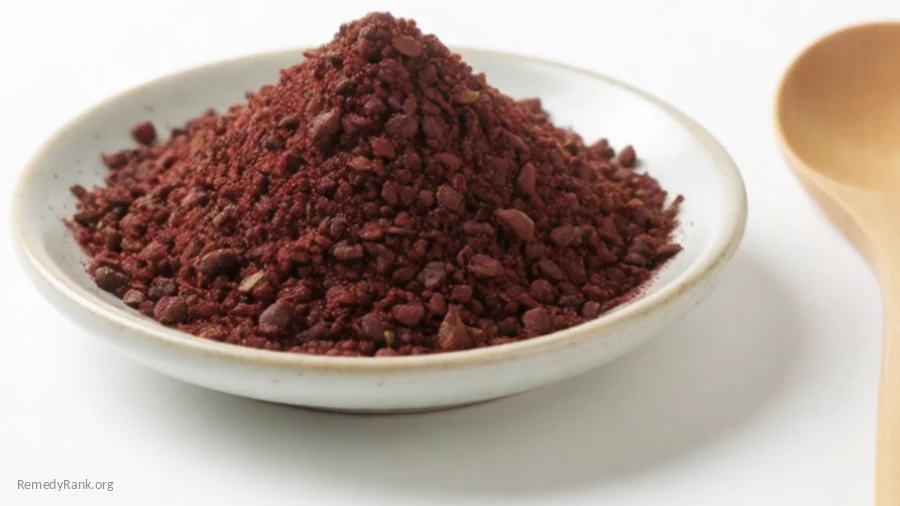
Culinary sumac is the dried, ground berry of Rhus coriaria, a shrub common across the Mediterranean and Middle East, valued for its tart, lemony flavor and deep red color.
📜 Where it comes from
Sumac has been used across the Mediterranean and Middle East for thousands of years, both as a tart culinary spice in dishes and as a traditional remedy valued by regional herbalists for digestive and metabolic complaints. Ancient physicians in the region, working in traditions influenced by Greco-Roman and Unani medicine, noted its astringent, cooling qualities. Modern researchers have more recently conducted small clinical trials on its antioxidant compounds and their effects on cholesterol and blood sugar.
✨ Why it's good for you
- Studied in small trials for supporting healthy cholesterol levels
- Studied in small trials for supporting healthy blood sugar as part of a balanced diet
- Rich source of dietary antioxidants
- May help ease muscle soreness after exercise, in early research
🥄 How to use it
Sprinkle ground sumac on salads, meats, and dips as part of regular meals, or take a standardized sumac extract capsuleDried, powdered herb packed into a swallowable shell for a measured dose. How to make a capsule → as directed on the label.
How much: 1-2 teaspoons ground sumac daily with food, or follow extract label directions.
Why it works: Sumac is rich in polyphenol antioxidants such as gallic acid, which small human trials suggest may help support healthy cholesterol and blood sugar levels as part of an overall diet, though larger studies are needed.
⚠️ Cautions
- Sumac is related to cashews, mangoes, and poison ivy... those with allergies to these plants should use caution
- Not a substitute for prescribed diabetes or cholesterol medication; may add to their blood-sugar-lowering effect, so monitor levels and consult a doctor if combining
- High blood sugar that is poorly controlled, or chest pain, needs prompt medical care
- Culinary sumac sold for food is safe; avoid foraging wild sumac due to look-alike toxic species
📚 Learn more
🌿 Deeper natural detail
🩺 The conventional view
Curated links coming for this one.
💬 Ask Remy about Sumac
📚 Resource confidence
Based on mentions in health references
Your vote is saved. Source endorsement totals come from books and studies (+7 per book, +5 per article). You can change your vote anytime from this device.
💬 Comments & experiences
Share what worked for you — and reply or 👍 like the experiences that resonate. Comments get a quick review before they appear publicly, to keep things safe and honest. Please don't make medical claims.
💚 Have an experience to share? Create a free account to join the conversation — your words might be exactly what someone else needs. Reading is always open to everyone.
Know a remedy like this?
Share a structured suggestion and our team will review it for the site.
Suggest a similar remedy