Therapy
Epsom Salt Soak
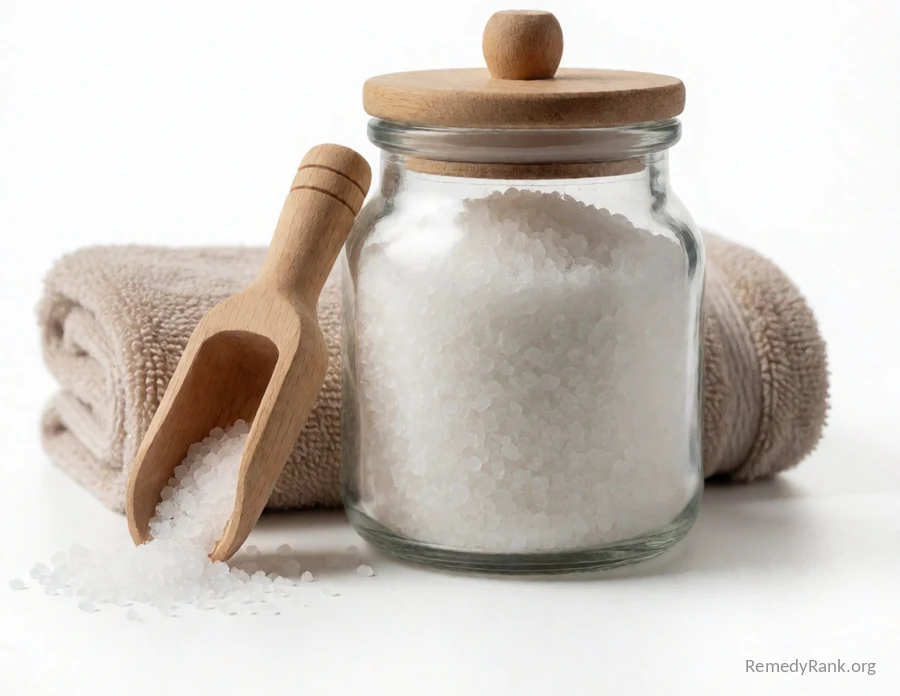
A warm bath with Epsom salt is a relaxing way to ease tired, aching muscles.
 ⤢
⤢📊 How it ranks (our editor score) — 81/100Tap to see the breakdown
🌱 What it is
An Epsom salt soak is a warm bath with Epsom salt, a mineral compound of magnesium and sulfate, dissolved into the water.
📜 Where it comes from
Epsom salt takes its name from a bitter mineral spring discovered in Epsom, England in the seventeenth century, where the water became famous for its supposed healing properties and drew visitors seeking relief for aches and pains. It fit naturally into the broader hydrotherapy tradition later refined at nineteenth-century Battle Creek sanitariums, which used mineral baths and soaks as part of their water-cure treatments. The warm bathtub soak remains a simple, unchanged comfort.
🙏 Begin with prayer
Prayer is the first remedy, not the last resort. Whether you are facing this yourself, caring for someone who is, or simply reading to understand — here is a simple prayer you are welcome to make your own, in your name or in theirs:
Father, thank You for a warm bath and a handful of Epsom salt, a small kindness for tired, aching muscles. Bless this soak as I settle into it. You lead me beside still waters and restore my soul, so let this quiet hour be more than rest for my body — let it restore my spirit too. In Jesus' name, Amen.
“He maketh me to lie down in green pastures: he leadeth me beside the still waters. He restoreth my soul: he leadeth me in the paths of righteousness for his name's sake.”— Psalm 23:2-3
🥄 How to use it
Dissolve about a cup of Epsom salt in a warm bath and soakResting a body part (or the whole body) in warm, treated water. How to make a soak → for 15–20 minutes, or use a smaller amount in a foot soak.
Why it works: Advocates suggest that the warm water itself relaxes tight muscles and improves local circulation, while some believe magnesium sulfate from the salt may be drawn in through the skin, though researchers note the evidence for meaningful skin absorption is limited.
🔬 Let's get technical
The scientific view, plainly reported. Hover a dotted word for its meaning.
What's in it
Epsom salt is the common name for magnesium sulfate heptahydrate (MgSO4·7H2O), a mineral compound that dissociates in water into magnesium and sulfate ions. Neither ion is unique to Epsom salt — both are ordinary already present throughout the body — but the concentrated dissolved form is what distinguishes a soak from tap water. The formulation contains no organic actives, fragrance compounds, or botanical extracts; its chemistry is entirely inorganic.
Mechanism of action
In a warm bath, the primary physiological driver is heat, not the dissolved salt: warm water dilates blood vessels, increases local blood flow, and relaxes skeletal muscle, which is the mechanism most commonly credited for easing achy, tense muscles after a soak. Whether magnesium or sulfate ions cross intact skin in meaningful amounts is disputed; human skin's is a poor conduit for charged ionic species, and controlled studies measuring blood or urine magnesium after bathing have produced inconsistent results, with some finding modest rises and others finding none. A small body of research has looked at magnesium absorption more broadly, but sample sizes are limited and dose delivered by a bath is difficult to standardize. Any systemic contribution, if it exists at all, is likely small relative to what magnesium supplementation or diet would provide.
Current pharmacological applications
Because the absorption question remains unresolved, Epsom salt baths are used in practice primarily as a warm-water hydrotherapy vehicle rather than as a verified magnesium-delivery method, and no regulatory body has approved topical magnesium sulfate for correcting magnesium deficiency. Magnesium sulfate itself has well-established, unrelated clinical uses when given intravenously — for example in obstetric care and for certain arrhythmias — but those applications are pharmacologically distinct from a bathtub soak and involve direct systemic dosing. Research specifically isolating the bath's effect on muscle soreness from the effect of warm water alone remains limited.
Every underlined word is collected on the technical glossary.
⚠️ Cautions
- Don't drink Epsom salt water unless a doctor directs it.
- Keep the water warm, not scalding.
- Skip very hot soaks if you are pregnant or have heart concerns.
📚 Learn more
🌿 Deeper natural detail
💬 Ask Remy about Epsom Salt Soak
📚 Resource confidence
Based on mentions in health references
Your vote is saved. Source endorsement totals come from books and studies (+7 per book, +5 per article). You can change your vote anytime from this device.
💬 Comments & experiences
Share what worked for you — and reply or 👍 like the experiences that resonate. Comments get a quick review before they appear publicly, to keep things safe and honest. Please don't make medical claims.
💚 Have an experience to share? Create a free account to join the conversation — your words might be exactly what someone else needs. Reading is always open to everyone.
Know a remedy like this?
Share a structured suggestion and our team will review it for the site.
Suggest a similar remedy