Herb
Tea Tree Oil
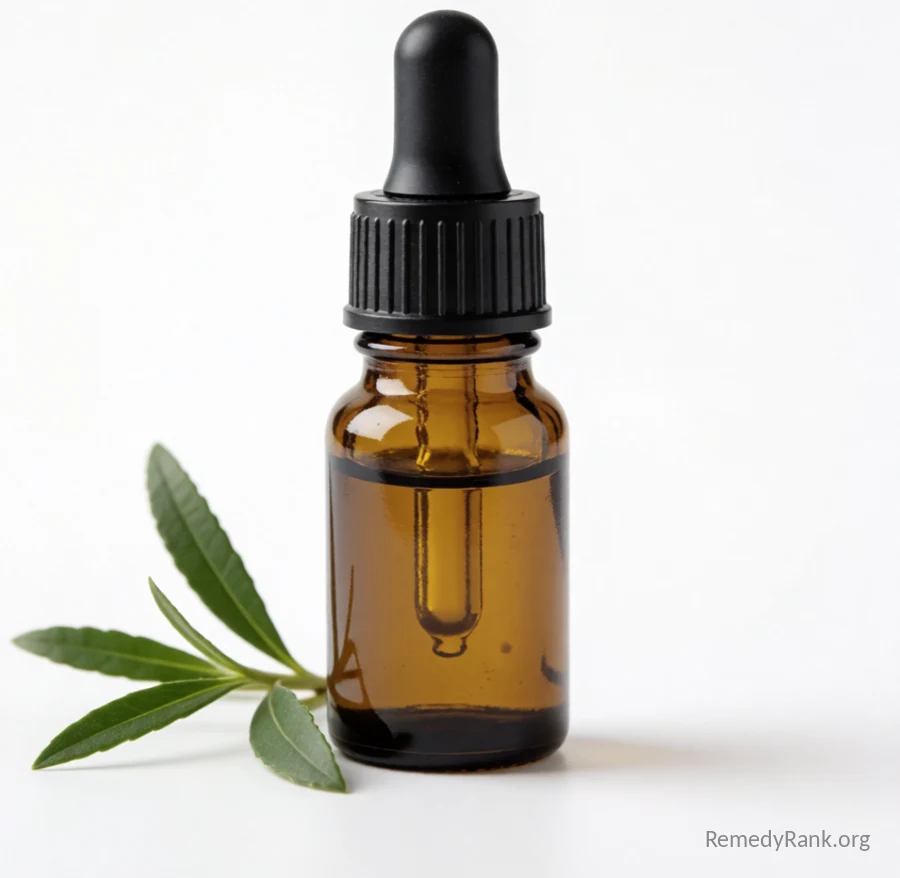
A strong-smelling plant oil traditionally used, well-diluted, on the skin for itchy or troubled spots.
 ⤢
⤢📊 How it ranks (our editor score) — 69/100Tap to see the breakdown
👶 Safe for children?
This remedy carries age-related cautions. Please read them before giving it to a child, and check with your pediatrician or pharmacist first.
- Keep it away from pets and young children, and try a small test spot first.
🌱 What it is
Tea tree oil is a concentrated oil pressed from the leaves of an Australian tree, known for its sharp, medicinal scent and long history of skin use.
📜 Where it comes from
Tea tree oil comes from a tree native to Australia and was used by Aboriginal Australian peoples, who crushed the leaves and applied them to wounds and skin complaints for generations. Australian settlers and later chemists took a scientific interest in the oil in the early twentieth century, and it was distilled commercially soon after. Its use spread internationally through the twentieth century as a natural option for minor skin troubles.
✨ Why it's good for you
- May help support the look of occasional skin blemishes
- May help support a clean, fresh feeling on the skin
- May help support comfort for minor skin irritation when properly diluted
- May help support a simple, plant-based addition to a skin routine
🥄 How to use it
Always dilute it first — mix a drop or two into a spoonful of a carrier oil (like coconut oil) before dabbing it on the skin.
How much: Dilute to about 5% before skin use — roughly 5 drops of teaA warm drink made by steeping herbs in hot water. How to make a tea → tree oil per 1 teaspoon (5 ml) of carrier oil. Apply a thin layer to the affected spot 1–2 times a day. Never swallow it.
Why it works: Antibacterial and anti-inflammatoryA food or habit that helps calm swelling and redness in the body. More →.
Show full details & how to prepare it
TeaA warm drink made by steeping herbs in hot water. How to make a tea → tree oil is steam-distilled from the leaves of an Australian shrub, and it has been studied for its ability to discourage the fungi and bacteria behind problems like athlete's foot, mild acne, and dandruff. That makes it a popular natural choice for troubled skin — but it is potent, and respect for that strength is the whole game.
The single most important rule is to dilute it. Undiluted essential oilA very concentrated plant oil — always diluted before it touches skin. How to make an essential oil → is harsh and can badly irritate or sensitize the skin, so it should always be blended into a carrier oil (such as coconut or olive) before it touches you — generally to about a 5% strength.
It must never be swallowed: teaA warm drink made by steeping herbs in hot water. How to make a tea → tree oil is toxic taken internally, even in small amounts. Keep it well away from young children and pets, and patch-test a diluted dab on your inner arm first to be sure your skin agrees with it.
Ways to prepare it
🔬 Let's get technical
The scientific view, plainly reported. Hover a dotted word for its meaning.
What's in it
Tea tree oil is the steam-distilled essential oil of Melaleuca alternifolia leaves, standardized commercially to a minimum content (typically over 30%) alongside gamma-terpinene and alpha-terpinene, with kept low because it is associated with skin irritation. These constituents make the oil highly and volatile.
Mechanism of action
and related partition into microbial cell membranes, disrupting lipid packing and increasing membrane permeability, which leads to leakage of cellular contents and loss of viability in bacteria, fungi, and some viruses . The oil also inhibits production of pro-inflammatory and by activated immune cells, giving it a secondary anti-inflammatory action alongside its one. Because the whole oil is a complex mixture, its net effect on skin flora is broader and less selective than a single-target antibiotic, which is part of why resistance development has been slower to document in the literature. On intact skin, the oil's lipophilicity allows some penetration into the -rich follicle, which is proposed to contribute to its effect in follicular skin conditions.
Current pharmacological applications
Diluted tea tree oil has been studied in randomized trials for mild-to-moderate acne, where it shows benefit comparable in some trials to benzoyl peroxide with a slower onset, and for and tinea pedis, where topical antifungal effects are supported by and some clinical data though trial quality varies. and allergic sensitization to oxidized tea tree oil are documented in the dermatology literature, an important counterpoint to its reputation. Evidence for internal or ingested use is essentially absent from clinical research and the oil is toxic if swallowed in more than trace amounts.
Every underlined word is collected on the technical glossary.
⚠️ Cautions
- Never put undiluted tea tree oil on the skin — always dilute it well first.
- Never swallow it — it is for outside use only and is harmful if eaten.
📚 Learn more
🌿 Deeper natural detail
🩺 The conventional view
💬 Ask Remy about Tea Tree Oil
📚 Resource confidence
Based on mentions in health references
Your vote is saved. Source endorsement totals come from books and studies (+7 per book, +5 per article). You can change your vote anytime from this device.
💬 Comments & experiences
Share what worked for you — and reply or 👍 like the experiences that resonate. Comments get a quick review before they appear publicly, to keep things safe and honest. Please don't make medical claims.
💚 Have an experience to share? Create a free account to join the conversation — your words might be exactly what someone else needs. Reading is always open to everyone.
Know a remedy like this?
Share a structured suggestion and our team will review it for the site.
Suggest a similar remedy