Vegetable
Kelp (Sea Vegetable)
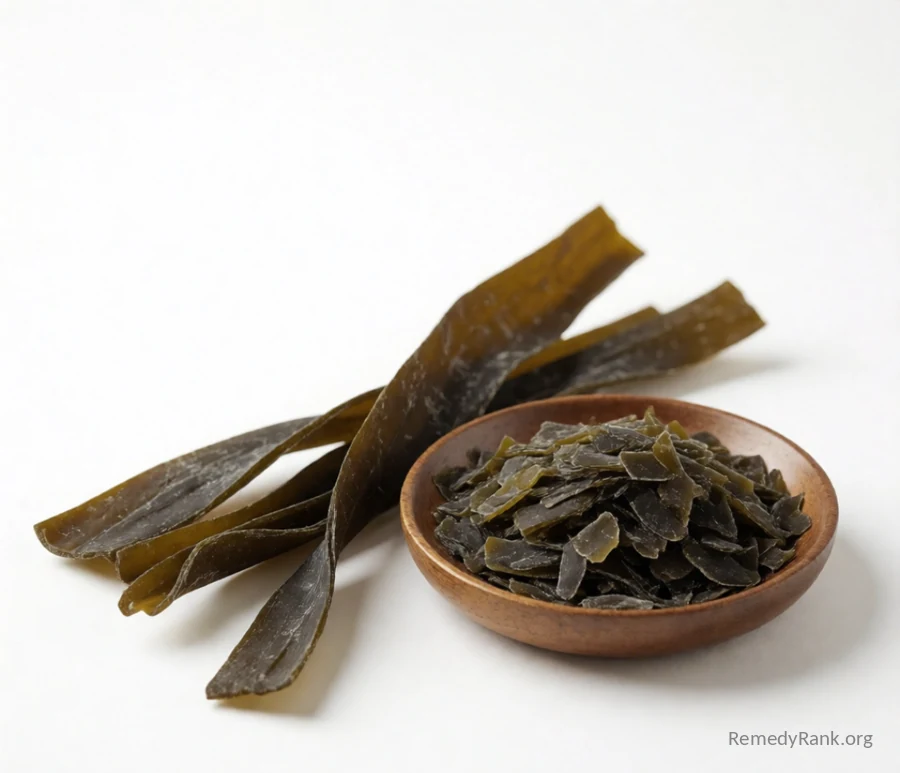
A mineral-rich seaweed that is one of nature's best sources of iodine, used in small amounts as a nourishing addition to soups and broths.
 ⤢
⤢📊 How it ranks (our editor score) — 75/100Tap to see the breakdown
🌱 What it is
Kelp is a large brown seaweed that grows in cool coastal waters, sometimes forming underwater forests. Dried kelp, often sold as kombu, has been used for generations in soups, broths, and seasonings for its deep, savory flavor.
📜 Where it comes from
Kelp and other seaweeds have been eaten for centuries in coastal East Asian cultures, particularly Japan, Korea, and China, where dried kelp such as kombu became a staple flavoring and nutritional food. Coastal peoples elsewhere, including in Northern Europe, also traditionally used seaweed in cooking and as animal feed. Kelp entered wider Western nutritional awareness in the twentieth century as a natural source of iodine.
✨ Why it's good for you
- Traditionally used to support healthy thyroid function because of its natural iodine content
- May help support mineral intake with its calcium, iron, and magnesium content
- Traditionally used to add savory depth and nourishment to soups and broths
- May help support healthy digestion when cooked with beans and legumes
🥗 Nutrition
Per 2 tbsp raw (10 g) · about 4 calories
- Iodine (varies, often very high per gram)
- Calcium 17 mg
- Iron 0.3 mg
- Magnesium 12 mg
Source: USDA FoodData Central
🥄 How to use it
Add a small piece of dried kelp (kombu) to soups, broths, or a pot of beans while cooking, or use a light sprinkle of kelp flakes as a seasoning.
How much: Use a small strip of dried kelp (a few inches) to flavor a pot of soup or beans, or a light pinch of kelp flakes as seasoning - occasional, modest amounts rather than daily large servings.
Why it works: Rich, balanced source of iodine and trace minerals for thyroid function.
Show full details & how to prepare it
Kelp is a large brown seaweed harvested as a sea vegetable, and it carries the minerals of the ocean - most notably iodine, the very element the thyroid needs to make its hormones. In places where the land and diet are low in iodine, sea vegetables were the traditional safeguard against goiter, the thyroid swelling that iodine lack can cause.
Beyond iodine, kelp offers calcium and other trace minerals that support bone health, along with gentle fiber that helps keep the bowel moving. A small piece of dried kombu simmered into a soup, broth, or pot of beans lends a savory depth and quietly enriches the meal.
The key is restraint. Because kelp is so concentrated in iodine, a little goes a long way; small culinary amounts nourish, while large doses or strong supplements can tip the thyroid the wrong way. Used as a gentle seasoning, it is a wholesome gift from the sea.
Ways to prepare it
⚠️ Cautions
- Kelp is very high in iodine; too much can upset the thyroid, so use small culinary amounts, not high-dose supplements.
- People with thyroid disease or who take thyroid medicine often need to watch their iodine intake closely, since kelp's high iodine content can affect thyroid function.
- Choose tested, reputable sources, since seaweed can concentrate heavy metals from the sea.
📚 Learn more
🌿 Deeper natural detail
Curated links coming for this one.
💬 Ask Remy about Kelp (Sea Vegetable)
📚 Resource confidence
Based on mentions in health references
Your vote is saved. Source endorsement totals come from books and studies (+7 per book, +5 per article). You can change your vote anytime from this device.
💬 Comments & experiences
Share what worked for you — and reply or 👍 like the experiences that resonate. Comments get a quick review before they appear publicly, to keep things safe and honest. Please don't make medical claims.
💚 Have an experience to share? Create a free account to join the conversation — your words might be exactly what someone else needs. Reading is always open to everyone.
Know a remedy like this?
Share a structured suggestion and our team will review it for the site.
Suggest a similar remedy