Practice
High-Fiber Diet
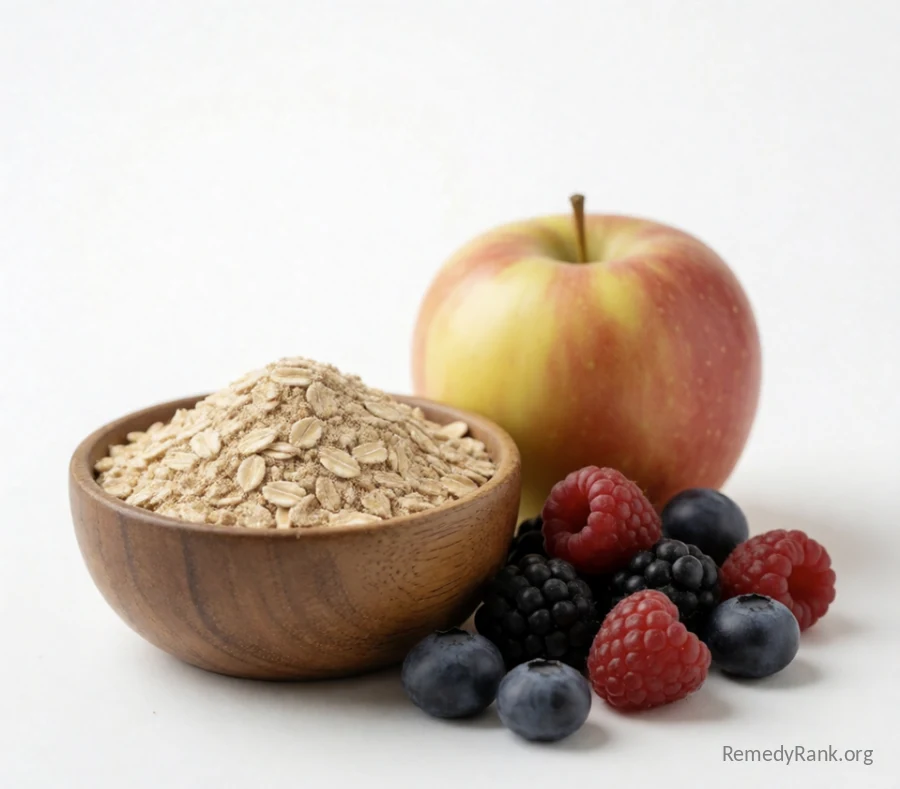
Eating enough fiber to produce large, soft stools and support healthy bowels.
 ⤢
⤢📊 How it ranks (our editor score) — 73/100Tap to see the breakdown
🌱 What it is
A dietary pattern rich in fruits, vegetables, bran, and whole grains that increases stool bulk and softness.
📜 Where it comes from
The importance of fiber-rich foods for bowel health was recognized informally for centuries through traditional diets built around whole grains, fruits, and vegetables, but it became a formal nutritional concept in the twentieth century after researchers studying rural African diets in the 1970s noted low rates of digestive disease alongside high fiber intake. This research helped popularize fiber as a specific dietary target in both conventional and natural-health nutrition guidance. The dietary pattern has since become a mainstream recommendation for healthy bowel function.
✨ Why it's good for you
- Supports regular, comfortable bowel movements
- May ease pressure-related colon conditions
- Generally supports overall digestive health
🙏 Begin with prayer
Prayer is the first remedy, not the last resort. Whether you are facing this yourself, caring for someone who is, or simply reading to understand — here is a simple prayer you are welcome to make your own, in your name or in theirs:
Lord, my body is Your temple, and I want to care well for it, even in something as ordinary as what I eat each day. Thank You for the fruits, vegetables, and whole grains that keep this body moving as You designed. Bless this fuller, fiber-rich way of eating, ease my discomfort, and give me patience as my gut slowly finds its balance. In Jesus' name, Amen.
“What? know ye not that your body is the temple of the Holy Ghost which is in you, which ye have of God, and ye are not your own? For ye are bought with a price: therefore glorify God in your body, and in your spirit, which are God's.”— 1 Corinthians 6:19-20
🥄 How to use it
Include fresh fruit, vegetables, bran, and whole grains at most meals, and drink plenty of water throughout the day.
How much: As directed on the product label
Why it works: Fiber adds bulk and softness to stool, which reduces pressure in the colon and supports regular, comfortable bowel movements.
🔬 Let's get technical
The scientific view, plainly reported. Hover a dotted word for its meaning.
What's in it
Dietary fiber divides broadly into , which dissolves in water to form a viscous gel, and , which adds bulk without dissolving; foods contribute varying blends of both along with fermentable components such as and .
Mechanism of action
increases fecal bulk and softens stool by holding water in the colon, which stimulates the stretch receptors that trigger and shortens colonic transit time. slows and delays glucose and cholesterol absorption in the small intestine, contributing to a blunted post-meal and modest cholesterol reduction. In the colon, and other fermentable fibers are metabolized by resident bacteria into , including , which serves as a primary energy source for and has been studied for anti-inflammatory effects on the gut lining. This also lowers pH and supports a more favorable balance of gut bacterial populations.
Current pharmacological applications
High-fiber intake has strong observational and interventional evidence for improving stool consistency and reducing constipation, and is a standard first-line recommendation in gastroenterology for that purpose. Cohort studies consistently associate higher fiber intake with lower rates of colorectal disease and cardiovascular events, though as with most dietary epidemiology, disentangling fiber's specific contribution from the overall dietary pattern of high-fiber eaters is difficult. and research is an active area of gut-health science, with much of the mechanistic detail still coming from laboratory and animal studies rather than direct human clinical trials.
Every underlined word is collected on the technical glossary.
⚠️ Cautions
- Increase fluid intake as you increase fiber to avoid worsening constipation.
- Increase fiber gradually to reduce gas and bloating.
📚 Learn more
🌿 Deeper natural detail
Curated links coming for this one.
🩺 The conventional view
💬 Ask Remy about High-Fiber Diet
📚 Resource confidence
Based on mentions in health references
Your vote is saved. Source endorsement totals come from books and studies (+7 per book, +5 per article). You can change your vote anytime from this device.
💬 Comments & experiences
Share what worked for you — and reply or 👍 like the experiences that resonate. Comments get a quick review before they appear publicly, to keep things safe and honest. Please don't make medical claims.
💚 Have an experience to share? Create a free account to join the conversation — your words might be exactly what someone else needs. Reading is always open to everyone.
Know a remedy like this?
Share a structured suggestion and our team will review it for the site.
Suggest a similar remedy