Supplement
Beta Carotene
A plant-based vitamin A precursor traditionally used to support the intestinal and colon lining.
 ⤢
⤢📊 How it ranks (our editor score) — 60/100Tap to see the breakdown
🌱 What it is
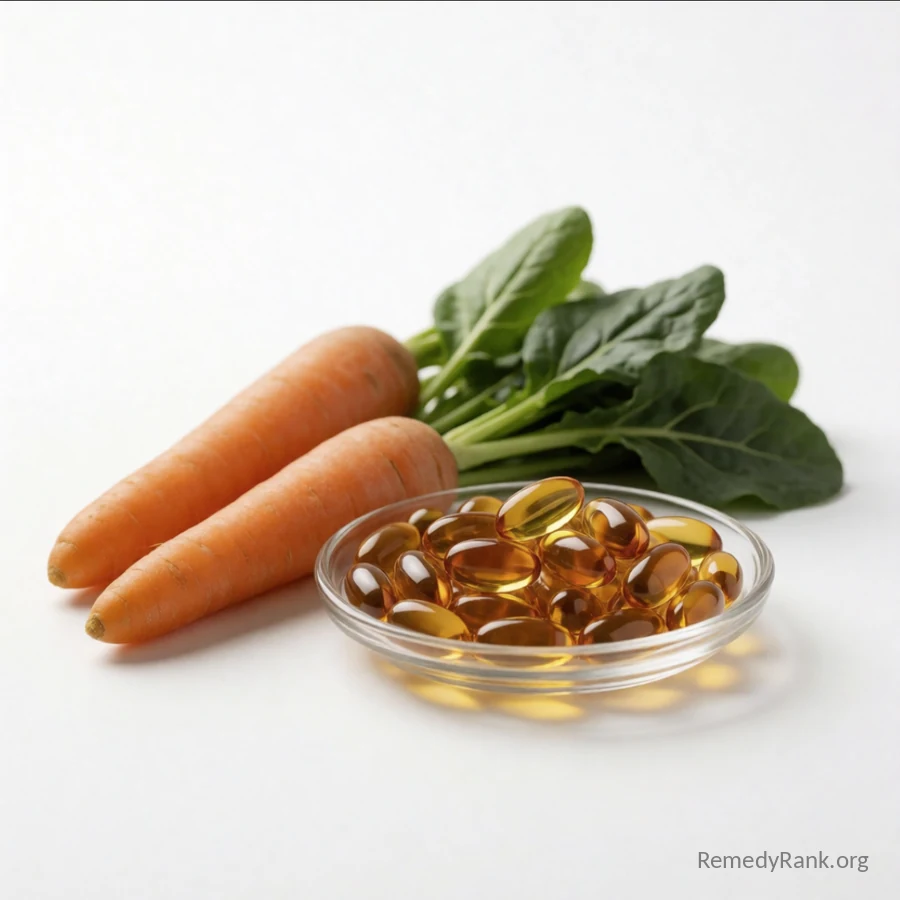
Beta carotene is a plant pigment found in carrots and leafy greens that the body converts into vitamin A as needed.
📜 Where it comes from
Carrots and other orange vegetables have been valued since antiquity as foods that support eyesight and general vigor, an observation later explained by the discovery of vitamin A and its plant precursor, beta carotene, in the early 20th century. Natural-health writers have since recommended beta-carotene-rich foods to support the lining of the intestines and colon.
✨ Why it's good for you
- Supports intestinal and colon lining health
- Antioxidant support from whole foods
- Easy to get from carrots and leafy greens
- Body converts only what it needs into vitamin A
🙏 Begin with prayer
Prayer is the first remedy, not the last resort. Whether you are facing this yourself, caring for someone who is, or simply reading to understand — here is a simple prayer you are welcome to make your own, in your name or in theirs:
Lord, this body is Your temple, bought at a price, and I thank You for beta carotene's quiet support to the lining You gave my intestines and colon. Keep me within wise, gentle limits rather than excess, and steady my trust that You care about even this unseen, inward part of me. Grant comfort and patience as this support does its slow work. In Jesus' name, Amen.
“What? know ye not that your body is the temple of the Holy Ghost which is in you, which ye have of God, and ye are not your own? For ye are bought with a price: therefore glorify God in your body, and in your spirit, which are God's.”— 1 Corinthians 6:19-20
🥄 How to use it
Take a modest supplement as directed on the label, or get it through food by drinking carrot juice and eating deep green and orange vegetables regularly.
How much: As directed on the product label; food sources (carrot juice, greens) are the safest way to get it.
Why it works: Beta carotene supports the mucous membranes lining the intestines and colon, and the body's antioxidantA helpful substance in colorful fruits and vegetables that protects your cells from everyday wear and tear. More → activity, which may aid tissue repair.
🔬 Let's get technical
The scientific view, plainly reported. Hover a dotted word for its meaning.
What's in it
is an orange-red pigment and the most efficiently converted of the provitamin A carotenoids, split in the intestinal wall into two molecules of , which can then be reduced to retinol or oxidized to depending on tissue need.
Mechanism of action
Unlike preformed vitamin A, 's conversion to active retinoids is regulated by the body according to vitamin A status, which is why excess beta-carotene intake does not produce the toxicity seen with excess preformed retinol. , one conversion product, acts as a ligand for nuclear retinoic acid receptors that regulate gene expression involved in , including the maintenance of linings such as the intestinal and colonic epithelium. Unconverted beta-carotene also functions independently as an antioxidant, quenching and other reactive species in fat-containing tissues. At very high intakes, unconverted beta-carotene accumulates in skin fat layers, producing a harmless yellow-orange skin discoloration called .
Current pharmacological applications
status is studied observationally as a marker of fruit and vegetable intake, with higher levels associated with lower rates of several chronic diseases in cohort studies. Notably, large randomized trials of high-dose synthetic beta-carotene supplements in smokers found an increased, not decreased, risk of lung cancer, a finding that reshaped how the supplement is viewed and led to caution against extrapolating food-based associations to concentrated supplementation. Its traditional use for intestinal and colon lining support is plausible given 's role in epithelial maintenance, but direct clinical evidence for this specific application in humans is limited.
Every underlined word is collected on the technical glossary.
⚠️ Cautions
- Avoid high-dose megadosing (some traditional sources suggest very high amounts, but this is not recommended) — stick to label directions or food sources.
- Very high intakes can (harmlessly) tint skin orange; discontinue if this occurs.
- Consult a doctor before high-dose supplementation if pregnant or nursing.
📚 Learn more
🌿 Deeper natural detail
🩺 The conventional view
💬 Ask Remy about Beta Carotene
📚 Resource confidence
Based on mentions in health references
Your vote is saved. Source endorsement totals come from books and studies (+7 per book, +5 per article). You can change your vote anytime from this device.
💬 Comments & experiences
Share what worked for you — and reply or 👍 like the experiences that resonate. Comments get a quick review before they appear publicly, to keep things safe and honest. Please don't make medical claims.
💚 Have an experience to share? Create a free account to join the conversation — your words might be exactly what someone else needs. Reading is always open to everyone.
Know a remedy like this?
Share a structured suggestion and our team will review it for the site.
Suggest a similar remedy