Nut
Cashew
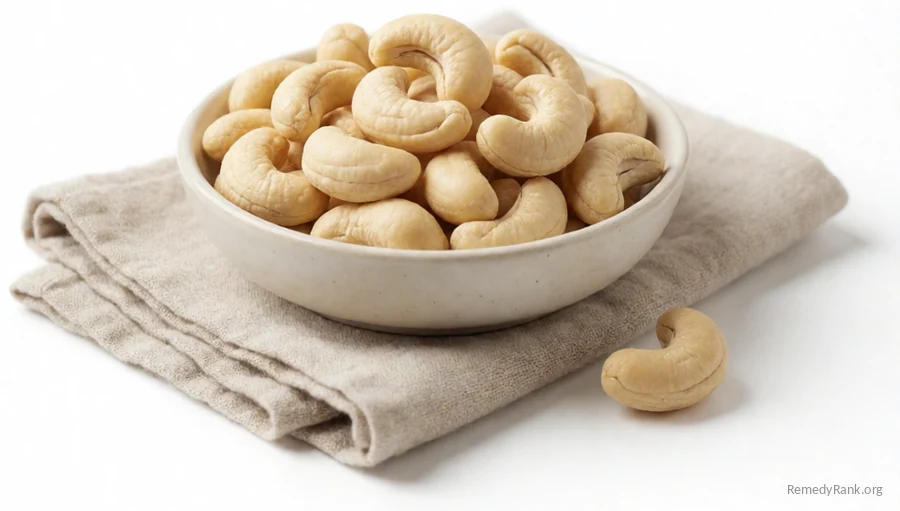
A creamy, kidney-shaped nut rich in magnesium and heart-healthy fats that supports the heart, eases muscle cramps, and steadies cholesterol.
 ⤢
⤢📊 How it ranks (our editor score) — 88/100Tap to see the breakdown
🌱 What it is
Cashews grow as a single curved seed dangling beneath the cashew apple, a tropical fruit. The kernel is roasted to remove a mildly irritating shell oil before it reaches store shelves, leaving the smooth, buttery nut we know.
📜 Where it comes from
Cashews are native to Brazil, where indigenous peoples used both the nut and the cashew apple long before Portuguese explorers carried the tree to Africa and Asia in the sixteenth century. It took root especially well in India and parts of Africa, which became major producers over the following centuries. Cashews eventually became a popular snack nut worldwide.
✨ Why it's good for you
- May help support the heart with its blend of unsaturated fats
- May help ease muscle cramps thanks to its magnesium content
- May help support steady cholesterol levels as part of a balanced diet
- Traditionally used to support healthy skin and hair with its copper and zinc content
🥗 Nutrition
Per 1 oz (28 g, about 18 kernels) · about 157 calories
- Protein 5.2 g
- Magnesium 83 mg
- Copper 0.6 mg
- Unsaturated fat 9 g
- Iron 1.9 mg
Source: USDA FoodData Central
🥄 How to use it
Snack on a small handful, blend into creamy sauces, or sprinkle over dishes for richness.
How much: A practical food amount is a small handful, about a quarter cup, on most days.
Why it works: Nutrition science points to cashew's magnesium content as support for muscle relaxation and easing cramps, alongside its heart-healthy monounsaturated fats studied for supporting cholesterol balance.
Show full details & how to prepare it
The cashew is a buttery, kidney-shaped nut that grows curiously from the base of a tropical fruit, native to Brazil and now cherished the world over. Its mild sweetness and creamy texture make it a favorite both as a snack and blended into rich, dairy-free sauces.
Cashews are an excellent source of magnesium, the quiet mineralA natural building block your body needs in small amounts, like calcium or magnesium. More → that helps muscles relax and unclench — a comfort to anyone troubled by cramps — and they carry the heart-friendly fats that help steady cholesterol. They also bring copper, zinc and plant compounds that support the blood vessels and the body's daily repair.
They are a wholesome and safe food for most people. As a tree nut they must be avoided by anyone with a nut allergy, and being rich and calorie-dense they are best enjoyed unsalted and in a modest handful.
Ways to prepare it
⚠️ Cautions
- They are a tree nut, so anyone with a nut allergy must avoid them entirely.
- Choose unsalted cashews and keep to a small handful, as nuts are rich and calorie-dense.
📚 Learn more
🌿 Deeper natural detail
💬 Ask Remy about Cashew
📚 Resource confidence
Based on mentions in health references
Your vote is saved. Source endorsement totals come from books and studies (+7 per book, +5 per article). You can change your vote anytime from this device.
💬 Comments & experiences
Share what worked for you — and reply or 👍 like the experiences that resonate. Comments get a quick review before they appear publicly, to keep things safe and honest. Please don't make medical claims.
💚 Have an experience to share? Create a free account to join the conversation — your words might be exactly what someone else needs. Reading is always open to everyone.
Know a remedy like this?
Share a structured suggestion and our team will review it for the site.
Suggest a similar remedy