Herb
Calendula
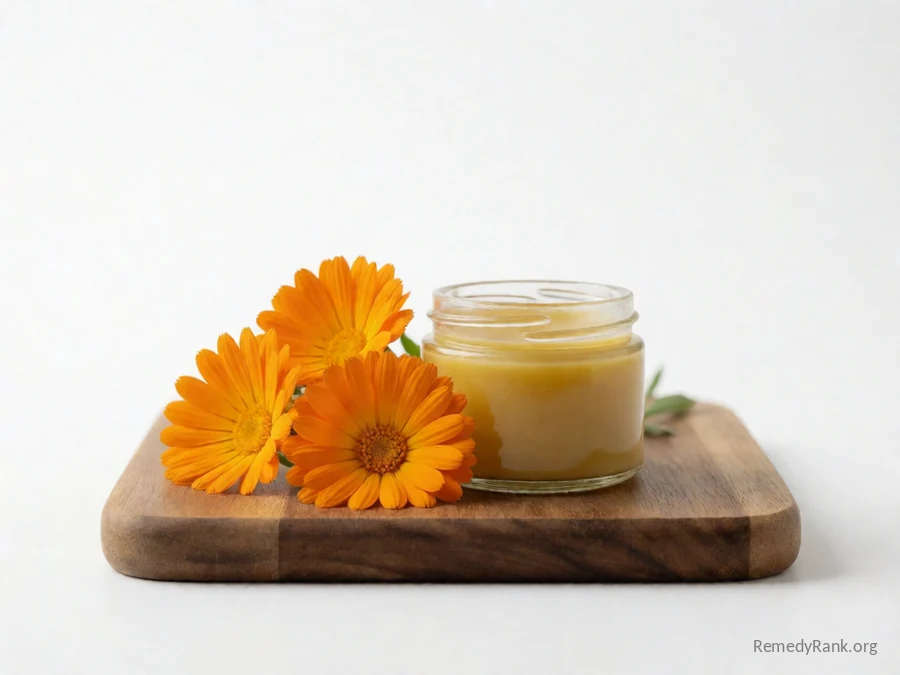
A cheerful golden flower traditionally used as a soothing, skin-healing tea and topical wash.
 ⤢
⤢📊 How it ranks (our editor score) — 66/100Tap to see the breakdown
🌱 What it is
Calendula (pot marigold) is a garden flower long used in herbal medicine for its gentle, soothing effect on skin and mucous membranes.
📜 Where it comes from
Calendula, or pot marigold, was used by ancient Greek, Roman, and Arab physicians for its soothing effect on skin and wounds, and it remained a fixture of medieval European herb gardens. Folk healers across Europe brewed it as a tea and applied it as a wash for centuries, a tradition that continues in herbal medicine today.
✨ Why it's good for you
- May soothe irritated or inflamed skin
- Traditionally used to support wound healing
- Gentle enough for regular topical use
- Pleasant, mild tea
🥄 How to use it
Drink calendula teaA warm drink made by steeping herbs in hot water. How to make a tea →, or steep 2 tbsp dried flowers in 1 cup boiling water 15-20 minutes; strain and apply the cooled infusionA tea made by steeping soft leaves or flowers in hot water. How to make an infusion → to skin with a clean cloth 2x daily. Calendula-infused oilOil gently flavored with herbs, used on skin or in a salve. How to make an infused oil →, cream, or ointmentA soft, spreadable skin preparation, a little thicker than a cream. How to make an ointment → can also be applied topically as needed.
How much: 1 cup teaA warm drink made by steeping herbs in hot water. How to make a tea → up to 2-3x daily, or apply topicalSomething you put on your skin rather than swallow. More → preparations as needed.
Why it works: Calendula is thought to be anti-inflammatoryA food or habit that helps calm swelling and redness in the body. More → and to promote wound healing, which may help soothe irritated skin and support the gut lining.
⚠️ Cautions
- Avoid if allergic to ragweed or other plants in the daisy family
- Not well studied in pregnancy — check with a provider before internal use
- Discontinue topical use if irritation develops
📚 Learn more
🌿 Deeper natural detail
🩺 The conventional view
Curated links coming for this one.
🔎 What this addresses
Where Calendula fits into a condition's cause-and-symptom picture — some conditions it works on the root cause of, others it mainly soothes.
Eases the symptoms of
For these, it calms the condition without addressing what drives it.
💬 Ask Remy about Calendula
📚 Resource confidence
Based on mentions in health references
Your vote is saved. Source endorsement totals come from books and studies (+7 per book, +5 per article). You can change your vote anytime from this device.
💬 Comments & experiences
Share what worked for you — and reply or 👍 like the experiences that resonate. Comments get a quick review before they appear publicly, to keep things safe and honest. Please don't make medical claims.
💚 Have an experience to share? Create a free account to join the conversation — your words might be exactly what someone else needs. Reading is always open to everyone.
Know a remedy like this?
Share a structured suggestion and our team will review it for the site.
Suggest a similar remedy