Food
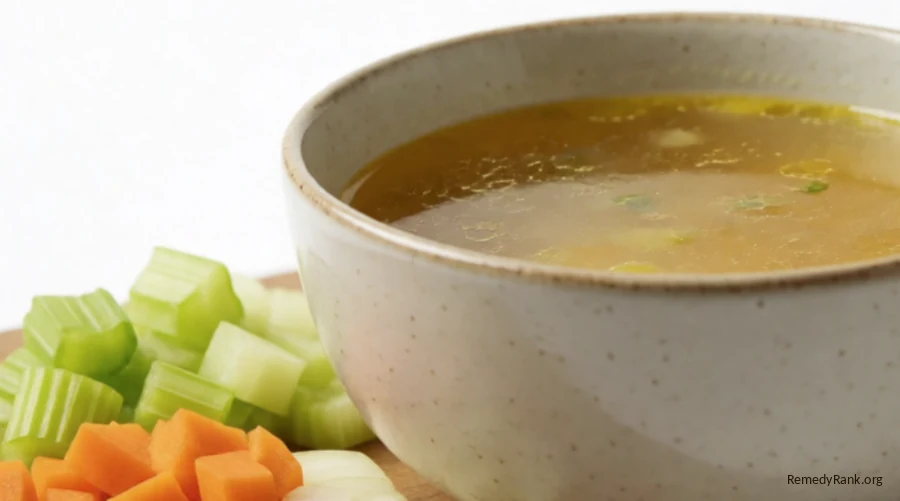
Vegetable Broth
A warm, savory plant-based broth that comforts, hydrates, and is easy on an upset stomach.
 ⤢
⤢📊 How it ranks (our editor score) — 89/100Tap to see the breakdown
🌱 What it is
Vegetable broth is a savory liquid made by gently simmering vegetables like onion, celery, carrot, and greens in water, then straining out the solids.
📜 Where it comes from
Simmered vegetable broths have been a comfort food in nearly every culinary tradition, valued for centuries as an easy, warming way to nourish someone who is unwell. The nineteenth-century Battle Creek health movement, with its emphasis on simple plant-based cooking, kept broths like this as a gentle staple for the sick and recovering. It remains one of the most universally recommended foods when someone feels under the weather.
✨ Why it's good for you
- May help support hydration when appetite is low
- May help support a gentle, easy-to-digest meal during illness
- May help support warmth and comfort on a cold or unsettled day
- May help support a light, nourishing base for soups and grains
🥗 Nutrition
Per 1 cup (240ml) · about 12 calories
- Sodium 460mg
- Potassium 130mg
- Vitamin A 190IU
Source: USDA FoodData Central
🥄 How to use it
Simmer vegetables like onion, celery, carrot, and greens, then sip the warm, strained broth. Add a little salt and herbs to taste.
Why it works: Nutritionists point out that warm broth is easy to digest, supplies fluids and gentle minerals from the vegetables, and can be more appealing than plain water to someone who feels unwell.
🔬 Let's get technical
The scientific view, plainly reported. Hover a dotted word for its meaning.
What's in it
Vegetable broth is water simmered with plant matter — commonly onion, carrot, celery, and other aromatics — yielding a dilute solution of (chiefly sodium, potassium, and small amounts of magnesium and calcium), free amino acids, and water-soluble flavor compounds released during cooking. It carries little to no fat and only a small amount of carbohydrate and protein compared with the vegetables it was made from, since most of the solid fiber and much of the plant structure stays behind if the broth is strained. Commercial versions often add extra sodium chloride, which meaningfully changes the electrolyte profile compared with a homemade, lightly salted version.
Mechanism of action
As a warm liquid taken in volume, broth contributes to fluid intake and, because it contains sodium and potassium alongside water, it helps replace lost through sweating, fever, or gastrointestinal fluid loss more effectively than plain water alone — a principle shared with oral rehydration formulations, though broth's exact electrolyte ratios are not standardized the way a rehydration solution's are. Its low fiber and fat content make it easy to digest and empty from the stomach quickly, which is why clear soups and broths are commonly categorized among "clear liquids" tolerated when the gut is irritated or motility is reduced. Warmth itself can promote mild and a subjective sense of comfort, though this is a general effect of warm liquids rather than something specific to broth's composition.
Current pharmacological applications
Vegetable broth is widely listed as an example of a clear liquid appropriate during recovery from gastrointestinal upset, in the period before or after certain medical procedures, or when fluid intake needs to increase, largely because of its low fiber and residue content rather than any specific pharmacological action. It has no defined dose, standardized formulation, or clinical trial base in the way a drug or supplement does; its role in guidance documents is dietary and practical rather than therapeutic. Sodium content varies enormously between homemade and commercial versions, which is the main variable of interest when broth is discussed for fluid and management.
Every underlined word is collected on the technical glossary.
⚠️ Cautions
- Go easy on salt, especially if you are watching your blood pressure.
- Let it cool enough to sip safely.
- Choose a low-salt broth if you buy it ready-made.
📚 Learn more
🌿 Deeper natural detail
💬 Ask Remy about Vegetable Broth
📚 Resource confidence
Based on mentions in health references
Your vote is saved. Source endorsement totals come from books and studies (+7 per book, +5 per article). You can change your vote anytime from this device.
💬 Comments & experiences
Share what worked for you — and reply or 👍 like the experiences that resonate. Comments get a quick review before they appear publicly, to keep things safe and honest. Please don't make medical claims.
💚 Have an experience to share? Create a free account to join the conversation — your words might be exactly what someone else needs. Reading is always open to everyone.
Know a remedy like this?
Share a structured suggestion and our team will review it for the site.
Suggest a similar remedy