Vegetable
Avocado
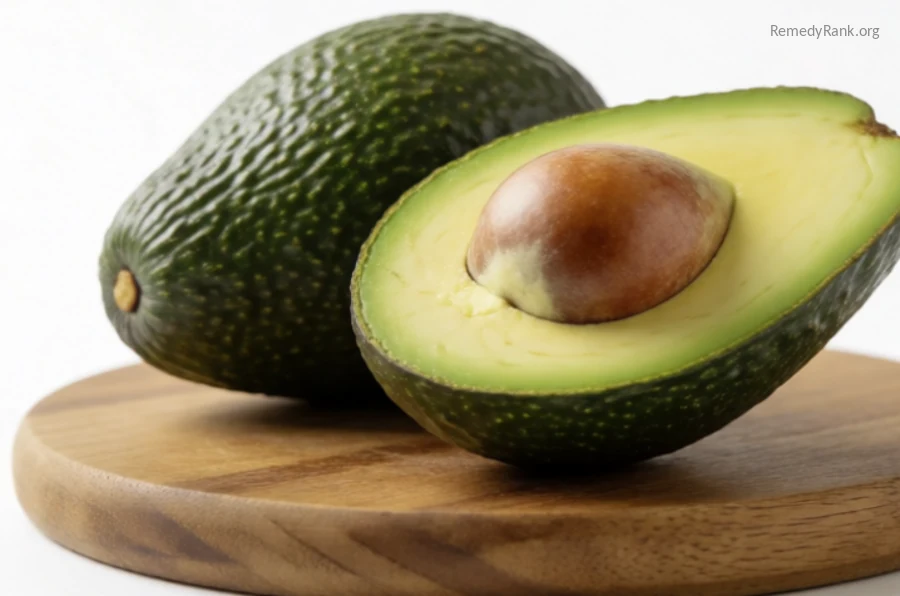
A creamy green fruit rich in healthy fats, nourishing for the heart, skin, and steady energy.
 ⤢
⤢📊 How it ranks (our editor score) — 87/100Tap to see the breakdown
🌱 What it is
Avocados are a soft, buttery fruit packed with healthy fats, fiber, and potassium. They are gentle, filling, and easy to enjoy.
📜 Where it comes from
Avocados were cultivated by the Aztec and Maya peoples of Central America centuries before European contact, valued as a rich, nourishing food. They spread to the rest of the world gradually and gained popularity in the West through the 20th century as nutrition science identified their healthy fat content.
✨ Why it's good for you
- Healthy plant fats help feed soft, supple skin
- Potassium and fiber support a happy heart
- Slow, steady energy that helps you feel full
🥗 Nutrition
Per 1/2 medium avocado (100g) · about 160 calories
- Healthy monounsaturated fat 15g
- Fiber 7g
- Potassium 14% DV
- Folate 20% DV
Source: USDA FoodData Central
🥄 How to use it
Eat avocado fresh — mashed on whole-grain toast, in salads, or blended into smoothies; its healthy fats also help you absorb nutrients from other foods.
How much: A serving (a quarter to half an avocado) as part of meals.
Why it works: Nutrition science points to avocado's monounsaturated fats and potassium as supporting healthy cholesterol levels and heart function.
Show full details & how to prepare it
Avocado is a buttery green fruit rich in the same kind of healthy monounsaturated fats found in olive oil, which support healthy cholesterol and the heart. Those fats also nourish the skin and help the body absorb fat-soluble vitamins from the rest of a meal.
Ways to prepare it
🔬 Let's get technical
The scientific view, plainly reported. Hover a dotted word for its meaning.
What's in it
Avocado flesh is roughly three-quarters water and is notable among fruits for its fat content, dominated by the monounsaturated fatty acid , with smaller amounts of polyunsaturated fat. It also supplies the plant sterol , the , potassium, and .
Mechanism of action
, the same fatty acid prominent in olive oil, has been studied for its influence on blood lipid profiles when substituted for saturated fat, generally lowering while maintaining or raising HDL cholesterol. structurally resembles cholesterol and can compete with it for absorption in the intestine, a mechanism proposed to modestly lower circulating cholesterol. is preferentially deposited in the retina's , where it is thought to filter high-energy light and contribute to antioxidant defense of photoreceptor cells. The fruit's fiber and fat combination also slows , contributing to and a blunted post-meal .
Current pharmacological applications
Dietary trials substituting avocado for other fat sources have measured favorable shifts in LDL and HDL cholesterol over several weeks, generally in the context of otherwise controlled diets. Observational nutrition research links regular avocado consumption with modestly better diet quality and cardiovascular risk markers, though as with most whole-food epidemiology, isolating avocado's specific contribution from overall dietary pattern is difficult. 's role in eye health is better established for isolated supplementation than for avocado consumption specifically.
Every underlined word is collected on the technical glossary.
⚠️ Cautions
- A whole food, very safe; it's calorie-dense, so enjoy in sensible portions.
- A rare latex-related allergy is possible.
- Those on certain blood thinners should keep intake steady (it contains some vitamin K).
📚 Learn more
🌿 Deeper natural detail
🩺 The conventional view
💬 Ask Remy about Avocado
📚 Resource confidence
Based on mentions in health references
Your vote is saved. Source endorsement totals come from books and studies (+7 per book, +5 per article). You can change your vote anytime from this device.
💬 Comments & experiences
Share what worked for you — and reply or 👍 like the experiences that resonate. Comments get a quick review before they appear publicly, to keep things safe and honest. Please don't make medical claims.
💚 Have an experience to share? Create a free account to join the conversation — your words might be exactly what someone else needs. Reading is always open to everyone.
Know a remedy like this?
Share a structured suggestion and our team will review it for the site.
Suggest a similar remedy