Nut
Almond
A crunchy nut rich in vitamin E and healthy fats, eaten to support the heart, skin, and steady energy.
 ⤢
⤢📊 How it ranks (our editor score) — 82/100Tap to see the breakdown
🌱 What it is
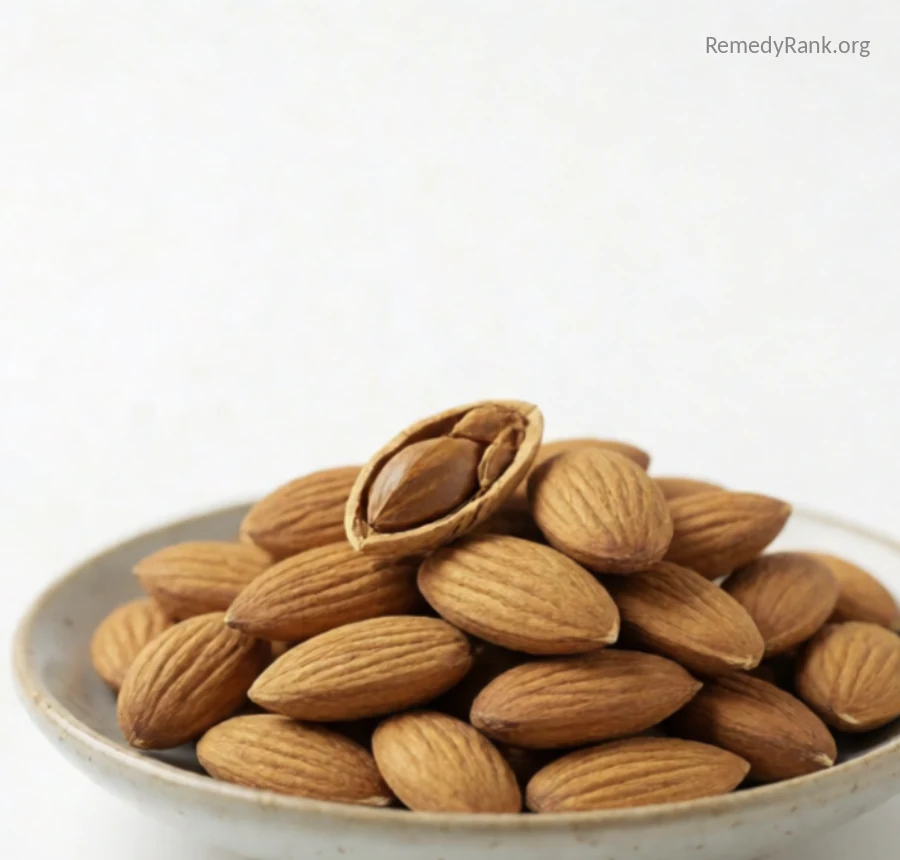
Almonds are tree nuts with a firm, ivory-colored kernel under a thin brown skin, eaten raw, roasted, or soaked, and rich in vitamin E and healthy fats.
📜 Where it comes from
Almonds have been cultivated in the Middle East and Mediterranean for thousands of years, appearing in ancient Egyptian tombs and biblical texts as a valued food. Traditional Mediterranean and Middle Eastern diets relied on almonds as a nourishing snack, a role that spread to the West as almond growing expanded in California in the 1800s and 1900s.
✨ Why it's good for you
- May help support heart health
- May help support healthy skin
- May help support steady, lasting energy between meals
- May help support healthy cholesterol levels
🥗 Nutrition
Per 1 oz, about 23 almonds (28 g) · about 164 calories
- Vitamin E: 7.3 mg
- Protein: 6 g
- Fiber: 3.5 g
- Magnesium: 76 mg
Source: USDA FoodData Central
🥄 How to use it
Eat a small handful (about 20 almonds) most days as a snack, or add them to oatmeal, salads, and dishes; soaking overnight makes them easier to digest for some.
How much: A small handful (about 20 almonds) most days.
Why it works: Nutrition science attributes almond's benefits to vitamin E, an antioxidantA helpful substance in colorful fruits and vegetables that protects your cells from everyday wear and tear. More →, and its monounsaturated fats, which are thought to support heart health.
Show full details & how to prepare it
Almonds are rich in vitamin E, healthy monounsaturated fats, protein, and fiber... a combination that supports healthy cholesterol, nourishes the skin, and provides steady, satisfying energy between meals. A small daily handful is the simple way to enjoy them.
Ways to prepare it
⚠️ Cautions
- A whole food and nourishing; calorie-dense, so keep to a small handful.
- A tree-nut allergy is a clear reason to avoid them.
- Choose raw or dry-roasted, unsalted almonds to keep sodium down.
📚 Learn more
🌿 Deeper natural detail
🩺 The conventional view
💬 Ask Remy about Almond
📚 Resource confidence
Based on mentions in health references
Your vote is saved. Source endorsement totals come from books and studies (+7 per book, +5 per article). You can change your vote anytime from this device.
💬 Comments & experiences
Share what worked for you — and reply or 👍 like the experiences that resonate. Comments get a quick review before they appear publicly, to keep things safe and honest. Please don't make medical claims.
💚 Have an experience to share? Create a free account to join the conversation — your words might be exactly what someone else needs. Reading is always open to everyone.
Know a remedy like this?
Share a structured suggestion and our team will review it for the site.
Suggest a similar remedy