Nut
Sesame Seed
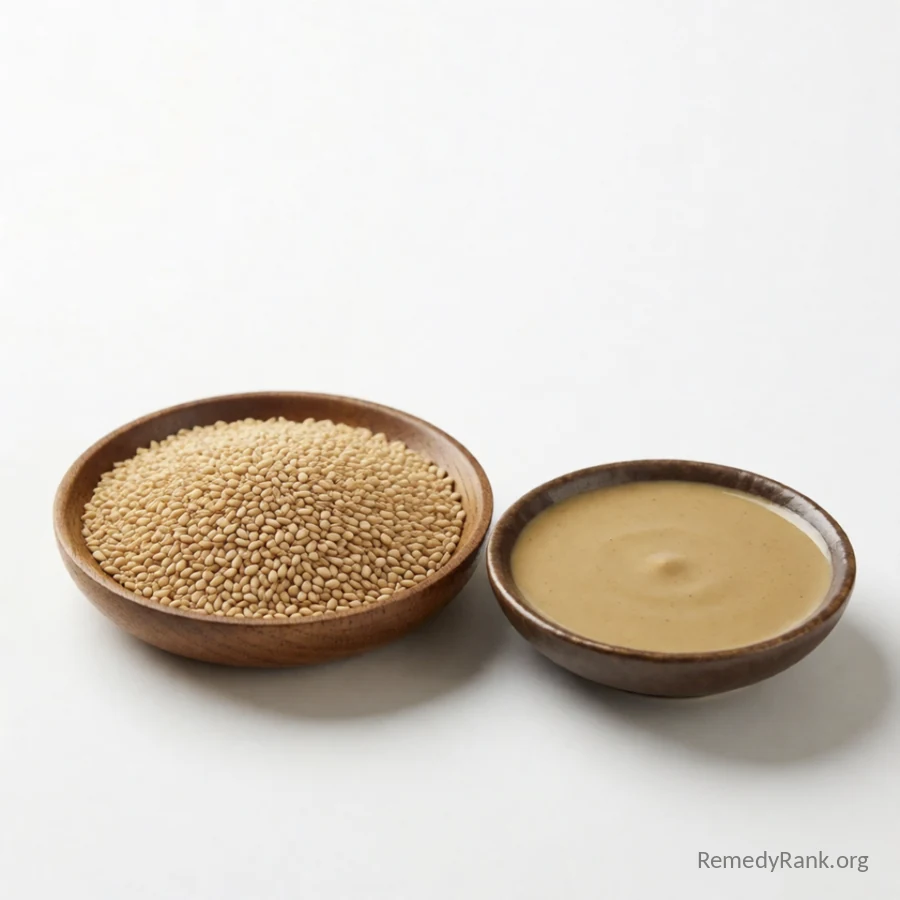
A tiny calcium-rich seed, eaten whole or as tahini, supporting the bones, heart, and digestion.
 ⤢
⤢📊 How it ranks (our editor score) — 85/100Tap to see the breakdown
🌱 What it is
Sesame seeds are small oil-rich seeds used whole or ground into tahini, a staple in cuisines around the world.
📜 Where it comes from
Sesame is one of the oldest cultivated oilseed crops, used in ancient Mesopotamia, Egypt, and India for both food and oil. Traditional Middle Eastern cuisine transformed it into tahini, and it remains a staple across Mediterranean, Middle Eastern, and Asian cooking, valued in folk tradition for its calcium content.
✨ Why it's good for you
- May help support bone health with calcium
- May help support heart health with healthy fats
- May help support healthy digestion
- May help support healthy cholesterol levels
🥗 Nutrition
Per 1 tablespoon (~9g) · about 52 calories
- Calcium 88mg
- Copper 0.4mg
- Fiber 1.1g
- Healthy fats 4.5g
Source: USDA FoodData Central
🥄 How to use it
Sprinkle sesame seeds on food, or use tahini (sesame paste) in dressings and dips; grinding or chewing them well releases their nutrients.
How much: A tablespoon of seeds or tahini, used in food.
Why it works: Sesame seeds carry a good amount of plant-basedEating mostly or only foods that come from plants — fruits, vegetables, beans, grains, nuts, and seeds. More → calcium along with healthy fats, which nutritionists say makes them a useful whole-food contributor to bone strength and cardiovascular health.
Show full details & how to prepare it
Sesame seeds are a remarkable plant source of calcium (especially the unhulled seeds), along with healthy fats and lignans that support the heart. Ground into tahini, they're easy to enjoy in dressings and dips — and grinding helps the body absorb their minerals.
Ways to prepare it
⚠️ Cautions
- A whole food and nourishing; calorie-dense, so use modestly.
- Sesame is a recognized allergen — a clear reason for the allergic to avoid it.
- Whole seeds pass through partly undigested, so grind or chew them well for the calcium.
📚 Learn more
🌿 Deeper natural detail
🩺 The conventional view
💬 Ask Remy about Sesame Seed
📚 Resource confidence
Based on mentions in health references
Your vote is saved. Source endorsement totals come from books and studies (+7 per book, +5 per article). You can change your vote anytime from this device.
💬 Comments & experiences
Share what worked for you — and reply or 👍 like the experiences that resonate. Comments get a quick review before they appear publicly, to keep things safe and honest. Please don't make medical claims.
💚 Have an experience to share? Create a free account to join the conversation — your words might be exactly what someone else needs. Reading is always open to everyone.
Know a remedy like this?
Share a structured suggestion and our team will review it for the site.
Suggest a similar remedy