Therapy
Steam Inhalation
Warm, moist air loosens mucus and soothes irritated nasal and throat passages.
 ⤢
⤢📊 How it ranks (our editor score) — 86/100Tap to see the breakdown
👶 Safe for children?
This remedy carries age-related cautions. Please read them before giving it to a child, and check with your pediatrician or pharmacist first.
- Keep a safe distance to avoid scalds — supervise children closely.
🌱 What it is
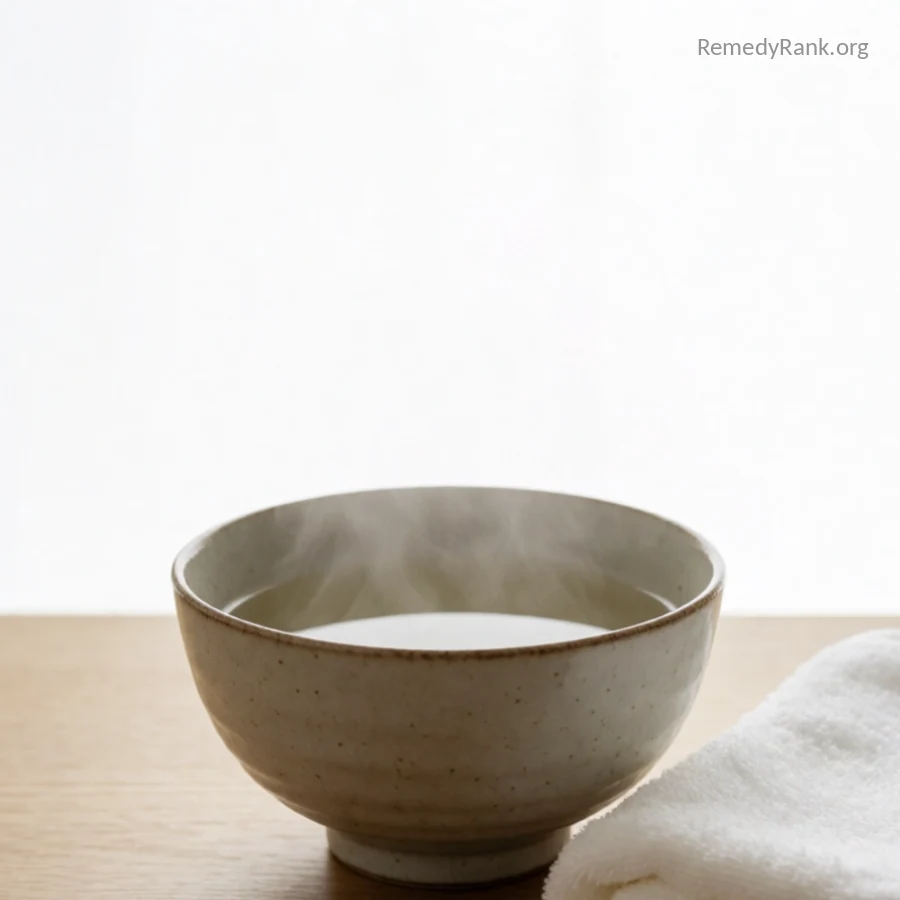
Steam inhalation means breathing in the warm vapor rising from a bowl or pot of hot water, sometimes with herbs added.
📜 Where it comes from
Steam inhalation was a staple of the nineteenth-century hydrotherapy movement associated with Battle Creek sanitariums, where moist heat treatments were prescribed for chest and sinus complaints. The practice reaches back further still, as Greco-Roman physicians and medieval herbalists both recommended breathing in the steam of herb-infused hot water for congestion. It remains one of the simplest and most widely repeated home remedies for a stuffy head.
🙏 Begin with prayer
Prayer is the first remedy, not the last resort. Whether you are facing this yourself, caring for someone who is, or simply reading to understand — here is a simple prayer you are welcome to make your own, in your name or in theirs:
Father, thank You for the simple comfort of warm, moist air when my head and throat are stuffed and sore. As I breathe in this steam, bless it to loosen and ease what troubles me, and keep me safe from any scald. You alone bring true health and cure, so I lean on You, not on this rising vapor, for whatever healing is Yours to give. In Jesus' name, Amen.
“Behold, I will bring it health and cure, and I will cure them, and will reveal unto them the abundance of peace and truth.”— Jeremiah 33:6
🥄 How to use it
Lean over a bowl of hot water with a towel over your head and breathe gently for a few minutes. A warm shower works too.
Why it works: Herbalists and clinicians explain that warm, moist air helps loosen thickened mucus and soothes swollen nasal and throat tissue, making it easier to breathe and to clear congestion naturally.
🔬 Let's get technical
The scientific view, plainly reported. Hover a dotted word for its meaning.
What's in it
As a practice rather than a substance, steam inhalation involves breathing air saturated with water vapor near 100% , typically generated from water heated to near-boiling and cooled slightly before inhalation to a comfortable temperature. Volatile-oil additives such as eucalyptus or are sometimes mixed into the water, adding their own aromatic constituents to the inhaled vapor.
Mechanism of action
Warm, humidified air increases the moisture content of the nasal and upper airway , which is thought to reduce the thickness of mucus and make it easier to clear through normal , the coordinated sweeping action of airway cilia. Warmth also causes transient dilation of superficial nasal blood vessels, contributing to a subjective sensation of eased airflow even when objective measures of show little consistent change. Any added act mainly through their own sensory and mild irritant-receptor effects on the nasal lining rather than through the steam itself. Because the effect is local and largely sensory, steam inhalation is not understood to alter the underlying course of a respiratory infection.
Current pharmacological applications
Steam inhalation is widely used traditionally for symptomatic relief of nasal congestion and cough associated with the common cold, but a Cochrane systematic review of controlled trials found insufficient evidence that it meaningfully improves cold symptoms, and noted case reports of scald and burn injuries from hot water or steam devices as a documented risk of the practice. It continues to be studied in small trials, often alongside herbal steam additives, with mixed and generally low-quality evidence. Clinical guidance in respiratory medicine treats it as a comfort measure rather than a disease-modifying intervention.
Every underlined word is collected on the technical glossary.
📚 Learn more
🌿 Deeper natural detail
💬 Ask Remy about Steam Inhalation
📚 Resource confidence
Based on mentions in health references
Your vote is saved. Source endorsement totals come from books and studies (+7 per book, +5 per article). You can change your vote anytime from this device.
💬 Comments & experiences
Share what worked for you — and reply or 👍 like the experiences that resonate. Comments get a quick review before they appear publicly, to keep things safe and honest. Please don't make medical claims.
💚 Have an experience to share? Create a free account to join the conversation — your words might be exactly what someone else needs. Reading is always open to everyone.
Know a remedy like this?
Share a structured suggestion and our team will review it for the site.
Suggest a similar remedy