Vegetable
Cauliflower
A pale, versatile member of the cabbage family rich in vitamin C and protective plant compounds — light, filling, and endlessly adaptable.
 ⤢
⤢📊 How it ranks (our editor score) — 85/100Tap to see the breakdown
🌱 What it is
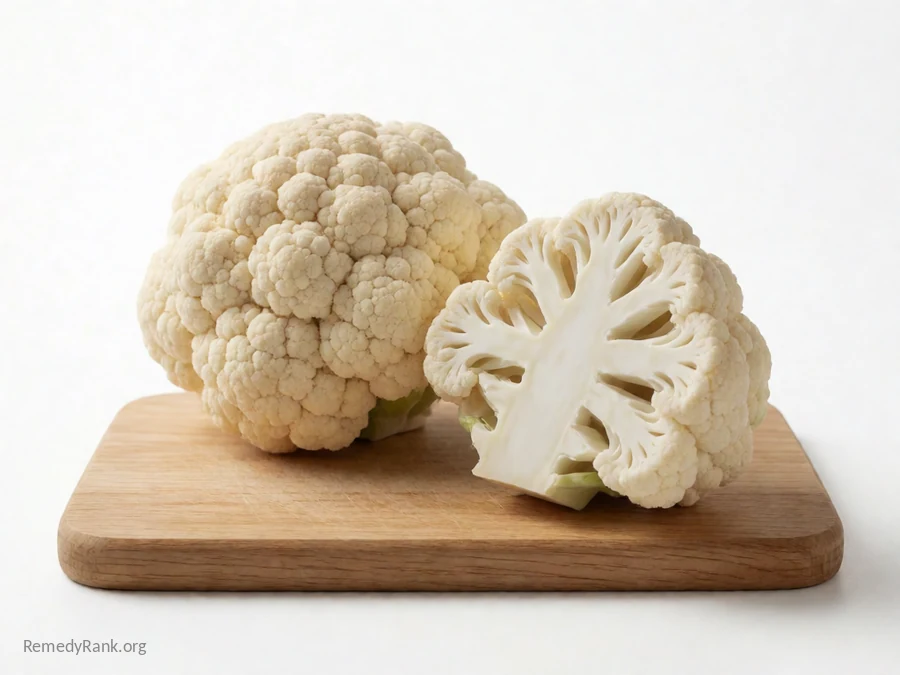
Cauliflower is a cruciferous vegetable with a dense white head of flower buds, related to broccoli and cabbage, that takes on whatever flavors it's cooked with.
📜 Where it comes from
Cauliflower was developed from wild cabbage plants in the eastern Mediterranean and Asia Minor, and its cultivation was well documented by Roman writers including Pliny the Elder. It spread through Europe by the sixteenth century, becoming a favorite in French and Italian cooking before reaching wider popularity worldwide. Traditional diets valued it as a mild, versatile vegetable that could stand in for heartier fare.
✨ Why it's good for you
- May help provide vitamin C for immune support
- May help provide sulfur-rich plant compounds the body uses in its normal defenses
- May help add fiber for fullness and digestion
- May help support a low-calorie, nutrient-dense diet
🥗 Nutrition
Per 1 cup chopped (107g) · about 27 calories
- Vitamin C 51mg
- Fiber 2.1g
- Vitamin K 16.6mcg
- Folate 57mcg
Source: USDA FoodData Central
🥄 How to use it
Roast florets until golden, steam them tender, or blend cooked cauliflower into a creamy soup or mash. It takes on whatever flavors you cook it with.
How much: A cup of cooked cauliflower is a generous serving with a full measure of vitamin C. Several servings of cruciferous vegetables a week is a wholesome aim.
Why it works: Nutrition science points to cauliflower's vitamin C and cruciferous plant compounds as support for the body's natural detoxification processes and immune function.
Show full details & how to prepare it
Cauliflower belongs to the same nourishing family as broccoli, cabbage, and kale, and it shares their gift of glucosinolates — sulfur-rich plant compounds the body uses to support its natural defenses. It is also surprisingly high in vitamin C and fiber while being very low in calories, which makes it a satisfying, light food.
Its mild taste and firm texture let it stand in for heavier foods: blended into a creamy soup, mashed like potatoes, or roasted until sweet and golden. Cooking it thoroughly softens the compounds that cause gas.
Ways to prepare it
⚠️ Cautions
- Like other cruciferous vegetables, it can cause gas and bloating in some people — cooking it well makes it gentler.
- Its vitamin K can affect blood-thinning medicine; keep your intake steady if you take warfarin.
📚 Learn more
🌿 Deeper natural detail
🩺 The conventional view
💬 Ask Remy about Cauliflower
📚 Resource confidence
Based on mentions in health references
Your vote is saved. Source endorsement totals come from books and studies (+7 per book, +5 per article). You can change your vote anytime from this device.
💬 Comments & experiences
Share what worked for you — and reply or 👍 like the experiences that resonate. Comments get a quick review before they appear publicly, to keep things safe and honest. Please don't make medical claims.
💚 Have an experience to share? Create a free account to join the conversation — your words might be exactly what someone else needs. Reading is always open to everyone.
Know a remedy like this?
Share a structured suggestion and our team will review it for the site.
Suggest a similar remedy