Educational information only — RemedyRank does not diagnose, treat, or cure disease. Read our full disclaimer.

Herb

White Willow Bark

67/100
RemedyRank score

The bark of the willow tree, the original source of aspirin's active idea — a traditional herb for pain, fever, and achy joints.

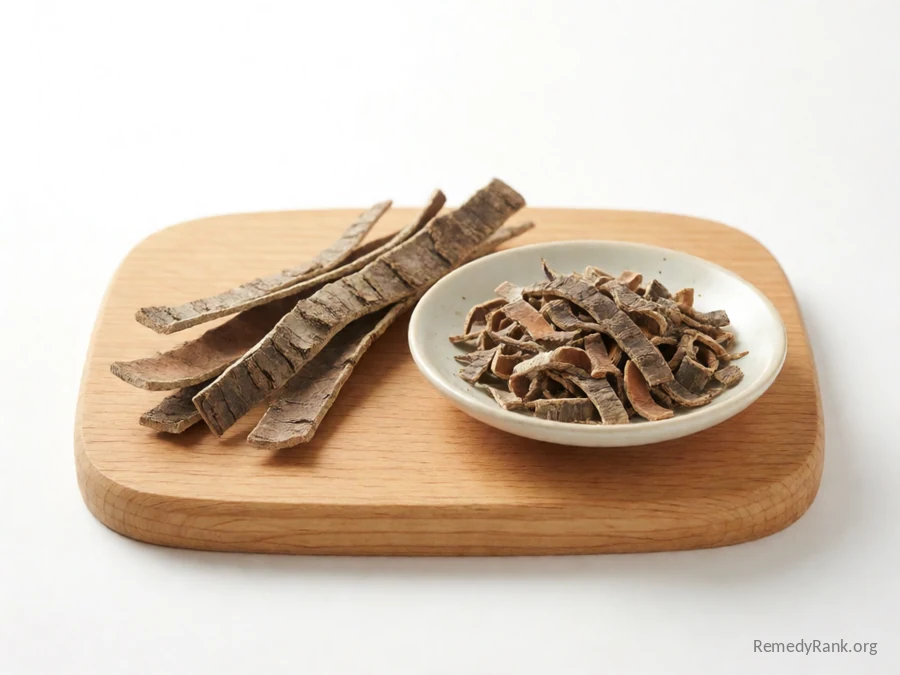
A strip of white willow bark beside a dish of dried shredded bark.
📊 How it ranks (our editor score) — 67/100Tap to see the breakdown
Source quality
Safety
Simplicity
Affordability
Lifestyle fit
Eight-laws alignment
User feedback

👶 Safe for children?

This remedy carries age-related cautions. Please read them before giving it to a child, and check with your pediatrician or pharmacist first.

  • Never give it to children or teens with a fever or viral illness, because of the risk of Reye's syndrome.

🌱 What it is

White willow bark comes from the willow tree and contains salicin, the natural compound that inspired the creation of aspirin. It has a long history as a traditional remedy for pain and fever.

📜 Where it comes from

Willow bark's pain-relieving use goes back to ancient Egypt, Sumer, and the Greco-Roman world, where Hippocrates is said to have recommended chewing willow leaves and bark for pain and fever. Native American nations also used willow bark independently for aches and fevers. In the 19th century, chemists isolated salicin from willow bark, work that eventually led to the synthesis of aspirin, making willow bark the traditional plant ancestor of one of the world's most common medicines.

✨ Why it's good for you

  • may help support comfort with everyday aches and joint stiffness
  • may help support a more comfortable response to mild fever
  • may help support easing of tension headaches
  • may help support traditional recovery from minor aches after activity

🥗 Nutrition

Per 1 cup brewed tea / 1 tsp bark · about 3 calories

  • Salicin (natural, aspirin-like)
  • Tannins
  • Flavonoids

Source: Nutrition estimate (per typical serving)

🥄 How to use it

White willow is taken as a standardized extract or brewed as a teaA warm drink made by steeping herbs in hot water. How to make a tea from the dried bark. Because it works like aspirin, treat it with the same respect.

How much: Extracts are often standardized to salicin, with common amounts providing roughly 120 to 240 mg of salicin a day. Follow the product label and the same cautions you would use with aspirin.

Why it works: Natural pain reliever similar to aspirin.

Show full details & how to prepare it

Long before aspirin came from a laboratory, people chewed willow bark for pain and fever. The bark contains salicin, which the body converts into a salicylate much like the active part of aspirin — which is exactly why it eases headaches, back pain, and stiff, arthritic joints. It tends to act more slowly but sometimes more lastingly than a pill.

Because it truly behaves like aspirin, it carries aspirin's cautions: it can irritate the stomach, thin the blood, trigger an aspirin allergy, and — importantly — must never be given to children or teenagers with a fever, due to the danger of Reye's syndrome.

Ways to prepare it

Standardized extract: Take a salicin-standardized capsuleDried, powdered herb packed into a swallowable shell for a measured dose. How to make a capsule following the label, with food to protect the stomach.
Bark tea: Simmer one to two teaspoons of dried bark in water for 10 minutes; the taste is bitter, and the dose is harder to judge than with an extract.

🧺 Other forms of White Willow Bark

These used to be pages of their own. They are the same remedy in a different form — the differences worth knowing are below.

White WillowHerb

A salicin-containing herbA plant, or part of one, used for flavor, food, or gentle health support. More → traditionally used to help ease fever and pain.

How this form is used: Drink white willow bark teaA warm drink made by steeping herbs in hot water. How to make a tea for fever and general discomfort; start with a weak brew and adjust as needed.

Cautions for this form
  • Avoid if allergic to aspirin or salicylates.
  • Not recommended for children or teens with viral illness due to Reye's syndrome risk, similar to aspirin.
  • Avoid with blood-thinning medication or before surgery — consult a doctor.
  • Avoid during pregnancy and breastfeeding.

Learn more: PFAF — White Willow · MSKCC — Willow Bark

Natural Remedies Encyclopedia (7th ed.)

Shop white willow bark tea/capsules on Amazon

Formerly its own page at /remedies/white-willow, now redirected here.

⚠️ Cautions

  • It contains salicylates like aspirin — avoid it if you are allergic to aspirin, take blood thinners, have ulcers, or are pregnant.

📚 Learn more

💬 Ask Remy about White Willow Bark

Hi, I'm Remy 🌿 Ask me anything about White Willow Bark and I'll answer from this page.

📚 Resource confidence

Based on mentions in health references

0 ratings
Tap to rate:
Did this remedy help you? Add your experience — source endorsements plus visitor feedback rank it on the ailment pages:0

Your vote is saved. Source endorsement totals come from books and studies (+7 per book, +5 per article). You can change your vote anytime from this device.

💬 Comments & experiences

Share what worked for you — and reply or 👍 like the experiences that resonate. Comments get a quick review before they appear publicly, to keep things safe and honest. Please don't make medical claims.

💚 Have an experience to share? Create a free account to join the conversation — your words might be exactly what someone else needs. Reading is always open to everyone.

Know a remedy like this?

Share a structured suggestion and our team will review it for the site.

Suggest a similar remedy