Vegetable
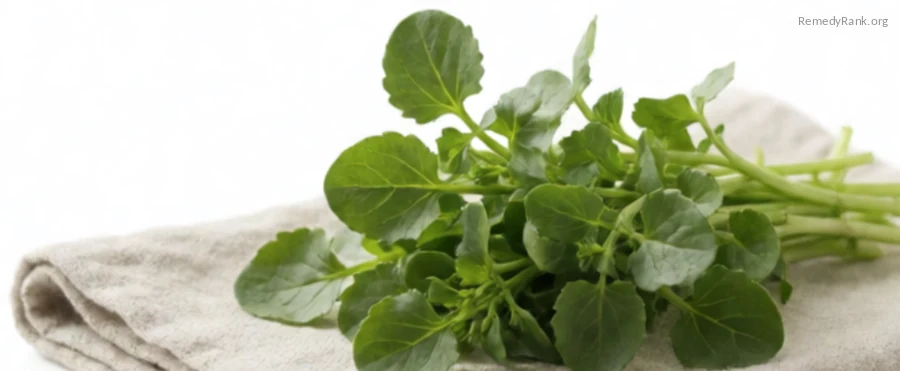
Watercress
A peppery leafy green packed with vitamin C and minerals that nourish the blood and bones.
 ⤢
⤢📊 How it ranks (our editor score) — 89/100Tap to see the breakdown
🌱 What it is
Watercress is a peppery, dark-green leafy vegetable that grows in and around clean flowing water, eaten fresh in salads and dishes.
📜 Where it comes from
Watercress is considered one of the oldest leafy vegetables eaten by humans, gathered from clean streams by ancient Persians, Greeks, and Romans, with Hippocrates reportedly situating a hospital near a watercress bed for its supposed healing properties. European folk tradition regarded it as a classic spring tonic to refresh the blood after winter. It remains valued today as a nutrient-dense leafy green.
✨ Why it's good for you
- may help support bone health with vitamin K and calcium
- may help support healthy blood with iron and vitamin C
- may help support immune health as a nutrient-dense green
- may help support healthy vision with vitamin A
🥗 Nutrition
Per 1 cup chopped, raw (34g) · about 4 calories
- Vitamin K 85mcg
- Vitamin C 14.3mg
- Vitamin A 1610 IU
- Calcium 41mg
Source: USDA FoodData Central
🥄 How to use it
Pile fresh leaves into salads and sandwiches, or stir into warm soup at the very end of cooking.
How much: A practical food amount is one to two good handfuls (about a cup or two) of fresh leaves most days, raw in salads or wilted into a finished dish.
Why it works: Nutrition science points to watercress's vitamin C and mineralA natural building block your body needs in small amounts, like calcium or magnesium. More → content as support for healthy blood and bone strength, part of its long-standing reputation as a tonic green.
Show full details & how to prepare it
Watercress is one of the oldest greens people have eaten, a fast-growing leaf with a clean, peppery bite. Despite weighing almost nothing it is remarkably rich, ounce for ounce, in vitamin C, vitamin K, and a range of minerals, which is why it was carried by sailors and prescribed by old physicians as a spring tonic to rebuild a tired, run-down body.
The vitamin C makes it a natural friend to the immune systemYour body's built-in defense team that fights off germs and helps you heal. More → and to the building of healthy skin and gums, while its iron and folate support the blood and its calcium and vitamin K support the bones. Like its cabbage-family cousins it also carries protective plant compounds studied for keeping cells healthy.
It is best eaten fresh and raw, or barely wilted, to preserve its delicate vitamins. The only real caution is to choose cultivated or thoroughly washed watercress, since leaves gathered from open streams can carry waterborne parasites.
Ways to prepare it
⚠️ Cautions
- Wild watercress from streams can carry parasites... use cultivated or well-washed leaves.
- Very large medicinal amounts may irritate the bladder; everyday food portions are gentle.
📚 Learn more
🌿 Deeper natural detail
🩺 The conventional view
💬 Ask Remy about Watercress
📚 Resource confidence
Based on mentions in health references
Your vote is saved. Source endorsement totals come from books and studies (+7 per book, +5 per article). You can change your vote anytime from this device.
💬 Comments & experiences
Share what worked for you — and reply or 👍 like the experiences that resonate. Comments get a quick review before they appear publicly, to keep things safe and honest. Please don't make medical claims.
💚 Have an experience to share? Create a free account to join the conversation — your words might be exactly what someone else needs. Reading is always open to everyone.
Know a remedy like this?
Share a structured suggestion and our team will review it for the site.
Suggest a similar remedy