Educational information only — RemedyRank does not diagnose, treat, or cure disease. Read our full disclaimer.

Fruit

Orange

92/100
RemedyRank score

A sweet, juicy citrus brimming with vitamin C — a cheerful, time-honored helper for colds and everyday immune strength.

📊 How it ranks (our editor score) — 92/100Tap to see the breakdown
Source quality
Safety
Simplicity
Affordability
Lifestyle fit
Eight-laws alignment
User feedback

🌱 What it is

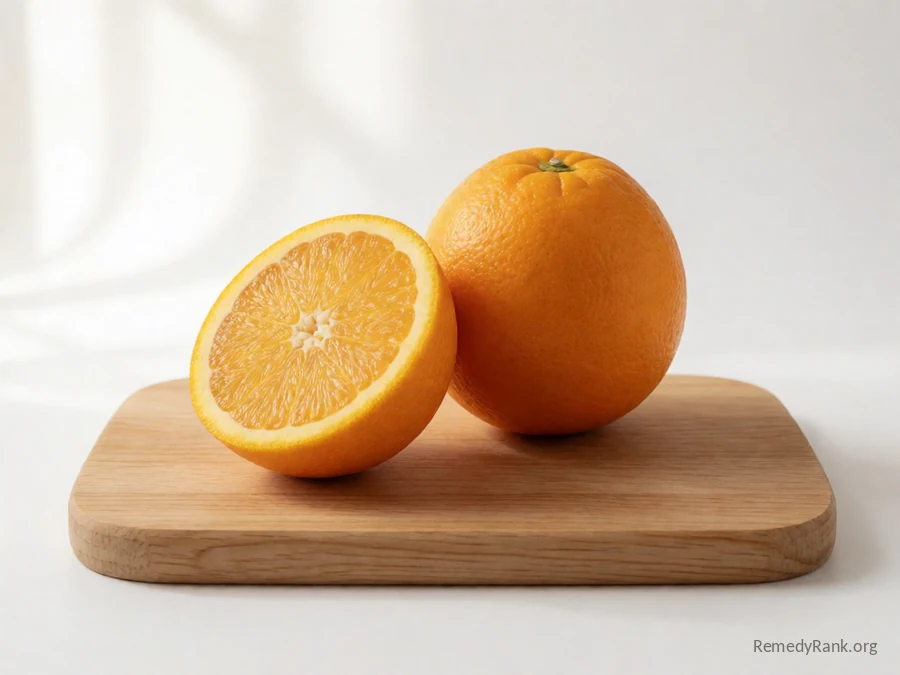
Oranges are round citrus fruits with a thick peel and juicy, sweet-tart segments inside. They are one of the best-known sources of everyday vitamin C.

✨ Why it's good for you

  • Rich in vitamin C, which supports a healthy immune system
  • Mostly water, so they help with hydration
  • Their natural fiber and sugars give a gentle energy lift

🥗 Nutrition

Per 1 medium orange (131g) · about 62 calories

  • Vitamin C 78% DV
  • Fiber 3g
  • Folate 6% DV
  • Potassium 5% DV

Source: USDA FoodData Central

🥄 How to use it

Eat a whole orange, peel and segment it for a snack, or enjoy it fresh-sectioned with breakfast. Eating the whole fruit gives you the fiberThe part of plant foods your body can't fully break down — it keeps digestion moving. More → that juice leaves behind.

How much: One medium orange a day supplies more than a full day's vitamin C. During a cold, two or three pieces of citrus across the day is gentle and refreshing.

Show full details & how to prepare it

The orange is one of the friendliest sources of vitamin C, the nutrient the body needs to build collagen, heal tissue, and keep the immune systemYour body's built-in defense team that fights off germs and helps you heal. More → supplied. For centuries oranges and other citrus were the cure that ended scurvy among sailors, and they remain a simple, pleasant way to keep vitamin C topped up.

Whole oranges also carry fiberThe part of plant foods your body can't fully break down — it keeps digestion moving. More →, potassium, and plant compounds called flavonoids. Eating the segments rather than drinking the juice keeps the fiber and slows the natural sugar, which is gentler on the body.

Ways to prepare it

Fresh segments: Peel and pull apart a ripe orange; eat the whole segments, pith and all, for the most fiberThe part of plant foods your body can't fully break down — it keeps digestion moving. More → and flavonoids.
Warm citrus drink: For a cold, squeeze an orange into a mug of warm (not boiling) water with a little honey for a soothing, vitaminA natural substance your body needs in small amounts to stay healthy, like vitamin C or D. More →-C-rich sip.

⚠️ Cautions

  • Citrus can worsen heartburn and acid reflux in some people — notice how your body responds.
  • Grapefruit and some citrus interact with certain medicines; if you take prescription drugs, check whether citrus affects them.

📚 What others say

  • A classic vitamin-C fruit
  • The historic remedy for scurvy

Learn more

🕊️ A word of encouragement

Bright fruit in a dull season is a small mercy. Let simple, sunny food remind you that care can be ordinary and still real.

💬 Ask Remy about Orange

Hi, I'm Remy 🌿 Ask me anything about Orange and I'll answer from this page.

📚 Resource confidence

Based on mentions in health references

0 ratings
Tap to rate:
Did this remedy help you? Add your experience — source endorsements plus visitor feedback rank it on the ailment pages:0

Your vote is saved. Source endorsement totals come from books and studies (+7 per book, +5 per article). You can change your vote anytime from this device.

💬 Comments & experiences

Share what worked for you — and reply or 👍 like the experiences that resonate. Comments get a quick review before they appear publicly, to keep things safe and honest. Please don't make medical claims.

💚 Have an experience to share? Create a free account to join the conversation — your words might be exactly what someone else needs. Reading is always open to everyone.

Know a remedy like this?

Share a structured suggestion and our team will review it for the site.

Suggest a similar remedy