Vegetable
Turnip
A humble, peppery root that is light, low in calories, and gently supportive of digestion and immunity.
 ⤢
⤢📊 How it ranks (our editor score) — 91/100Tap to see the breakdown
🌱 What it is
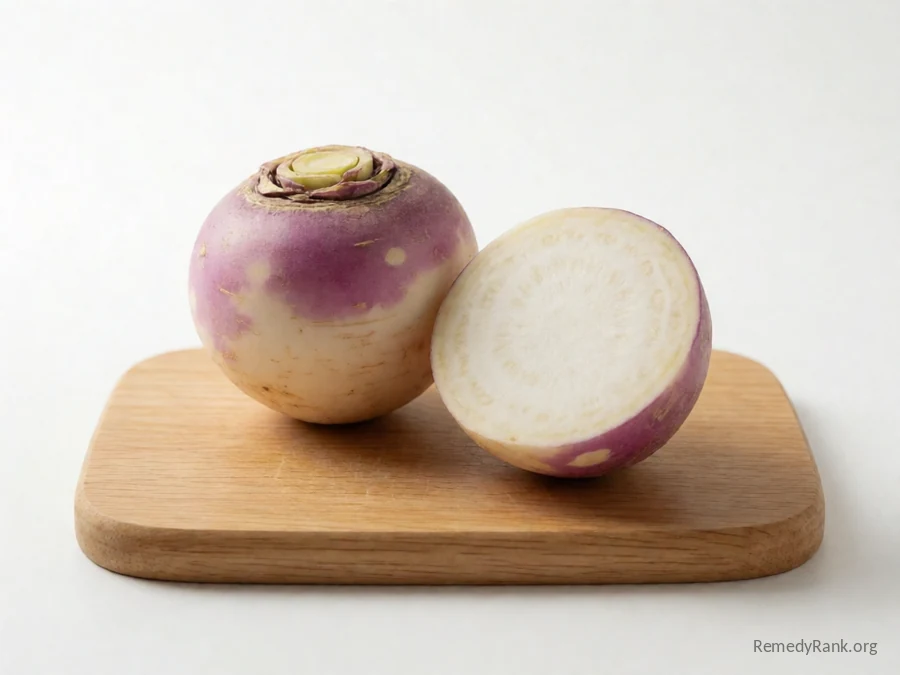
The turnip is a round white-and-purple root vegetable from the cabbage family, eaten along with its leafy green tops.
📜 Where it comes from
Turnips have been cultivated since ancient times in Europe and the Middle East, valued by Greco-Roman farmers as a hardy, cold-tolerant staple crop that could feed both people and livestock through winter. Traditional European peasant diets relied heavily on the turnip when other vegetables were scarce. It remained a dietary mainstay in cooler climates for centuries before being partly overshadowed by the potato.
✨ Why it's good for you
- may help support digestion with a light, fiber-rich bite
- may help support immune health with vitamin C
- may help support bone health when the leafy tops are eaten
- may help support a light, low-calorie addition to meals
🥗 Nutrition
Per 1 cup cubed, cooked (156g) · about 34 calories
- Vitamin C 18.4mg
- Fiber 3.1g
- Potassium 276mg
- Calcium 51mg
- Folate 15mcg
Source: USDA FoodData Central
🥄 How to use it
Roast, mash, or add to soups and stews; the young leafy tops can be cooked like other greens.
How much: A practical serving is about 1 cup cooked turnip (and its greens) as part of varied meals through the week.
Why it works: Nutrition science points to turnip's vitamin C and fiber content as support for digestionHow your body breaks food down into pieces small enough to use for energy. More → and immune function, while its low calorie density makes it a light addition to meals.
Show full details & how to prepare it
The turnip is a modest white-and-purple root that has warmed cool-weather tables for centuries. It is light and low in calories yet satisfying, carrying useful vitamin C to support the immune systemYour body's built-in defense team that fights off germs and helps you heal. More → and a steady supply of fiber that keeps digestionHow your body breaks food down into pieces small enough to use for energy. More → moving comfortably.
Don't overlook the leafy tops: turnip greens are a true bonus crop, rich in calcium and vitamin K that help support bone strength, much like other dark leafy greens. Roasting brings out the root's gentle sweetness, while mashing or adding it to soups makes it a comforting, filling base without heaviness.
Turnips are a very safe, inexpensive everyday vegetable. As a member of the cabbage family they share the mild caution that very large raw amounts can affect thyroid function in people short on iodine — a non-issue with normal, mostly cooked servings.
Ways to prepare it
⚠️ Cautions
- As a cruciferous vegetable, very large raw amounts may affect thyroid function in iodine-deficient people; cooking reduces this.
- Its fiber can cause gas in large servings — increase gradually.
- Choose firm, smaller turnips, which are sweeter and less woody.
📚 Learn more
🌿 Deeper natural detail
🩺 The conventional view
💬 Ask Remy about Turnip
📚 Resource confidence
Based on mentions in health references
Your vote is saved. Source endorsement totals come from books and studies (+7 per book, +5 per article). You can change your vote anytime from this device.
💬 Comments & experiences
Share what worked for you — and reply or 👍 like the experiences that resonate. Comments get a quick review before they appear publicly, to keep things safe and honest. Please don't make medical claims.
💚 Have an experience to share? Create a free account to join the conversation — your words might be exactly what someone else needs. Reading is always open to everyone.
Know a remedy like this?
Share a structured suggestion and our team will review it for the site.
Suggest a similar remedy