Herb
Rosehip
The tangy fruit of the rose, rich in vitamin C, taken as tea or powder to support immunity and ease achy joints.
 ⤢
⤢📊 How it ranks (our editor score) — 82/100Tap to see the breakdown
🌱 What it is
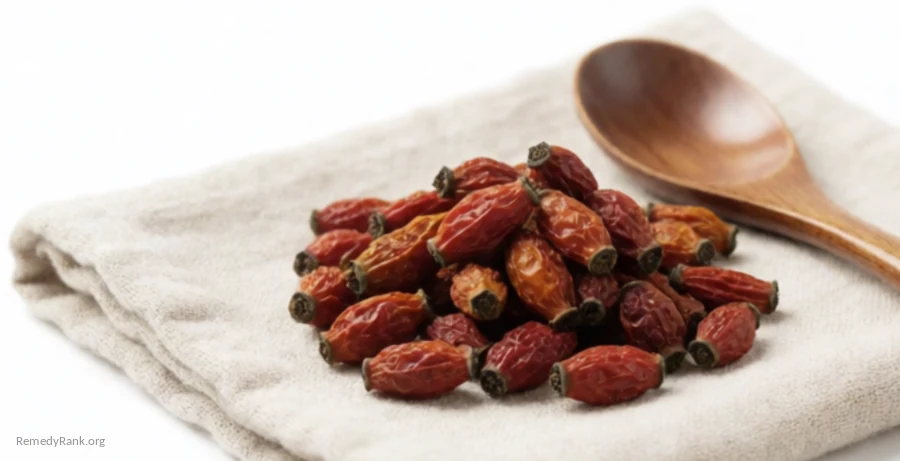
Rosehips are the small, tart fruits that form on rose bushes after the flowers fade, traditionally dried and used for tea or powder.
📜 Where it comes from
Rosehips have been gathered from wild rose bushes since ancient times, with Greco-Roman physicians noting their use for the gut and skin. They became especially prized in wartime Britain and Scandinavia, when rosehip syrup was distributed as a vitamin C source during shortages of citrus fruit. That tradition of rosehip as a folk vitamin supplement continues in herbal use today.
✨ Why it's good for you
- May help support the immune system with natural vitamin C
- May help support joint comfort
- May help supply antioxidants to the diet
- May help support healthy skin from the inside out
🥗 Nutrition
Per 1 tbsp dried rosehip (5 g) · about 14 calories
- Vitamin C 30mg
- Vitamin A 20mcg RAE
- Manganese 0.1mg
- Fiber 1g
Source: USDA FoodData Central
🥄 How to use it
Steep 1–2 teaspoons of dried rosehips in hot water for 10–15 minutes for a tart, fruity teaA warm drink made by steeping herbs in hot water. How to make a tea →, or stir rosehip powder into food; one to two cups a day.
How much: As teaA warm drink made by steeping herbs in hot water. How to make a tea →, 1–2 teaspoons dried rosehips per cup, one to two cups daily; or rosehip powder per the label.
Why it works: Herbalists point to rosehip's high vitamin C and antioxidantA helpful substance in colorful fruits and vegetables that protects your cells from everyday wear and tear. More → content as supporting immune function, while researchers studying joint comfort attribute its effects to compounds that may calm inflammationThe body's natural response to injury — like redness, swelling, or heat around a sore spot. More →.
Show full details & how to prepare it
Rosehips are the bright red-orange fruits left behind after roses bloom, and they're one of nature's richest sources of vitamin C — so much so that they were gathered to make syrupA sweet, thick herbal liquid that soothes the throat. How to make a syrup → for children during wartime shortages. They make a tangy, fruity teaA warm drink made by steeping herbs in hot water. How to make a tea → that supports the immune systemYour body's built-in defense team that fights off germs and helps you heal. More →, and rosehip powder has been studied for gently easing the stiffness of worn joints.
A simple infusionA tea made by steeping soft leaves or flowers in hot water. How to make an infusion → of the dried hips, or a spoon of the powder stirred into food, is all it takes. It's food-like and gentle; just rinse after the tart teaA warm drink made by steeping herbs in hot water. How to make a tea → to protect tooth enamel.
Ways to prepare it
⚠️ Cautions
- Generally very safe and food-like; its acidity can soften tooth enamel, so rinse after.
- Very high doses of its vitamin C may loosen the stool; those prone to kidney stones should be moderate.
- May mildly interact with blood thinners at large amounts — ordinary tea is gentle.
📚 Learn more
🌿 Deeper natural detail
🩺 The conventional view
💬 Ask Remy about Rosehip
📚 Resource confidence
Based on mentions in health references
Your vote is saved. Source endorsement totals come from books and studies (+7 per book, +5 per article). You can change your vote anytime from this device.
💬 Comments & experiences
Share what worked for you — and reply or 👍 like the experiences that resonate. Comments get a quick review before they appear publicly, to keep things safe and honest. Please don't make medical claims.
💚 Have an experience to share? Create a free account to join the conversation — your words might be exactly what someone else needs. Reading is always open to everyone.
Know a remedy like this?
Share a structured suggestion and our team will review it for the site.
Suggest a similar remedy