Fruit
Papaya
A soft tropical fruit rich in digestive enzymes, eaten to aid digestion and support smooth, regular bowels.
 ⤢
⤢📊 How it ranks (our editor score) — 85/100Tap to see the breakdown
🌱 What it is
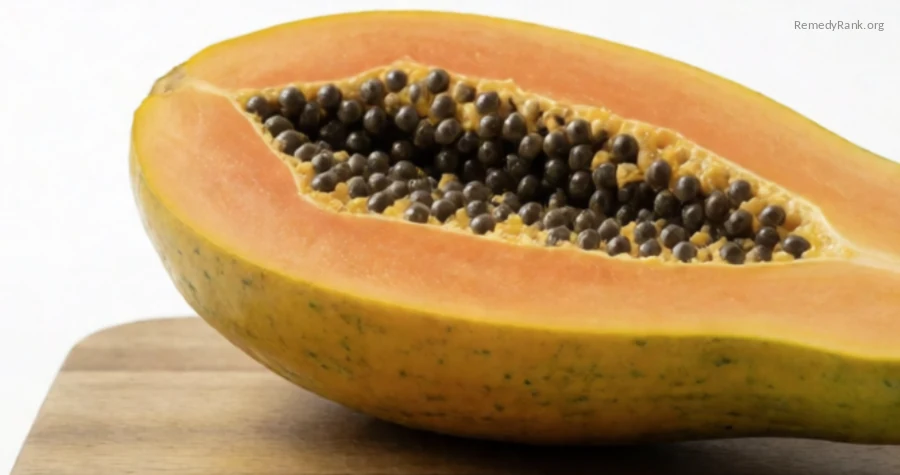
Papaya is a soft, orange-fleshed tropical fruit rich in natural digestive enzymes, most often eaten ripe on its own or added to fruit salads.
📜 Where it comes from
Papaya originated in Central America and was spread throughout the tropics by Spanish explorers in the 1500s. Traditional Central American and Caribbean folk medicine used the fruit and its unripe form for digestive troubles, a practice that later drew scientific attention to its natural enzyme content.
✨ Why it's good for you
- May help support easy, comfortable digestion
- May help support smooth, regular bowels
- May help support healthy skin from the inside out
- May help support the body's antioxidant defenses
🥗 Nutrition
Per 1 cup, cubed (145 g) · about 62 calories
- Vitamin C
- Folate
- Vitamin A
- Potassium
Source: USDA FoodData Central
🥄 How to use it
Eat ripe papaya as a food, especially after meals to aid digestionHow your body breaks food down into pieces small enough to use for energy. More →; the seeds are sometimes used as a traditional remedy but are strong and best left to guidance.
How much: A serving of ripe papaya, especially after meals.
Why it works: Researchers point to papain, a natural enzyme in papaya, as helping to break down proteins and ease digestionHow your body breaks food down into pieces small enough to use for energy. More →, while the fruit's fiber is thought to support regularity.
Show full details & how to prepare it
Papaya is a soft, sweet tropical fruit rich in papain, an enzyme that helps break down protein and ease digestionHow your body breaks food down into pieces small enough to use for energy. More →. Eaten ripe, it's gentle and supports smooth, regular bowels; the green fruit and seeds are far stronger and not for casual use.
Ways to prepare it
⚠️ Cautions
- Ripe papaya is a gentle food; unripe (green) papaya and the seeds are much stronger and best avoided in pregnancy.
- A rare allergy, especially in those sensitive to latex, is possible.
- Large amounts of the seeds are not a casual remedy.
📚 Learn more
🌿 Deeper natural detail
🩺 The conventional view
💬 Ask Remy about Papaya
📚 Resource confidence
Based on mentions in health references
Your vote is saved. Source endorsement totals come from books and studies (+7 per book, +5 per article). You can change your vote anytime from this device.
💬 Comments & experiences
Share what worked for you — and reply or 👍 like the experiences that resonate. Comments get a quick review before they appear publicly, to keep things safe and honest. Please don't make medical claims.
💚 Have an experience to share? Create a free account to join the conversation — your words might be exactly what someone else needs. Reading is always open to everyone.
Know a remedy like this?
Share a structured suggestion and our team will review it for the site.
Suggest a similar remedy