Herb
Echinacea
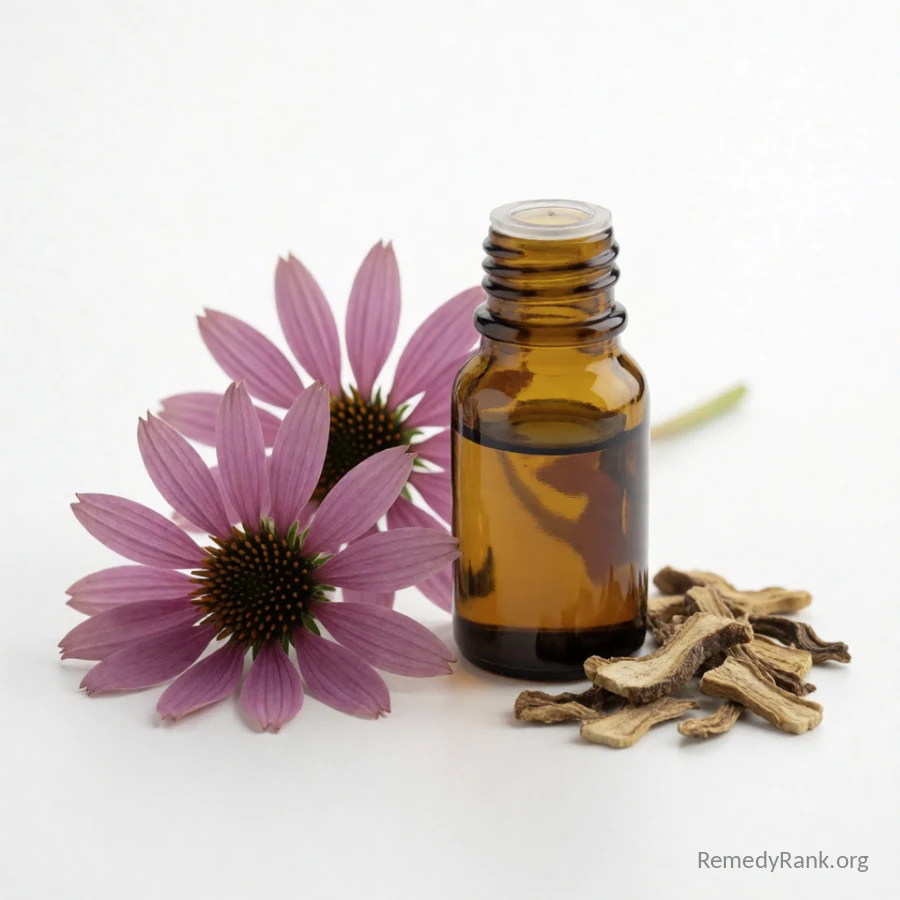
A purple cone-flower long used at the very first hint of a cold to give the body's defenses a gentle nudge during the bug season.
 ⤢
⤢📊 How it ranks (our editor score) — 78/100Tap to see the breakdown
🌱 What it is
Echinacea is a daisy-like purple flower. Its leaves, flowers, and roots are dried for teas and tinctures.
📜 Where it comes from
Echinacea was used for generations by Native American nations of the Great Plains, including the Lakota and other peoples, who applied it for infections, wounds, and general immune support. European settlers learned of the plant from these communities in the nineteenth century, and it was soon adopted into American eclectic medicine. It later spread to Europe, especially Germany, where it became a popular cold-season remedy.
✨ Why it's good for you
- Traditionally used to support the immune system
- Often taken as a warm, soothing tea
- A gentle comfort at the first sign of a cold
🥗 Nutrition
Per 1 cup brewed tea / 1 tbsp dried (0.5g) · about 1 calories
- Alkamides (bioactive)
- Polysaccharides
- Trace calcium and iron
Source: Nutrition estimate (per typical serving)
🥄 How to use it
Take it as a teaA warm drink made by steeping herbs in hot water. How to make a tea →, a store-bought tinctureA concentrated herbal extract made with alcohol. How to make a tincture →, or a capsuleDried, powdered herb packed into a swallowable shell for a measured dose. How to make a capsule → right when a cold seems to be starting, in short courses of a week or so — not all the time. Always read the label and stop once you feel better.
How much: As teaA warm drink made by steeping herbs in hot water. How to make a tea →, 1 cup 1–3 times a day at the first sign of a cold, using 1–2 teaspoons of dried root or leaf per cup. For tinctureA concentrated herbal extract made with alcohol. How to make a tincture → or capsules, follow the label amount, and keep to short courses of about a week.
Why it works: Immune booster.
Show full details & how to prepare it
Echinacea, the prairie cone-flower with its drooping purple petals, is one of the best-known cold-season herbs. People reach for it at the very first tickle of a cold — the idea being to gently rouse the body's natural defenses early, when it may help most. It is best thought of as a short, timely support rather than something to take every day.
You will find it as a warm teaA warm drink made by steeping herbs in hot water. How to make a tea →, as drops of tinctureA concentrated herbal extract made with alcohol. How to make a tincture → in a little water, or as capsules. Whichever form you choose, the traditional wisdom is the same: start early, use it in a short course of about a week, and ease off once you are feeling better. Taken this way it is gentle and well-tolerated for most healthy adults.
There is one important exception worth understanding clearly. Because echinacea stirs the immune system up, it is not the right herbA plant, or part of one, used for flavor, food, or gentle health support. More → for people whose immune systemYour body's built-in defense team that fights off germs and helps you heal. More → is already over-active — those with autoimmune conditions like lupus. For them it could nudge things the wrong way, so it is one to skip or to clear with a doctor first. Daisy-family allergies are the other reason to leave it on the shelf.
Ways to prepare it
🔬 Let's get technical
The scientific view, plainly reported. Hover a dotted word for its meaning.
What's in it
Echinacea preparations, most often derived from Echinacea purpurea or Echinacea angustifolia, contain three main classes of compounds thought to contribute to its effects: , water-soluble , and caffeic acid derivatives such as cichoric acid and echinacoside. The relative concentration of each class varies substantially depending on which plant species, plant part (root versus aerial parts), and extraction method is used, which is a major source of inconsistency across studies.
Mechanism of action
are enough to interact with cannabinoid CB2 receptors and other immune cell surface targets , an interaction proposed to modulate release from and other immune cells. fractions have been shown in cell studies to stimulate macrophage activity and , while caffeic acid derivatives contribute antioxidant activity and may have mild direct effects against some pathogens in vitro. Collectively these compounds are promoted as producing a general, nonspecific stimulation of activity rather than acting against any single pathogen, though the clinical significance of these in vitro findings is not firmly established.
Current pharmacological applications
Echinacea is most commonly marketed as an over-the-counter dietary supplement taken at the first sign of a cold, and NCCIH's review of trial evidence describes a modest reduction in the chance of catching a cold with regular use, while evidence for shortening cold duration once symptoms start remains inconclusive. A more recent pediatric study suggested a possible reduction in respiratory tract infections and complications in children, but NCCIH characterizes overall evidence in this population as insufficient to draw firm conclusions. As with other botanicals, product variability across species and extraction methods complicates comparison between individual clinical trials.
Every underlined word is collected on the technical glossary.
⚠️ Cautions
- People with autoimmune conditions (such as lupus, multiple sclerosis, or rheumatoid arthritis) should avoid echinacea or check with a doctor first, since it nudges the immune system — the opposite of what those conditions need.
- Skip it if you are allergic to daisy-family plants like ragweed, marigold, or chamomile.
- Use short courses (about a week), not continuous long-term use.
- Check with your doctor first if you take immune-related or other regular medicines, or if you are pregnant or breastfeeding.
- It offers gentle, short-term support rather than a cure for an infection.
📚 Learn more
🌿 Deeper natural detail
💬 Ask Remy about Echinacea
📚 Resource confidence
Based on mentions in health references
Your vote is saved. Source endorsement totals come from books and studies (+7 per book, +5 per article). You can change your vote anytime from this device.
💬 Comments & experiences
Share what worked for you — and reply or 👍 like the experiences that resonate. Comments get a quick review before they appear publicly, to keep things safe and honest. Please don't make medical claims.
💚 Have an experience to share? Create a free account to join the conversation — your words might be exactly what someone else needs. Reading is always open to everyone.
Know a remedy like this?
Share a structured suggestion and our team will review it for the site.
Suggest a similar remedy