Herb
Mustard Seed
A warming kitchen spice whose gentle heat helps clear congestion and rouse sluggish digestion.
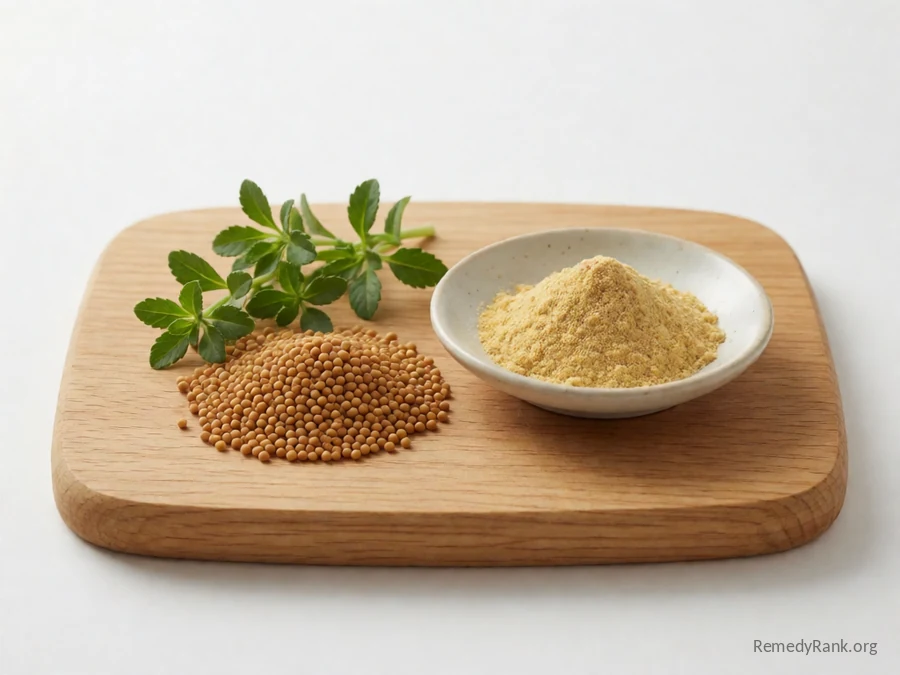 ⤢
⤢📊 How it ranks (our editor score) — 82/100Tap to see the breakdown
🌱 What it is
Mustard seed is the small round seed of the mustard plant, ground or used whole as a pungent spice, and long valued in traditional kitchens for the warming heat it brings to food.
📜 Where it comes from
Mustard seed has been used as both a spice and a folk remedy for thousands of years, referenced in ancient Greek, Roman, and biblical texts, including its well-known mention by Jesus as a symbol of small beginnings and great growth. Traditional European and Asian folk medicine ground the seeds into warming plasters and poultices applied to the chest for congestion and to sore joints. Mustard remains a familiar kitchen spice worldwide.
✨ Why it's good for you
- May help support clearer breathing when used in a warm preparation
- May help rouse sluggish digestion in small culinary amounts
- May help bring warmth to cold hands and feet in a footbath
- May help supply selenium and other trace minerals
🥗 Nutrition
Per 1 tablespoon whole seeds (11g) · about 52 calories
- Fiber 1.2g
- Selenium 2.6mcg
- Magnesium 39mg
- Protein 2.6g
Source: USDA FoodData Central
🥄 How to use it
Toast whole seeds to flavor cooked dishes, or use a warm mustard footbath to draw warmth to cold feet.
How much: As a food, a teaspoon or two of whole or ground mustard seed to season dishes is plenty. For an external footbath, stir one to two teaspoons of mustard powder into a basin of warm water.
Why it works: Herbalists attribute mustard seed's warming effect to compounds that create a mild heat sensation on the skin, traditionally thought to draw blood to the area and help loosen chest congestion.
Show full details & how to prepare it
Mustard seed is one of the oldest spices in the kitchen and one of the oldest remedies in the cupboard. Its familiar bite comes from natural compounds that are released when the crushed seed meets water, and that same gentle, warming heat is what generations have turned to for two simple purposes: clearing a stuffy head and chest, and waking up a sluggish appetite.
In cooking, a spoonful of toasted seeds adds warmth and depth while lending a small lift to digestionHow your body breaks food down into pieces small enough to use for energy. More →. Outside the body, mustard's heat has long been used to draw blood to the surface and bring soothing warmth to aching muscles, stiff joints, and cold feet — the old mustard plaster and the warm mustard footbath.
Because that heat is real, external use calls for care: a mustard plaster must always be applied over a cloth, never directly on bare skin, and removed promptly to avoid a burn. Taken as food it is gentle, though its pungency means those with a sensitive stomach should keep to culinary amounts.
Ways to prepare it
⚠️ Cautions
- A traditional mustard plaster can burn the skin if left on too long — always use a cloth barrier and remove promptly.
- Its pungency can irritate a sensitive stomach, so it is best kept to ordinary culinary amounts rather than the stronger, concentrated preparations sometimes used medicinally.
📚 Learn more
🌿 Deeper natural detail
🩺 The conventional view
💬 Ask Remy about Mustard Seed
📚 Resource confidence
Based on mentions in health references
Your vote is saved. Source endorsement totals come from books and studies (+7 per book, +5 per article). You can change your vote anytime from this device.
💬 Comments & experiences
Share what worked for you — and reply or 👍 like the experiences that resonate. Comments get a quick review before they appear publicly, to keep things safe and honest. Please don't make medical claims.
💚 Have an experience to share? Create a free account to join the conversation — your words might be exactly what someone else needs. Reading is always open to everyone.
Know a remedy like this?
Share a structured suggestion and our team will review it for the site.
Suggest a similar remedy