Educational information only — RemedyRank does not diagnose, treat, or cure disease. Read our full disclaimer.

Herb

Cayenne Pepper

66/100
RemedyRank score

A fiery red pepper traditionally used in tiny amounts to support warmth and circulation.

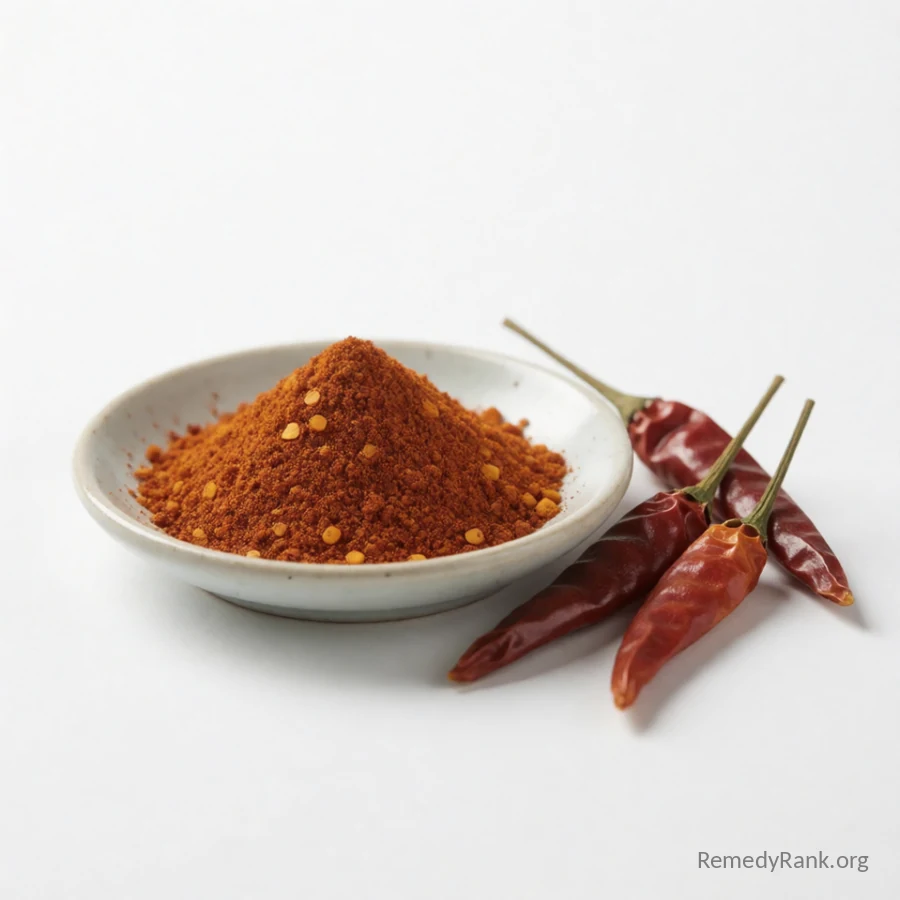
A dish of fine red cayenne pepper powder next to a few dried whole red chili peppers.
📊 How it ranks (our editor score) — 66/100Tap to see the breakdown
Source quality
Safety
Simplicity
Affordability
Lifestyle fit
Eight-laws alignment
User feedback

🌱 What it is

Cayenne is a hot red chili pepper, dried and ground into powder. Its heat comes from a compound called capsaicin.

📜 Where it comes from

Cayenne pepper originates with Indigenous peoples of Central and South America, who used chili peppers both as food and as a warming remedy long before European contact. Once brought back to Europe, cayenne entered traditional herbal kitchens as a circulation stimulant and was later championed in nineteenth-century America by herbalist Samuel Thomson, whose botanical medicine system relied heavily on it. It has remained a small but potent presence in traditional herbal cabinets since.

✨ Why it's good for you

  • A pinch can help loosen and clear a stuffy nose
  • Adds warmth and bold flavor with no salt
  • Studied for supporting warmth and circulation

🥗 Nutrition

Per 1 tsp ground (1.8g) · about 6 calories

  • Vitamin A 44mcg
  • Vitamin C 1.4mg
  • Potassium 36mg
  • Capsaicin (bioactive)

Source: USDA FoodData Central

🥄 How to use it

Add a small pinch to food or warm water. Start with the tiniest amount — a little goes a long way.

How much: Start with just a pinch (about 1/16 teaspoon) of cayenne in food or a warm drink and increase slowly as tolerated. For skin use, a properly diluted capsaicin ointmentA soft, spreadable skin preparation, a little thicker than a cream. How to make an ointment is applied in a thin layer up to 3–4 times a day.

Why it works: Brings blood to the stomach; capsaicin blocks pain signals from nerves under the skin.

Show full details & how to prepare it

Cayenne is the fiery red pepper whose heat comes from capsaicin, a compound that does something surprising: applied to the skin over time, it actually quiets the local pain signals, which is why capsaicin creams are a recognized help for achy muscles and joints. Taken in food, that same warming quality gently stimulates circulation and can wake up a sluggish digestionHow your body breaks food down into pieces small enough to use for energy. More →.

A little truly goes a long way. Cayenne's strength is also its caution — it can burn sensitive skin, eyes, and an empty stomach. Always start with the tiniest pinch and build up only as your body welcomes it.

If you make or use a capsaicin ointmentA soft, spreadable skin preparation, a little thicker than a cream. How to make an ointment, keep it well away from the eyes and broken skin, and wash your hands thoroughly afterward (or wear a glove), because the heat lingers on the fingers and stings badly if it reaches the eyes.

Ways to prepare it

Warming drink: Stir a tiny pinch of cayenne into 1 cup warm water with lemon and a little honey at the first chill of a cold. Increase the pinch only as tolerated.
In food: Add a small pinch to soups, stews, or bean dishes for gentle warmth and a circulation lift — taste as you go.
Warming ointment: For sore muscles, stir a pinch of cayenne powder into 2 tablespoons coconut oil to make a mild ointmentA soft, spreadable skin preparation, a little thicker than a cream. How to make an ointment; rub a thin layer on intact skin, keep away from eyes, and wash hands well afterward. Patch-test first.

🔬 Let's get technical

The scientific view, plainly reported. Hover a dotted word for its meaning.

What's in it

Cayenne pepper's characteristic heat comes from and related capsaicinoids, chiefly dihydrocapsaicin, along with pigments that give the fruit its red color. Capsaicinoid content is measured in Scoville heat units and varies considerably between pepper varieties and growing conditions.

Mechanism of action

binds the receptor on sensory nerve endings, the same receptor that responds to painful heat, producing an initial burning sensation followed by a period of reduced sensitivity as the nerve fiber becomes less responsive to further stimulation, a process called . This desensitization reduces local release of , a neuropeptide involved in transmitting pain signals, which is the proposed basis for capsaicin's topical effect in chronic pain conditions. Topical application also produces transient local and a sensation of warmth, consistent with the traditional description of cayenne as a circulatory stimulant, though this is a localized skin effect rather than a systemic change in blood flow. Ingested capsaicin has been studied for mild, transient increases in metabolic rate and thermogenesis, effects that are measurable but small relative to overall energy expenditure.

Current pharmacological applications

Topical cream, at concentrations from low-dose over-the-counter products to high-dose prescription patches, is an established treatment studied in randomized trials for neuropathic pain and some musculoskeletal pain conditions, with the main limiting factor being the initial burning sensation on application. Oral cayenne or capsaicin has been studied in small trials for appetite and modest thermogenic effects, with results that are statistically detectable but of uncertain everyday relevance. Traditional use for circulation and warmth is long-standing, but direct clinical evidence for systemic circulatory benefit from oral cayenne is thin.

Every underlined word is collected on the technical glossary.

🧺 Other forms of Cayenne Pepper

These used to be pages of their own. They are the same remedy in a different form — the differences worth knowing are below.

Cayenne Pepper PowderHerb

A hot pepper powder traditionally kept on hand for minor bleeding first aid and circulatory support — not a treatment for heart attack.

How this form is used: Keep cayenne pepper powder on hand for minor bleeding first aid — a small amount can be applied directly to a minor cut to help slow bleeding while seeking further care. Can also be added in small amounts to food or warm water for general circulatory support.

Cautions for this form
  • Never use cayenne in place of emergency care for a heart attack — call emergency services immediately for chest pain, and this claim from older folk sources is unproven and potentially dangerous
  • Can burn or irritate skin, eyes, and mucous membranes
  • Avoid on open or deep wounds; use only for minor surface bleeding first aid
  • May irritate the stomach in large amounts

Learn more: MSKCC — Capsaicin (Cayenne Pepper) · Examine — Capsaicin · Cleveland Clinic — What Is Capsaicin? · Mayo Clinic — Capsaicin (Topical Route)

Natural Remedies Encyclopedia (7th ed.)

Shop cayenne pepper powder on Amazon

Formerly its own page at /remedies/cayenne-pepper, now redirected here.

⚠️ Cautions

  • Too much can burn the mouth and upset the stomach.
  • Wash hands well and keep it away from eyes.
  • Go gentle if you have reflux or a sensitive stomach.

📚 Learn more

💬 Ask Remy about Cayenne Pepper

Hi, I'm Remy 🌿 Ask me anything about Cayenne Pepper and I'll answer from this page.

📚 Resource confidence

Based on mentions in health references

0 ratings
Tap to rate:
Did this remedy help you? Add your experience — source endorsements plus visitor feedback rank it on the ailment pages:0

Your vote is saved. Source endorsement totals come from books and studies (+7 per book, +5 per article). You can change your vote anytime from this device.

💬 Comments & experiences

Share what worked for you — and reply or 👍 like the experiences that resonate. Comments get a quick review before they appear publicly, to keep things safe and honest. Please don't make medical claims.

💚 Have an experience to share? Create a free account to join the conversation — your words might be exactly what someone else needs. Reading is always open to everyone.

Know a remedy like this?

Share a structured suggestion and our team will review it for the site.

Suggest a similar remedy