Herb
Mullein
A soft-leaved wild plant, brewed as tea, traditionally used to soothe the chest and quiet a stubborn cough.
 ⤢
⤢📊 How it ranks (our editor score) — 76/100Tap to see the breakdown
🌱 What it is
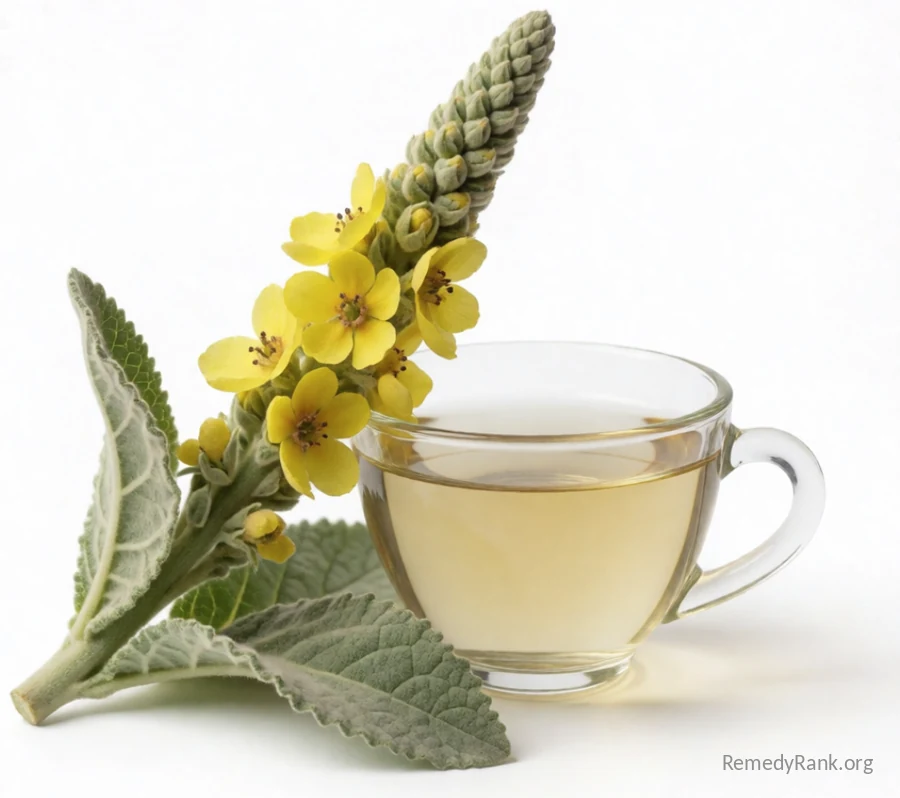
Mullein is a tall wild plant with soft, fuzzy leaves and a spike of yellow flowers, traditionally dried and brewed as a soothing chest tea.
📜 Where it comes from
Mullein grew widely across Europe and was carried to North America, where it was adopted by various Native American nations for chest and respiratory complaints alongside its established use in European folk medicine. Its tall, soft-leaved stalks made it easy to recognize and gather along roadsides and fields. Traditional households on both continents dried the leaves for a soothing chest tea passed down through generations.
✨ Why it's good for you
- May help support a soothed, calmer chest
- May help support relief from a stubborn cough
- May help support easier breathing during a seasonal cough
🥗 Nutrition
Per 1 cup brewed tea (240ml) · about 2 calories
- Mucilage
- Saponins
- Negligible macronutrients
Source: Nutrition estimate (per typical serving)
🥄 How to use it
Steep 1-2 teaspoons of dried mullein leaf or flower in hot water for 10 minutes, then strain well through a fine cloth or filter to catch the tiny hairs, and drink up to three cups a day.
How much: A common amount is 1-2 teaspoons of dried leaf or flower per cup, well strained, up to three cups daily.
Why it works: Traditionally used for respiratory ailments; eases cough.
Show full details & how to prepare it
Mullein is a tall wildflower with soft, velvety leaves that has long been a friend to the lungs. Its dried leaves and flowers make a mild, slightly sweet teaA warm drink made by steeping herbs in hot water. How to make a tea → traditionally used to soothe a dry, tickly cough and calm irritated airways.
The one trick worth remembering is to strain the teaA warm drink made by steeping herbs in hot water. How to make a tea → well... the leaves carry tiny hairs that can scratch the throat if they slip through. Mullein is gentle and well tolerated, though a cough that lingers, brings up blood, or comes with breathlessness is generally a sign of something more serious.
Ways to prepare it
🔬 Let's get technical
The scientific view, plainly reported. Hover a dotted word for its meaning.
What's in it
Mullein leaf and flower contain , , , and , along with , a phenylethanoid also found in several other traditionally used medicinal plants.
Mechanism of action
The content coats and soothes irritated on contact, a action that is largely physical rather than pharmacological and is thought to reduce reflex coughing triggered by throat irritation. have mild activity, thought to work through gastric mucosal irritation that reflexively increases the volume and thins the consistency of respiratory secretions, which can support -- the coordinated movement of mucus out of the airway by tiny hair-like cilia. and mullein's content show antioxidant and mild anti-inflammatory activity in laboratory studies, which has been proposed, though not firmly established, as a supporting mechanism for traditional respiratory use. in the plant have shown activity against certain bacteria , though this has not been substantially developed into clinical application.
Current pharmacological applications
Mullein is used traditionally, and in some contemporary herbal practice, as a tea or extract for cough and chest congestion, but it has almost no dedicated modern clinical trial evidence in humans; supportive data are largely laboratory-based or extrapolated from its known constituent classes. Its and mild properties are pharmacologically plausible extensions of well-characterized and activity seen in other plants, but direct efficacy studies specific to mullein are sparse. It remains a traditional-use remedy more than a research-substantiated one at this time.
Every underlined word is collected on the technical glossary.
⚠️ Cautions
- Always strain mullein tea well, as the fine leaf hairs can irritate the throat.
- Generally gentle, but stop if any irritation occurs.
- A cough that lasts more than three weeks, brings up blood, or comes with breathlessness or fever is generally a sign of something more serious than mullein can address.
📚 Learn more
🌿 Deeper natural detail
🩺 The conventional view
💬 Ask Remy about Mullein
📚 Resource confidence
Based on mentions in health references
Your vote is saved. Source endorsement totals come from books and studies (+7 per book, +5 per article). You can change your vote anytime from this device.
💬 Comments & experiences
Share what worked for you — and reply or 👍 like the experiences that resonate. Comments get a quick review before they appear publicly, to keep things safe and honest. Please don't make medical claims.
💚 Have an experience to share? Create a free account to join the conversation — your words might be exactly what someone else needs. Reading is always open to everyone.
Know a remedy like this?
Share a structured suggestion and our team will review it for the site.
Suggest a similar remedy