Food
Microgreens
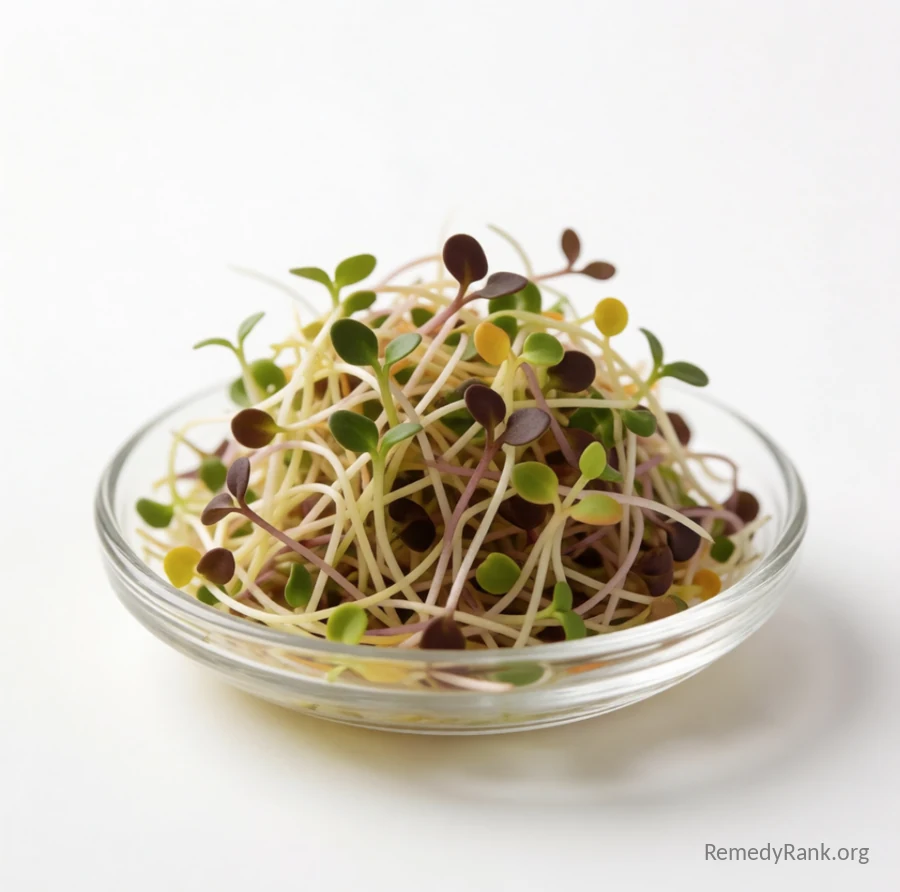
Microgreens are tiny, nutrient-dense seedling greens harvested just after sprouting, adding concentrated vitamins and color to meals.
 ⤢
⤢📊 How it ranks (our editor score) — 72/100Tap to see the breakdown
🌱 What it is
Microgreens are the young seedlings of vegetables and herbs (like kale, radish, or sunflower), harvested 1-3 weeks after germination... beyond a sprout but before a baby green.
📜 Where it comes from
Microgreens emerged as a distinct food trend in American restaurant kitchens in the 1980s, when chefs began using the tiny, colorful seedlings as a garnish before their nutritional density drew wider attention. Their popularity grew through the following decades as home gardeners and nutrition-focused cooks adopted them for everyday meals. Unlike many traditional remedies, microgreens are a relatively recent addition to the table.
✨ Why it's good for you
- A concentrated, easy way to add vitamins and color to everyday meals
- Studied for higher antioxidant content than the same mature vegetable in some crops
- Easy and inexpensive to grow at home year-round
- Adds variety that can encourage eating more vegetables overall
🥄 How to use it
Sprinkle a handful of microgreens over soups, salads, sandwiches, or eggs just before serving to preserve their delicate texture. They can also be grown on a windowsill in soil or a damp paper towel for a continuous fresh supply.
How much: A small handful (about 1/4 cup) as a topping on meals, a few times a week, is a reasonable amount.
Why it works: Studies suggest young seedlings can concentrate certain vitamins and antioxidants well above levels found in the mature vegetable, though this varies widely by crop.
⚠️ Cautions
- Like other raw sprouted greens, homegrown or store-bought microgreens should be grown and handled cleanly to avoid bacterial contamination.
- People on blood-thinning medication should be mindful of vitamin-K-rich varieties (like kale or broccoli microgreens) and discuss regular intake with a doctor.
- Not a substitute for a varied diet of fully mature vegetables... best treated as a garnish-level addition, not a meal replacement.
📚 Learn more
🌿 Deeper natural detail
Curated links coming for this one.
🩺 The conventional view
💬 Ask Remy about Microgreens
📚 Resource confidence
Based on mentions in health references
Your vote is saved. Source endorsement totals come from books and studies (+7 per book, +5 per article). You can change your vote anytime from this device.
💬 Comments & experiences
Share what worked for you — and reply or 👍 like the experiences that resonate. Comments get a quick review before they appear publicly, to keep things safe and honest. Please don't make medical claims.
💚 Have an experience to share? Create a free account to join the conversation — your words might be exactly what someone else needs. Reading is always open to everyone.
Know a remedy like this?
Share a structured suggestion and our team will review it for the site.
Suggest a similar remedy