Supplement
Iron Supplements
Iron taken for confirmed anemia, with important cautions about toxic forms and overdose.
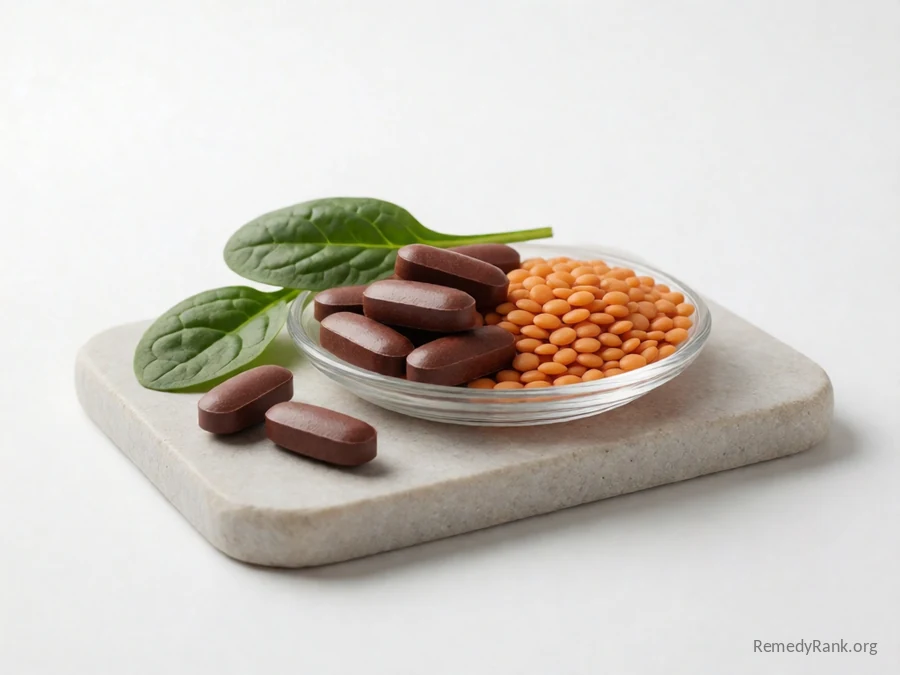 ⤢
⤢📊 How it ranks (our editor score) — 51/100Tap to see the breakdown
👶 Safe for children?
This remedy carries age-related cautions. Please read them before giving it to a child, and check with your pediatrician or pharmacist first.
- Ferric and ferrous sulfate forms have toxic potential, especially in overdose or in children — keep all iron products locked away from kids.
🌱 What it is
A mineral supplement used to rebuild iron stores and support healthy hemoglobin levels when a blood test confirms deficiency.
📜 Where it comes from
Iron's link to blood health was recognized as early as the seventeenth century, when European physicians used iron filings and iron-rich mineral waters to treat pale, weakened patients later understood to have anemia. Iron supplementation became a standard medical practice through the nineteenth and twentieth centuries as blood testing made diagnosing true deficiency possible. Its long history also includes hard-learned lessons about toxicity, since iron overdose was recognized early as a serious danger, particularly to children.
✨ Why it's good for you
- Can correct confirmed iron-deficiency anemia
- Supports healthy oxygen-carrying capacity of the blood
- Gentler forms like gluconate or picolinate are easier on the stomach
🙏 Begin with prayer
Prayer is the first remedy, not the last resort. Whether you are facing this yourself, caring for someone who is, or simply reading to understand — here is a simple prayer you are welcome to make your own, in your name or in theirs:
Heavenly Father, thank You for iron, a small mineral that strengthens the blood You gave me. I ask Your blessing as I take it, and pray for wisdom to use only what my body truly needs, trusting the guidance of those who test and care for me. Renew my strength in Your time and Your way, according to Your good will. In Jesus' name, Amen.
“But they that wait upon the LORD shall renew their strength; they shall mount up with wings as eagles; they shall run, and not be weary; and they shall walk, and not faint.”— Isaiah 40:31
🥄 How to use it
Take a well-tolerated form such as ferrous gluconate or iron picolinate only after a blood test confirms iron-deficiency anemia. Typical intakes are about 10 mg daily for men and 15 mg daily for women of childbearing age, or as directed by a healthcare provider.
How much: About 10 mg daily for men, 15 mg daily for women of childbearing age, or as directed by a healthcare provider based on blood test results
Why it works: Iron is a core building block of hemoglobin, the protein in red blood cells that carries oxygen; supplementing restores hemoglobin levels only when true deficiency is present.
⚠️ Cautions
- Iron overdose during pregnancy has been linked to miscarriage or birth defects; pregnant women should only take iron under a doctor's supervision.
- Never supplement iron without a blood test confirming deficiency, since excess iron can be harmful.
📚 Learn more
🌿 Deeper natural detail
Curated links coming for this one.
🩺 The conventional view
💬 Ask Remy about Iron Supplements
📚 Resource confidence
Based on mentions in health references
Your vote is saved. Source endorsement totals come from books and studies (+7 per book, +5 per article). You can change your vote anytime from this device.
💬 Comments & experiences
Share what worked for you — and reply or 👍 like the experiences that resonate. Comments get a quick review before they appear publicly, to keep things safe and honest. Please don't make medical claims.
💚 Have an experience to share? Create a free account to join the conversation — your words might be exactly what someone else needs. Reading is always open to everyone.
Know a remedy like this?
Share a structured suggestion and our team will review it for the site.
Suggest a similar remedy