Herb
Feverfew
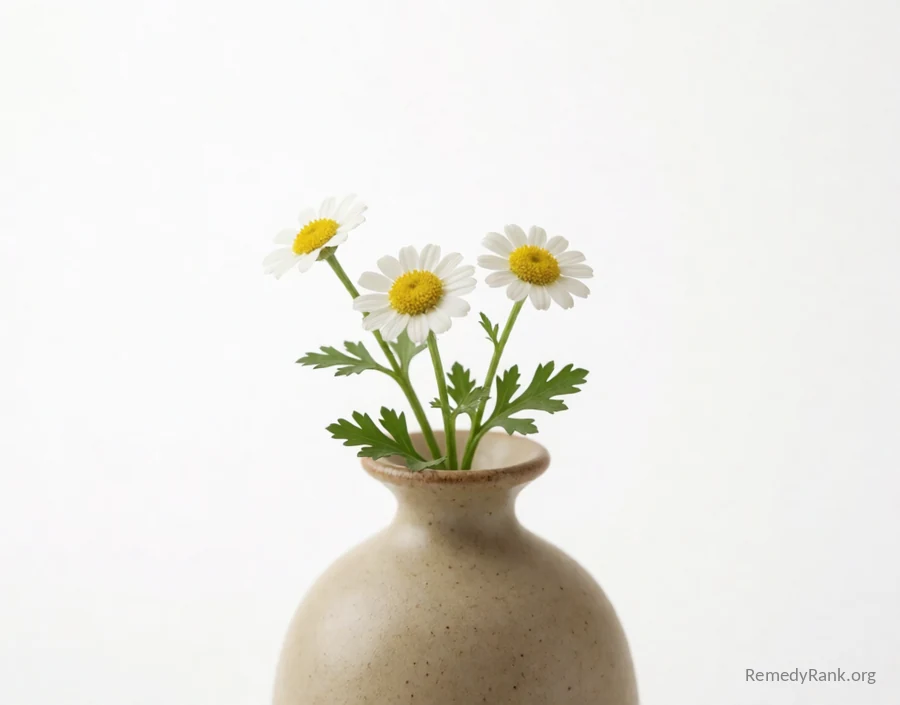
A small daisy-like herb traditionally taken every day to make migraine attacks come less often and feel less fierce.
 ⤢
⤢📊 How it ranks (our editor score) — 76/100Tap to see the breakdown
👶 Safe for children?
This remedy carries age-related cautions. Please read them before giving it to a child, and check with your pediatrician or pharmacist first.
- Chewing fresh leaves can cause mouth sores; not for children without a doctor's advice.
🌱 What it is
Feverfew is a short, bushy herb with small daisy-like flowers, related to chamomile and traditionally grown as a garden preventive remedy.
📜 Where it comes from
Feverfew takes its name from its traditional use for reducing fevers, a use recorded by Greco-Roman physicians, though it became far better known in later European folk medicine as a daily preventive for migraine headaches. English herbalists in particular kept feverfew as a garden staple for this purpose for centuries. Its shift toward migraine prevention specifically grew especially strong in more recent European herbal tradition.
✨ Why it's good for you
- May help support fewer migraine attacks over time
- May help support milder headache days with daily use
- May help support a steady, preventive routine for head pain
🥗 Nutrition
Per 1 cup brewed tea / a few fresh leaves · about 2 calories
- Parthenolide (bioactive)
- Flavonoids
- Negligible macronutrients
Source: Nutrition estimate (per typical serving)
🥄 How to use it
Most people take a standardized daily capsuleDried, powdered herb packed into a swallowable shell for a measured dose. How to make a capsule → for prevention; the dried leaf can also be steeped into a teaA warm drink made by steeping herbs in hot water. How to make a tea →. It works slowly over weeks as a preventive — not as a quick fix during an attack.
How much: For prevention, a common traditional amount is one standardized leaf capsuleDried, powdered herb packed into a swallowable shell for a measured dose. How to make a capsule → daily (often around 100–150 mg of dried leaf, standardized to its parthenolide content). Give it 6–8 weeks to show its effect, and taper slowly rather than stopping all at once.
Why it works: Inhibits release of serotonin and inflammatory substances implicated in migraines.
Show full details & how to prepare it
Feverfew is a cheerful little plant with white, daisy-like flowers, and for centuries people have leaned on it as a friend to an aching head — its very name comes from an old word for cooling fevers. Today it is valued less for stopping a headache once it has arrived and more for being taken every day to prevent migraines. Many people find that a steady daily habit makes their attacks come less often and feel less severe.
The gentle key is patience. Feverfew is a preventive, working quietly over several weeks, so it suits someone willing to take a small daily dose and keep a trigger diary alongside it. A standardized capsuleDried, powdered herb packed into a swallowable shell for a measured dose. How to make a capsule → keeps the amount of its active compound (parthenolide) dependable from day to day, which matters more here than with a casual cup of teaA warm drink made by steeping herbs in hot water. How to make a tea →.
Feverfew belongs to the same family as ragweed and daisies, so anyone allergic to those plants should steer clear. It can stir up the uterus, so it is not for pregnancy or breastfeeding, and because it may thin the blood a little, it deserves caution alongside blood thinners or before surgery. One kindness to yourself: don't quit a long daily habit abruptly, as that can bring on rebound headaches — taper off gently instead.
Ways to prepare it
⚠️ Cautions
- Avoid in pregnancy and breastfeeding — it can stimulate the uterus.
- Avoid if you're allergic to ragweed, daisies, marigolds, or chamomile (same plant family).
- Don't stop a long daily habit suddenly — taper off to avoid 'rebound' headaches and aches.
- May add to bleeding risk — use caution with blood thinners or before surgery.
📚 Learn more
🌿 Deeper natural detail
🩺 The conventional view
💬 Ask Remy about Feverfew
📚 Resource confidence
Based on mentions in health references
Your vote is saved. Source endorsement totals come from books and studies (+7 per book, +5 per article). You can change your vote anytime from this device.
💬 Comments & experiences
Share what worked for you — and reply or 👍 like the experiences that resonate. Comments get a quick review before they appear publicly, to keep things safe and honest. Please don't make medical claims.
💚 Have an experience to share? Create a free account to join the conversation — your words might be exactly what someone else needs. Reading is always open to everyone.
Know a remedy like this?
Share a structured suggestion and our team will review it for the site.
Suggest a similar remedy