Educational information only — RemedyRank does not diagnose, treat, or cure disease. Read our full disclaimer.

Vegetable

Carrot

94/100
RemedyRank score

A crisp orange root rich in beta-carotene, eaten for eye and skin health and gentle digestive fiber.

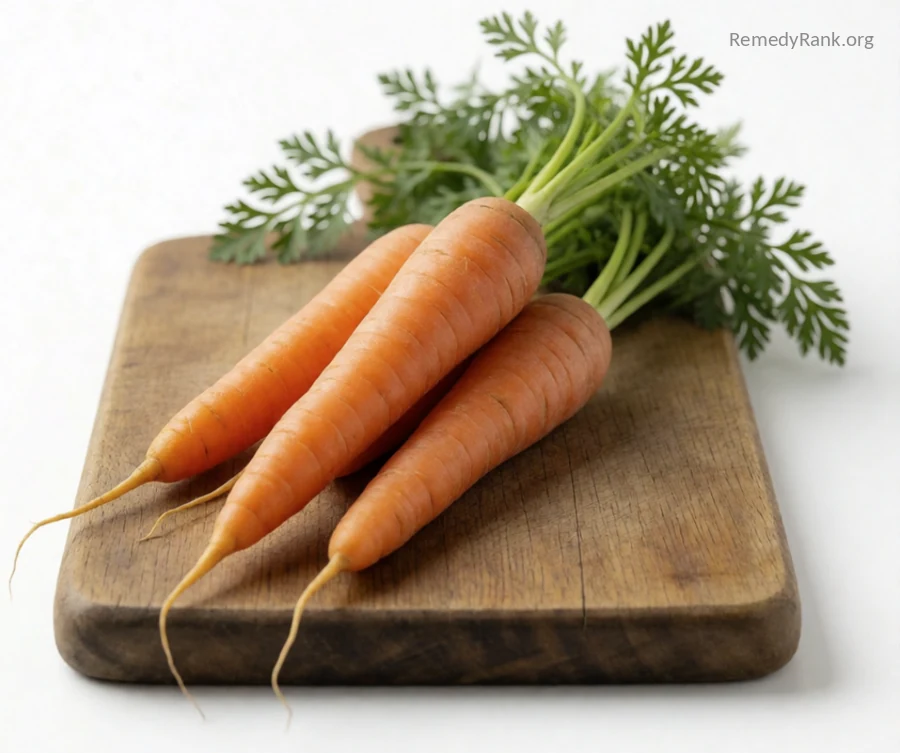
A few fresh whole orange carrots with leafy green tops on a rustic wooden cutting board.
📊 How it ranks (our editor score) — 94/100Tap to see the breakdown
Source quality
Safety
Simplicity
Affordability
Lifestyle fit
Eight-laws alignment
User feedback

👶 Safe for children?

This remedy carries age-related cautions. Please read them before giving it to a child, and check with your pediatrician or pharmacist first.

  • Whole raw carrots are a choking risk for very young children (grate or cook for them).

🌱 What it is

Carrots are a common root vegetable, usually orange, rich in the plant pigment beta-carotene that the body can turn into vitamin A.

✨ Why it's good for you

  • May help support healthy eyesight, especially in low light
  • May help support skin health
  • May help support gentle digestive regularity through fiber
  • May help support healthy immune function

🥗 Nutrition

Per 1 medium carrot (61 g) · about 25 calories

  • Vitamin A: 509 mcg RAE
  • Fiber: 1.7 g
  • Potassium: 195 mg
  • Vitamin K: 8.1 mcg

Source: USDA FoodData Central

🥄 How to use it

Eat carrots raw, cooked, or juiced; a little healthy fat (a drizzle of oil, or in a meal) helps the body absorb their vitaminA natural substance your body needs in small amounts to stay healthy, like vitamin C or D. More →-A-building beta-carotene.

How much: A serving of carrots daily, with a little fat to aid absorption.

Show full details & how to prepare it

Carrots are rich in beta-carotene, which the body turns into vitamin A — essential for healthy eyes (especially night vision) and skin. The old saying that carrots help you see in the dark holds a real kernel of truth where vitamin A is concerned.

Ways to prepare it

Raw or cooked: Enjoy carrots raw as sticks, roasted, or in soups; pair with a little oil or fat to absorb their beta-carotene.
Carrot juice: Drink a small glass of carrot juice for a concentrated, eye-friendly dose of beta-carotene.

🔬 Let's get technical

The scientific view, plainly reported. Hover a dotted word for its meaning.

What's in it

Carrots are a rich dietary source of , the provitamin A responsible for their orange color, along with alpha-carotene and , plus moderate fiber including both soluble pectin and insoluble cellulose.

Mechanism of action

is enzymatically cleaved in the intestinal mucosa into , which is further converted to retinol and , the active forms of vitamin A required for regeneration in retinal rod cells and for normal throughout the body. Because are fat-soluble, absorption is markedly higher when carrots are consumed with dietary fat and improves further with cooking, which softens plant cell walls and increases carotenoid release compared with raw consumption. Unconverted beta-carotene circulating in tissue also functions as a direct antioxidant, quenching and reactive species, a role studied separately from its vitamin A conversion function.

Current pharmacological applications

Carrot and intake is well established in nutrition science as a dietary source supporting vitamin A status and, epidemiologically, is associated with lower rates of vitamin A deficiency-related eye conditions in populations with limited dietary diversity. Large randomized trials of isolated high-dose beta-carotene supplements, notably in smokers, unexpectedly found increased lung cancer risk, a result that reshaped the field toward preferring whole-food sources over isolated supplements. Claims for general "eye health" benefit from ordinary dietary carrot intake in populations already vitamin A-sufficient have much weaker supporting evidence than the deficiency-prevention research.

Every underlined word is collected on the technical glossary.

🧺 Other forms of Carrot

These used to be pages of their own. They are the same remedy in a different form — the differences worth knowing are below.

Carrot JuiceFood

A beta-carotene-rich juice traditionally enjoyed for skin health and general wellness support.

How this form is used: Drink 8-12 oz of freshly made carrot juice daily, ideally juiced just before drinking for the most nutrients.

Cautions for this form
  • Very large, frequent amounts can temporarily turn skin orange (carotenemia) — harmless but a sign to cut back
  • Not a treatment for serious skin conditions or wounds — seek proper medical care for those
  • People with diabetes should account for its natural sugars

Natural Remedies Encyclopedia (7th ed.)

Shop juicer for fresh carrot juice on Amazon

Formerly its own page at /remedies/carrot-juice, now redirected here.

⚠️ Cautions

  • A whole food, very safe; eating very large amounts can harmlessly tint the skin orange (it fades).
  • Carrot juice is sugary — keep portions modest, especially with diabetes.

📚 Learn more

💬 Ask Remy about Carrot

Hi, I'm Remy 🌿 Ask me anything about Carrot and I'll answer from this page.

📚 Resource confidence

Based on mentions in health references

0 ratings
Tap to rate:
Did this remedy help you? Add your experience — source endorsements plus visitor feedback rank it on the ailment pages:0

Your vote is saved. Source endorsement totals come from books and studies (+7 per book, +5 per article). You can change your vote anytime from this device.

💬 Comments & experiences

Share what worked for you — and reply or 👍 like the experiences that resonate. Comments get a quick review before they appear publicly, to keep things safe and honest. Please don't make medical claims.

💚 Have an experience to share? Create a free account to join the conversation — your words might be exactly what someone else needs. Reading is always open to everyone.

Know a remedy like this?

Share a structured suggestion and our team will review it for the site.

Suggest a similar remedy