Herb
Elecampane
A bitter, aromatic root, taken as a decoction or syrup, traditionally used to loosen a deep, wet cough.
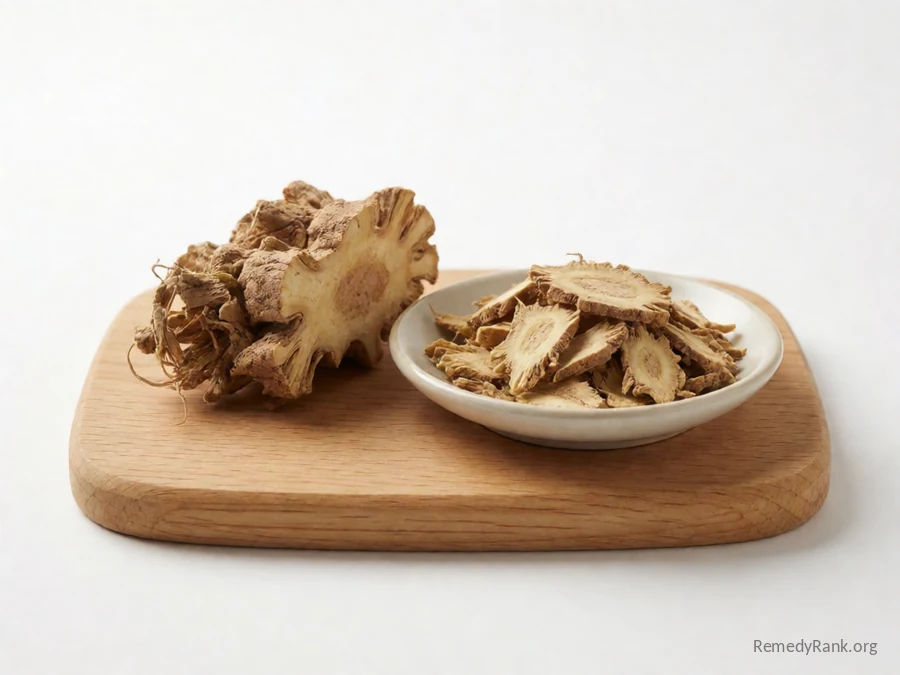 ⤢
⤢📊 How it ranks (our editor score) — 67/100Tap to see the breakdown
🌱 What it is
Elecampane is a tall, sunflower-like plant whose thick root has been used since ancient times as a warming remedy for coughs and chest congestion.
📜 Where it comes from
Elecampane has been used since ancient Greek and Roman times, when physicians such as Dioscorides recommended its root for coughs and digestive troubles. It was widely grown in medieval European monastery gardens and became a staple of home apothecaries for treating stubborn, wet coughs and bronchial congestion. The root was often prepared as a syrup or simmered decoction, a tradition that carried through into nineteenth-century herbal practice.
✨ Why it's good for you
- Traditionally used to help loosen a deep, wet cough
- May help soothe chest congestion
- Valued historically as a warming expectorant herb
- Often paired with honey for a soothing syrup
🥗 Nutrition
Per 1 cup brewed tea / 1 tsp root · about 5 calories
- Inulin (prebiotic fiber)
- Sesquiterpene lactones
- Volatile oils
Source: Nutrition estimate (per typical serving)
🥄 How to use it
Simmer ½–1 teaspoon of dried elecampane root in a cup of water for 10–15 minutes, sweeten with honey, and sip for a chesty cough; it's a warming expectorant.
How much: ½–1 teaspoon dried root as a decoctionA stronger tea made by simmering tough roots or bark. How to make a decoction →, sweetened, a few times daily.
Why it works: Expectorant that loosens and expels mucus.
Show full details & how to prepare it
Elecampane is a tall, sunflower-like plant whose bitter, aromatic root has long been a herbalist's friend for a deep, wet, rattling cough — a warming expectorant that helps the chest loosen and clear thick mucus. Its bitterness means it's used in modest amounts, often as a honey-sweetened decoctionA stronger tea made by simmering tough roots or bark. How to make a decoction → or syrupA sweet, thick herbal liquid that soothes the throat. How to make a syrup →.
Ways to prepare it
⚠️ Cautions
- Very bitter; large doses can cause nausea, vomiting, or cramping — keep to modest amounts.
- Avoid in pregnancy and breastfeeding; those allergic to daisies/ragweed may react.
- May lower blood sugar and add to sedatives — use caution with related medicines.
📚 Learn more
🌿 Deeper natural detail
🩺 The conventional view
💬 Ask Remy about Elecampane
📚 Resource confidence
Based on mentions in health references
Your vote is saved. Source endorsement totals come from books and studies (+7 per book, +5 per article). You can change your vote anytime from this device.
💬 Comments & experiences
Share what worked for you — and reply or 👍 like the experiences that resonate. Comments get a quick review before they appear publicly, to keep things safe and honest. Please don't make medical claims.
💚 Have an experience to share? Create a free account to join the conversation — your words might be exactly what someone else needs. Reading is always open to everyone.
Know a remedy like this?
Share a structured suggestion and our team will review it for the site.
Suggest a similar remedy