Educational information only — RemedyRank does not diagnose, treat, or cure disease. Read our full disclaimer.

Herb

Dandelion

72/100
RemedyRank score

The whole humble dandelion — leaf and root — taken as tea or greens, traditionally used to support digestion, the liver, and gentle fluid balance.

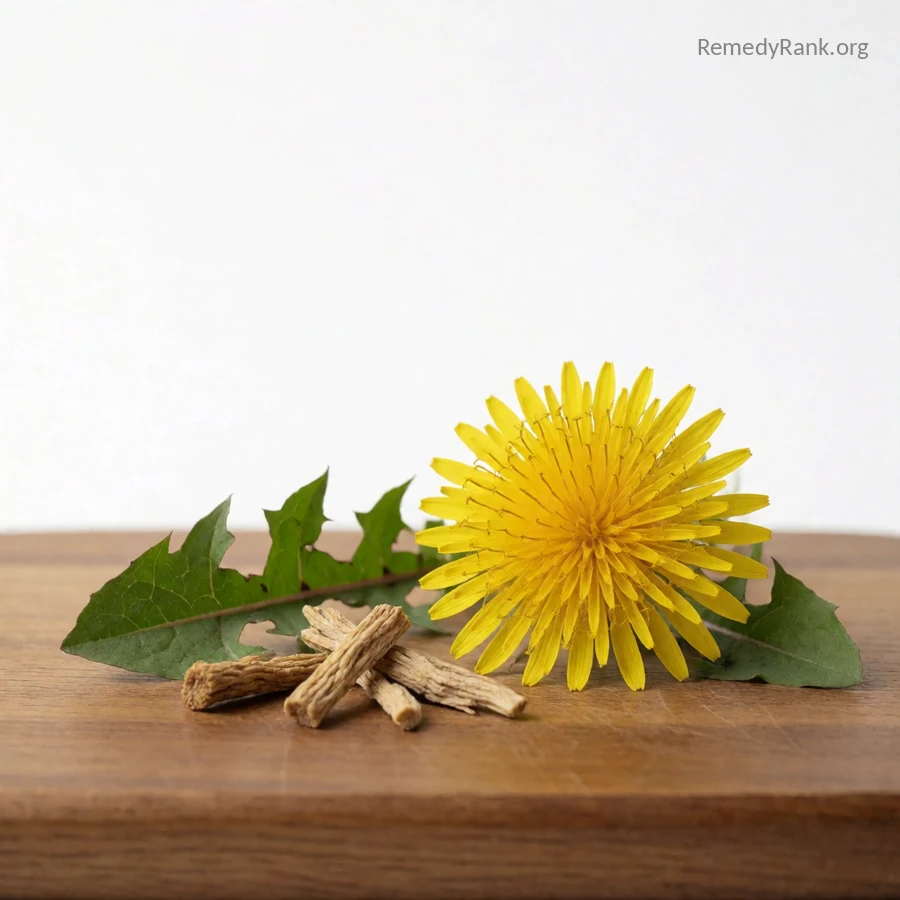
A bright yellow dandelion flower with jagged green leaves next to a few dried dandelion root pieces.
📊 How it ranks (our editor score) — 72/100Tap to see the breakdown
Source quality
Safety
Simplicity
Affordability
Lifestyle fit
Eight-laws alignment
User feedback

🌱 What it is

Dandelion is a common wild plant whose leaves, root, and flower have all been used in traditional kitchens and remedies for centuries. The leaves can be eaten fresh, and the root is often dried and steeped or roasted.

📜 Where it comes from

Dandelion has been used across many cultures as both food and medicine, with Traditional Chinese Medicine, medieval European herbalists, and Native American traditions all turning to its leaf and root for digestion and the liver. Its bitter greens were often gathered as a spring tonic to freshen the body after winter. That practice of using the whole plant, root to leaf, has continued in folk herbalism to the present day.

✨ Why it's good for you

  • May help support healthy digestion
  • Traditionally used to support liver function
  • May help support gentle, natural fluid balance
  • Provides vitamins and minerals when eaten as greens

🥗 Nutrition

Per 1 cup raw dandelion greens (55g) · about 25 calories

  • Vitamin A
  • Vitamin K
  • Calcium
  • Fiber
  • Potassium

Source: USDA FoodData Central

🥄 How to use it

Steep 1 teaspoon of dried dandelion root or leaf in hot water for 10 minutes, two or three cups a day; young leaves can also be eaten in salads. The roasted root makes a coffee-like drink.

How much: As teaA warm drink made by steeping herbs in hot water. How to make a tea, 1 teaspoon dried root or leaf per cup, two to three cups daily; leaves can be eaten as greens.

Why it works: Improves liver function and prevents internal toxicity; removes excess fluids.

Show full details & how to prepare it

The dandelion the world treats as a weed is, root to flower, one of the most useful gentle tonics around. Its slightly bitter leaves and roots have long been used to wake up sluggish digestionHow your body breaks food down into pieces small enough to use for energy. More →, support the liver's everyday work, and gently encourage the body to release excess fluid.

The young leaves are lovely in a salad, the roasted root makes a coffee-like brew, and a simple teaA warm drink made by steeping herbs in hot water. How to make a tea of either is the easiest way in. Because it's a mild diuretic and stirs the bile, anyone on water pills or with gallstones should check with a doctor first.

Ways to prepare it

Root or leaf tea: Steep 1 teaspoon dried dandelion root or leaf in a cup of hot water for 10 minutes; drink two to three cups a day.
Salad greens: Toss young, tender dandelion leaves into a salad for a gentle bitter that supports digestionHow your body breaks food down into pieces small enough to use for energy. More →.

🔬 Let's get technical

The scientific view, plainly reported. Hover a dotted word for its meaning.

What's in it

Dandelion leaf and root contain (including taraxinic acid derivatives), acids such as chlorogenic and caffeic acid, and the fructan-type , which is especially concentrated in the root. Leaves are additionally notable for a high potassium content, along with such as luteolin . Root and leaf differ enough in their compound ratios that they are often studied separately.

Mechanism of action

Dandelion's bitter are thought to stimulate taste receptors in the mouth and stomach, a bitter-tonic response that reflexively increases salivary and gastric secretions and may support appetite and early digestion. Chlorogenic and caffeic acid derivatives contribute antioxidant activity and have shown mild effects in animal studies, meaning they may increase bile flow from the liver, which underlies the plant's traditional 'liver support' reputation. The high potassium content of the leaf is notable because it distinguishes dandelion from many synthetic , which typically deplete potassium as they promote fluid loss; animal studies have shown a diuretic effect from leaf extract without the expected potassium loss, though human data are limited. in the root is a fiber, fermented by colonic bacteria into rather than being digested directly.

Current pharmacological applications

Dandelion is studied mainly in small animal and experiments examining , , and effects; human clinical trials are few, small, and often lack rigorous controls. Traditional use spans digestive bitters, mild diuretics, and liver-supportive tonics across multiple herbal systems, and dandelion greens are also studied simply as a nutrient-dense food source. Overall the evidence base is best described as preliminary and mechanistic rather than confirmed in large human trials.

Every underlined word is collected on the technical glossary.

🧺 Other forms of Dandelion

These used to be pages of their own. They are the same remedy in a different form — the differences worth knowing are below.

Dandelion RootHerb

A bitter root traditionally used to gently support liver function.

How this form is used: Drink 1-2 cups of dandelion root teaA warm drink made by steeping herbs in hot water. How to make a tea daily (steep 1 tsp dried root in hot water 10-15 minutes), or take as part of a liver-support herbA plant, or part of one, used for flavor, food, or gentle health support. More → blend as directed on the product.

Cautions for this form
  • Avoid if you have gallstones or a bile-duct obstruction — bitter herbs can trigger a painful gallbladder attack.
  • May interact with diabetes medication or diuretics — check with your doctor.
  • Those allergic to ragweed, marigolds, or daisies may react to dandelion. Mononucleosis, scrofula, and any new breast lump need a doctor's diagnosis and treatment — this tea is not a substitute for medical care.

Learn more: NCCIH — Dandelion: Usefulness and Safety

Natural Remedies Encyclopedia (7th ed.)

Shop organic dandelion root tea on Amazon

Formerly its own page at /remedies/dandelion-root, now redirected here.

⚠️ Cautions

  • Acts as a mild diuretic — go easy if you take water pills, and stay hydrated.
  • Gallstones or a blocked bile duct are reasons doctors commonly advise against use, since dandelion stirs the bile.
  • Those allergic to daisies or ragweed may react; may interact with diuretics, lithium, and some medicines.

📚 Learn more

🔎 What this addresses

Where Dandelion fits into a condition's cause-and-symptom picture — some conditions it works on the root cause of, others it mainly soothes.

Works on the cause of

  • EczemaTraditionally used as a liver and blood tonic thought to support clearer skin; no eczema clinical trials back this use.

💬 Ask Remy about Dandelion

Hi, I'm Remy 🌿 Ask me anything about Dandelion and I'll answer from this page.

📚 Resource confidence

Based on mentions in health references

0 ratings
Tap to rate:
Did this remedy help you? Add your experience — source endorsements plus visitor feedback rank it on the ailment pages:0

Your vote is saved. Source endorsement totals come from books and studies (+7 per book, +5 per article). You can change your vote anytime from this device.

💬 Comments & experiences

Share what worked for you — and reply or 👍 like the experiences that resonate. Comments get a quick review before they appear publicly, to keep things safe and honest. Please don't make medical claims.

💚 Have an experience to share? Create a free account to join the conversation — your words might be exactly what someone else needs. Reading is always open to everyone.

Know a remedy like this?

Share a structured suggestion and our team will review it for the site.

Suggest a similar remedy