Vegetable
Beetroot
A deep-red root vegetable, eaten or juiced, rich in nitrates that support healthy blood pressure and circulation.
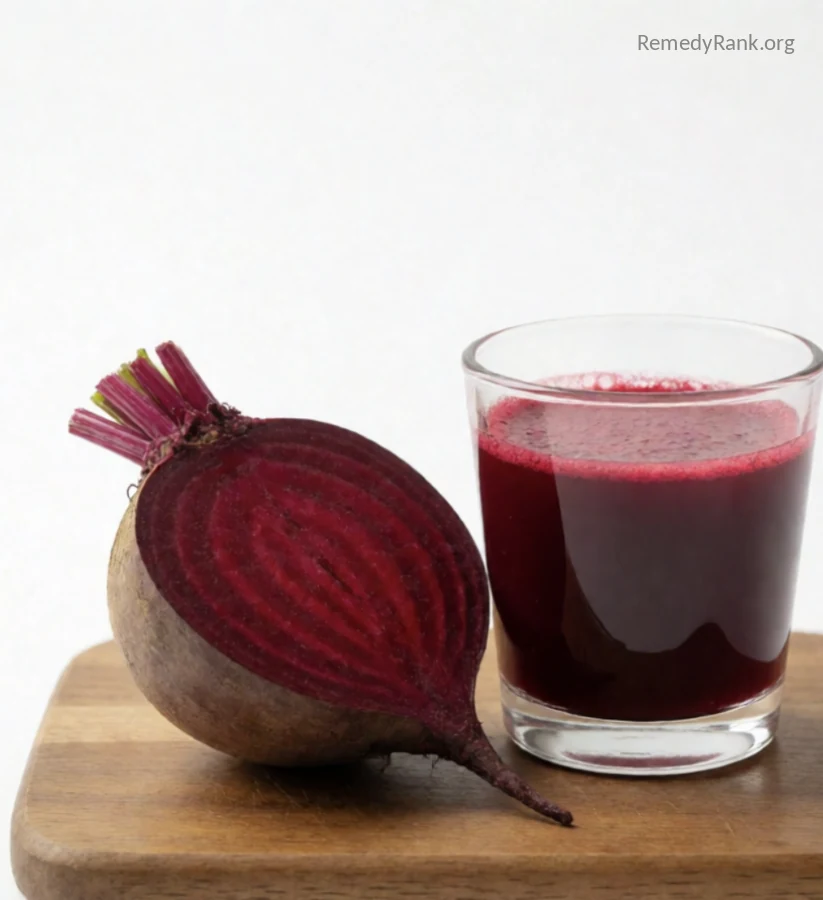 ⤢
⤢📊 How it ranks (our editor score) — 81/100Tap to see the breakdown
🌱 What it is
Beetroot is the deep-red taproot of the beet plant, enjoyed roasted, grated raw into salads, or juiced.
📜 Where it comes from
Beetroot has been cultivated since ancient Rome, where it was used as both food and folk remedy for the blood and digestion. Eastern European and Russian traditions built entire cuisines around it, including borscht, and folk healers used beet juice as a tonic for vigor and circulation. Modern interest in its nitrate content has renewed attention to this old root.
✨ Why it's good for you
- May help support healthy blood pressure already in a normal range
- May help support circulation and blood flow
- May help support stamina during exercise
- May help supply folate and antioxidants to the diet
🥗 Nutrition
Per 1/2 cup cooked, sliced (85 g) · about 37 calories
- Folate 68mcg
- Potassium 259mg
- Manganese 0.3mg
- Fiber 1.7g
- Vitamin C 3mg
Source: USDA FoodData Central
🥄 How to use it
Eat beetroot roasted, grated raw into salads, or drink a small glass of beet juice (often diluted) daily; the natural nitrates support blood flow.
How much: A serving of beetroot, or a small (often diluted) glass of beet juice, daily.
Why it works: Researchers point to beetroot's natural nitrates, which the body can convert into nitric oxide, a compound thought to relax blood vessels and support healthy circulation.
Show full details & how to prepare it
Beetroot is the deep crimson root whose natural nitrates the body turns into a compound that relaxes and widens blood vessels... which is why beet juice has been studied for gently lowering blood pressure and supporting stamina and circulation.
It's a true whole food, enjoyed roasted, grated raw into salads, or juiced. A small daily glass of (often diluted) beet juice is the concentrated way to get its benefit; just start modestly, and don't be alarmed if it tints the urine pink... that's harmless.
Ways to prepare it
🔬 Let's get technical
The scientific view, plainly reported. Hover a dotted word for its meaning.
What's in it
Beetroot is notably rich in inorganic dietary , along with pigments (betacyanins and betaxanthins) responsible for its deep red color, and moderate folate content.
Mechanism of action
Dietary from beetroot is reduced by oral bacteria to , which is then further converted in the stomach and blood to through a pathway independent of the enzymatic route, supplementing the body's usual nitric oxide production. This entero-salivary nitrate-nitrite-nitric oxide pathway increases nitric oxide , producing and reductions in the oxygen cost of submaximal exercise documented in sports physiology research. pigments separately show antioxidant and mild anti-inflammatory activity in cell studies, though this evidence is considerably less developed than the nitrate-nitric oxide research.
Current pharmacological applications
Beetroot juice is well studied in exercise physiology, with randomized trials showing improved exercise economy and modest gains in endurance performance, most consistently in recreationally active participants; results in highly trained athletes are considerably more mixed. Smaller clinical trials also report modest reductions in blood pressure following beetroot juice intake, attributed to the - pathway, though effect sizes are generally small and study populations have often been limited. Nitrate content varies considerably by growing conditions and preparation. -- harmless red or pink urine occurring in a subset of people after beetroot consumption -- reflects excretion of pigments and is unrelated to the nitrate content or the nitric oxide pathway.
Every underlined word is collected on the technical glossary.
⚠️ Cautions
- Harmless red coloring of urine and stool can occur... it's not blood.
- Those prone to kidney stones should be moderate (beets are high in oxalate).
- Start with small amounts of juice, especially if you take blood-pressure medication, as the effects can add up.
📚 Learn more
🌿 Deeper natural detail
🩺 The conventional view
💬 Ask Remy about Beetroot
📚 Resource confidence
Based on mentions in health references
Your vote is saved. Source endorsement totals come from books and studies (+7 per book, +5 per article). You can change your vote anytime from this device.
💬 Comments & experiences
Share what worked for you — and reply or 👍 like the experiences that resonate. Comments get a quick review before they appear publicly, to keep things safe and honest. Please don't make medical claims.
💚 Have an experience to share? Create a free account to join the conversation — your words might be exactly what someone else needs. Reading is always open to everyone.
Know a remedy like this?
Share a structured suggestion and our team will review it for the site.
Suggest a similar remedy