Herb
Chamomile
A gentle, calming flower tea that eases tension and helps prepare the body for sleep.
 ⤢
⤢📊 How it ranks (our editor score) — 85/100Tap to see the breakdown
🌱 What it is
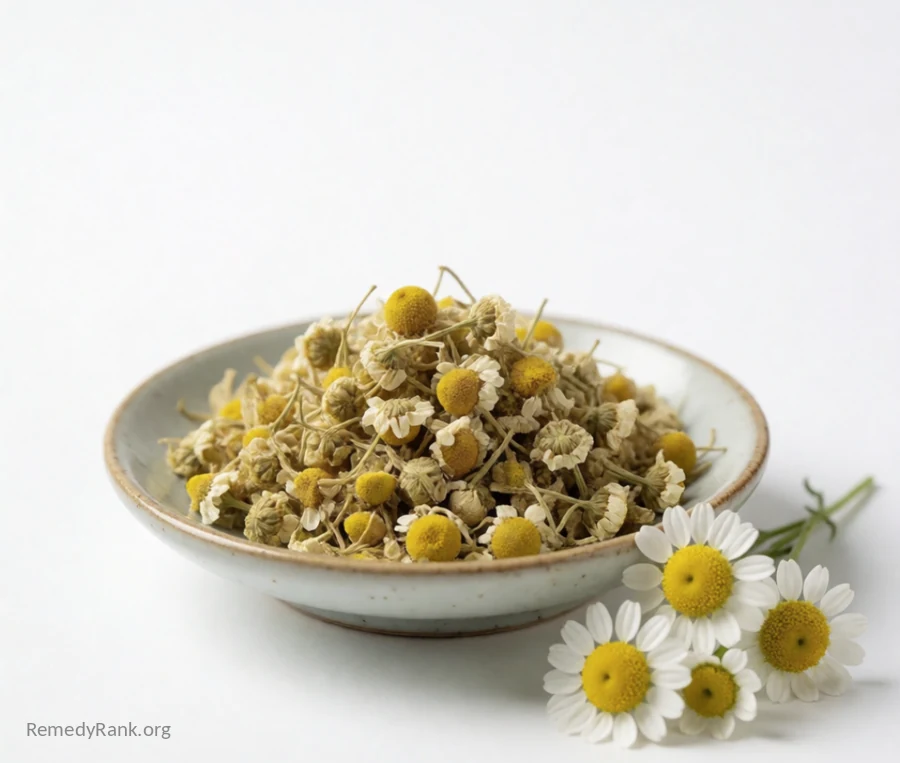
Chamomile looks like a tiny daisy. Dried and steeped in hot water, it becomes a mild, soothing tea.
📜 Where it comes from
Chamomile tea was steeped by ancient Egyptian healers, who associated the flower with the sun, and later used by Greco-Roman physicians for calming and digestive purposes. Medieval European herbals kept chamomile as a household standby for settling nerves and easing sleep. It crossed into nearly every culture it touched as a gentle bedtime tea, a reputation it still enjoys.
✨ Why it's good for you
- Helps you feel calm and relaxed
- A cozy way to get ready for sleep
- Can settle a nervous stomach
🥗 Nutrition
Per 1 cup brewed tea (240ml) · about 2 calories
- Apigenin (flavonoid)
- Trace potassium
- Negligible fat and protein
Source: Nutrition estimate (per typical serving)
🥄 How to use it
Steep a teaA warm drink made by steeping herbs in hot water. How to make a tea → bag or dried flowers in hot water for 5–10 minutes before bed.
How much: As a calming teaA warm drink made by steeping herbs in hot water. How to make a tea →, 1 cup 2–3 times a day, with the last cup 30–45 minutes before bed. A strong bedtime cup uses 2 teaspoons of dried flowers.
Why it works: Calming, gentle relaxant that promotes restful sleep.
Show full details & how to prepare it
Chamomile is the picture of a gentle remedy — soft daisy-like flowers that make a mild, apple-scented teaA warm drink made by steeping herbs in hot water. How to make a tea → trusted for generations to take the edge off a busy mind. Its calming reputation comes partly from a natural compound called apigenin, which appears to bind to the same calming spots in the brain that help us unwind and drift toward sleep.
Beyond rest, chamomile quietly soothes the digestionHow your body breaks food down into pieces small enough to use for energy. More →, easing the nervous, knotted stomach that often comes with stress. That double action — calming the mind and the gut at once — is why a warm cup feels like a small evening ritual of letting go.
It is very safe for most people. The main thing to know is that chamomile belongs to the daisy family, so the rare person who is allergic to ragweed, marigolds, or daisies should be cautious. Steeping it covered keeps the soothing oils in the cup instead of floating away as steam.
Ways to prepare it
🔬 Let's get technical
The scientific view, plainly reported. Hover a dotted word for its meaning.
What's in it
Chamomile flower preparations owe much of their reputation to a distinctive , , along with the essential-oil component alpha-bisabolol and, in German chamomile specifically, chamazulene, a blue-pigmented compound formed when the oil is steam-distilled. These sit alongside a broader mix of other flavonoids and constituents that vary by chamomile species and extraction method.
Mechanism of action
is of particular research interest because, in laboratory binding studies, it has shown affinity for the on in the central nervous system, a receptor complex central to many pharmaceutical and sedative drugs; this has led researchers to propose a mild sedative or anxiolytic mechanism for chamomile extracts, though receptor-binding data from isolated compounds does not automatically translate into an equivalent effect from a cup of tea at typical concentrations. Alpha-bisabolol and chamazulene have separately been studied for anti-inflammatory activity, including reductions in some inflammatory mediators in tissue and animal models, which has been proposed as a mechanism behind chamomile's traditional topical and gastrointestinal use. Because chamomile tea and supplements deliver a variable mixture of these compounds at generally low doses, the net pharmacological effect in humans is considerably more modest and harder to pin down than isolated-compound laboratory data might suggest.
Current pharmacological applications
NCCIH notes that preliminary clinical studies have found chamomile dietary supplements potentially helpful for generalized anxiety disorder and associated depression, though a 2019 review found only one study addressing insomnia specifically, which showed no benefit. Chamomile-containing mouth rinses have also been studied for managing oral irritation from radiation or chemotherapy, and chamomile is a common component in multi-herb formulations studied for infant colic and children's diarrhea, though evidence for chamomile's individual contribution in these combinations is not well isolated. NCCIH's overall assessment is that studies to date have not produced sufficient reliable evidence to rate chamomile's clinical usefulness for most of the specific conditions it has been studied for.
Every underlined word is collected on the technical glossary.
⚠️ Cautions
- Rarely, those allergic to ragweed/daisies may react.
📚 Learn more
🌿 Deeper natural detail
🔎 What this addresses
Where Chamomile fits into a condition's cause-and-symptom picture — some conditions it works on the root cause of, others it mainly soothes.
Eases the symptoms of
For these, it calms the condition without addressing what drives it.
- Eczema — A German chamomile cream performed comparably to a mild steroid cream in one trial; a home chamomile teaA warm drink made by steeping herbs in hot water. How to make a tea → wash is a much gentler version of that same idea, not the tested product itself.
💬 Ask Remy about Chamomile
📚 Resource confidence
Based on mentions in health references
Your vote is saved. Source endorsement totals come from books and studies (+7 per book, +5 per article). You can change your vote anytime from this device.
💬 Comments & experiences
Share what worked for you — and reply or 👍 like the experiences that resonate. Comments get a quick review before they appear publicly, to keep things safe and honest. Please don't make medical claims.
💚 Have an experience to share? Create a free account to join the conversation — your words might be exactly what someone else needs. Reading is always open to everyone.
Know a remedy like this?
Share a structured suggestion and our team will review it for the site.
Suggest a similar remedy